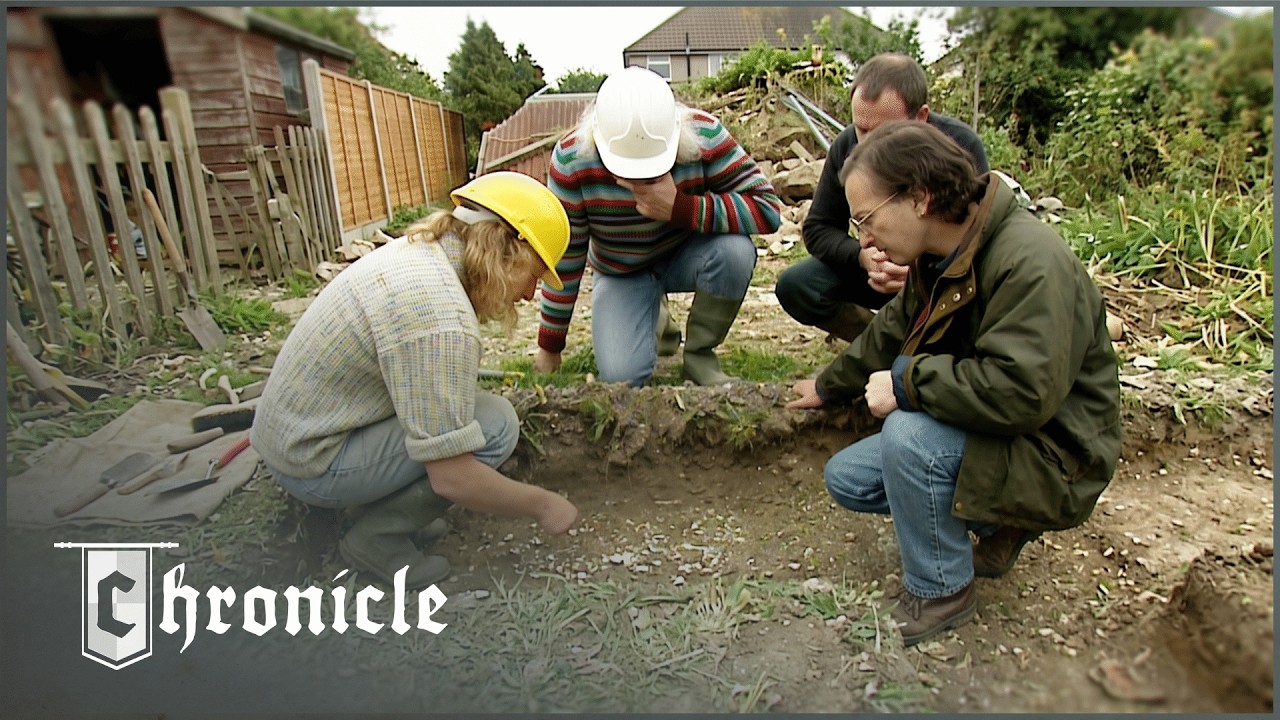
Archaeologists Discover A 1,400-Year-Old Anglo-Saxon Cemetery
This documentary details the archaeological discovery of a 1,400-year-old Anglo-Saxon cemetery in Winterbourne Gunner, Wiltshire. The site was uncovered during construction work for a modern housing development. The excavation revealed Anglo-Saxon burials containing artifacts such as gilded brooches, amber beads, and weaponry.
A significant aspect of the discovery is the Anglo-Saxons’ deliberate placement of their cemetery around a pre-existing 3,500-year-old Bronze Age sacred site. The program explores the settlement patterns of ancient invaders in post-Roman Britain and investigates the reasons for the enduring sacred significance of this particular location across multiple millennia.
Key Themes & Topics Examined
- Anglo-Saxon burial practices and grave goods
- The interaction between Anglo-Saxon and earlier Bronze Age cultures
- The continuity of sacred sites across different historical periods
- Archaeological methodologies employed in the excavation of ancient cemeteries
- The process of Anglo-Saxon settlement in post-Roman Britain
Archival & Investigative Sources
- Archaeological excavation reports from Winterbourne Gunner, Wiltshire
- Analysis of artifacts including gilded brooches, amber beads, and weapons
- Geophysical surveys identifying the Bronze Age sacred site
- Historical and archaeological interpretations of Anglo-Saxon and Bronze Age cultures
Frequently Asked Questions
What was discovered in Winterbourne Gunner?
Archaeologists discovered a 1,400-year-old Anglo-Saxon cemetery containing pagan burials with artifacts such as gilded brooches, amber beads, and weapons.
What is the significance of the cemetery’s location?
The Anglo-Saxon cemetery was deliberately constructed around a 3,500-year-old Bronze Age sacred site, indicating a continuity of sacred space across millennia and different cultures.
What period does the documentary cover?
The documentary primarily covers the Anglo-Saxon period in post-Roman Britain, with references to the earlier Bronze Age due to the nature of the archaeological discovery.