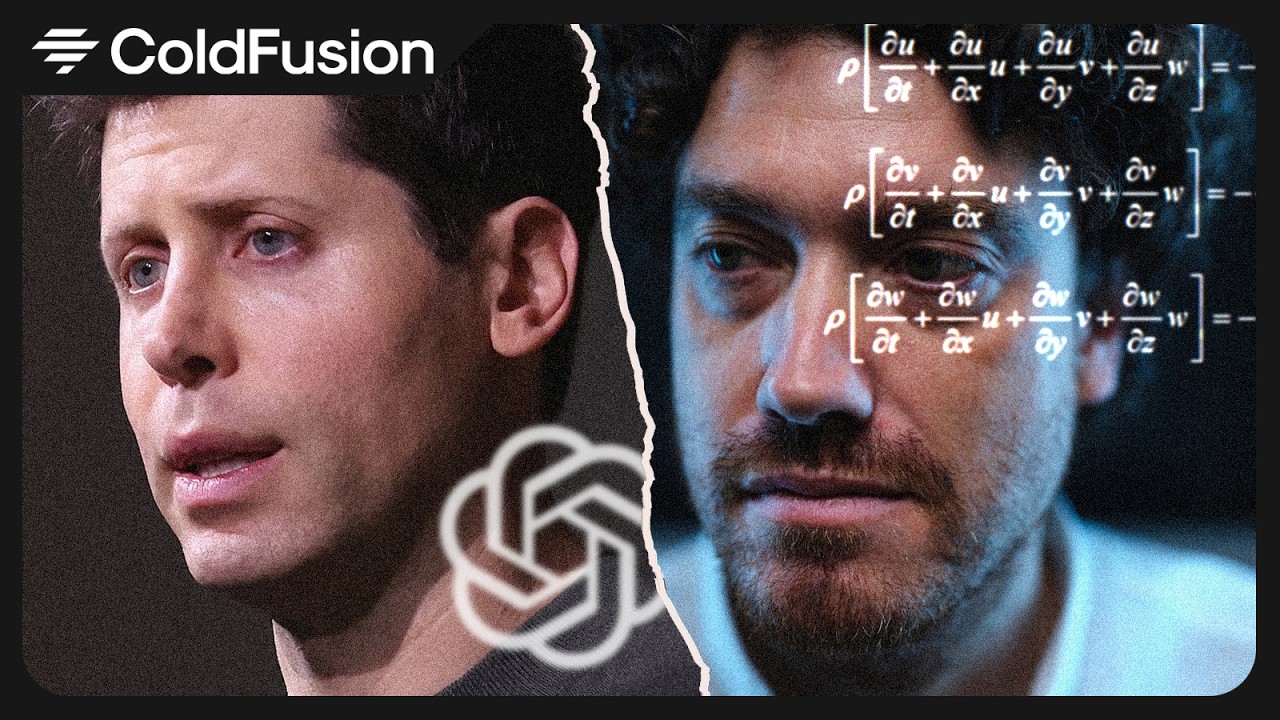
AI Keeps Pissing Off Mathematicians
This documentary investigates a controversy involving OpenAI and mathematician Tristan Buckmaster. The central claim is that OpenAI may have accessed Buckmaster’s chat logs and subsequently appropriated his work related to the Navier-Stokes problem, a complex challenge in fluid dynamics.
The program examines the allegations made by Buckmaster, who asserts that OpenAI utilized information from his private communications to develop solutions or insights pertaining to the $1 million Navier-Stokes problem. The documentary explores the implications of such an event for intellectual property rights and the ethical considerations surrounding artificial intelligence development and data privacy.
Key Themes & Topics Examined
- The intersection of artificial intelligence and advanced mathematics.
- Allegations of intellectual property infringement by AI companies.
- The Navier-Stokes problem and its significance in mathematics.
- Data privacy and the use of user chat logs by AI developers.
- Ethical considerations in AI research and development.
Archival & Investigative Sources
- Tristan Buckmaster’s personal accounts and claims.
- Information related to OpenAI’s operational practices.
- Contextual information regarding the Navier-Stokes problem.
Frequently Asked Questions
What is the central claim made by Tristan Buckmaster?
Tristan Buckmaster claims that OpenAI may have accessed his chat logs and subsequently used information from these logs to address the Navier-Stokes problem, potentially appropriating his work.
What is the Navier-Stokes problem?
The Navier-Stokes problem is one of the Millennium Prize Problems in mathematics, concerning the existence and smoothness of solutions to the Navier-Stokes equations, which describe the motion of viscous fluid substances.
What ethical concerns are raised by this situation?
The situation raises ethical concerns regarding intellectual property rights in the context of AI development, the privacy of user data, and the potential for AI companies to leverage private communications for research or commercial gain without explicit consent or attribution.