Archeologists Investigate Cardinal Wolsey’s 16th-Century Lost Tudor Palace
This documentary examines the archaeological investigation into the Manor of the More, a 16th-century Tudor palace constructed by Cardinal Thomas Wolsey. The palace, rumored to have surpassed Hampton Court in grandeur, served as a significant historical site, hosting King Henry VIII, Catherine of Aragon, and various peace treaty negotiations before its disappearance from historical records.
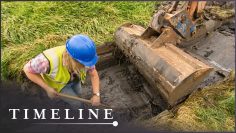
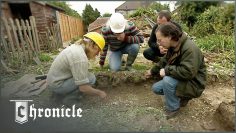
The program documents a three-day archaeological excavation conducted beneath a school field in Hertfordshire. The investigation aims to uncover the remains of the palace, including its gatehouse, Renaissance carvings, and other structural elements. The use of modern technology in the excavation process is highlighted as a means to determine the scale and significance of this historical royal residence.
Key Themes & Topics Examined
- The historical significance of Cardinal Thomas Wolsey’s Manor of the More.
- The architectural and historical context of Tudor palaces in 16th-century England.
- The role of archaeological methods and modern technology in uncovering historical sites.
- The historical interactions between key figures such as Cardinal Wolsey, King Henry VIII, and Catherine of Aragon at the palace.
- The process of identifying and excavating lost historical structures.
Archival & Investigative Sources
- Archaeological excavation data from the Hertfordshire site.
- Historical records pertaining to Cardinal Wolsey and the Manor of the More.
- Architectural analysis of discovered palace ruins and artifacts.
Frequently Asked Questions
What was the Manor of the More?
The Manor of the More was a 16th-century Tudor palace built by Cardinal Thomas Wolsey, known for its opulence and historical significance as a royal residence and site for diplomatic events.
Who were some notable historical figures associated with the palace?
King Henry VIII, Catherine of Aragon, and Cardinal Thomas Wolsey were prominent figures associated with the Manor of the More.
What was the purpose of the archaeological dig?
The archaeological dig aimed to locate and excavate the remains of the lost Manor of the More, including its gatehouse, carvings, and other structural components, to ascertain its true scale and historical details.