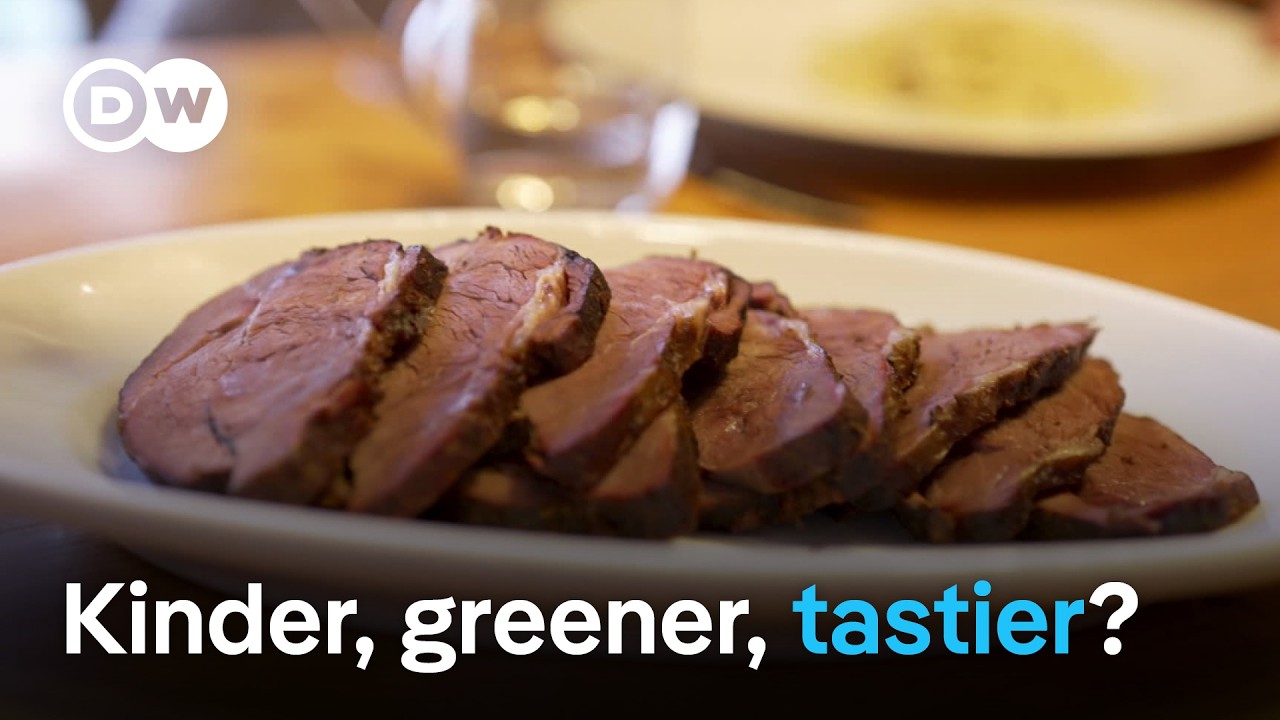
Fake Steak – Future-Proof Food And Lab-Grown Meat
This documentary examines global efforts by entrepreneurs and scientists to develop alternatives to conventional meat production, driven by concerns regarding animal welfare and the ecological impact of industrial livestock farming. It highlights the environmental footprint of industrial livestock farming, including its contribution to greenhouse gas emissions, land and water usage, and potential links to antibiotic-resistant infections.
The program investigates various approaches to sustainable food production. It features Joshua Tetrick’s work in California on cultivating chicken muscle cells in bioreactors for ‘Good Meat’ and Alison Van Eenennaam’s research at the University of California on gene-editing cattle using CRISPR to increase efficiency in meat production. Additionally, the documentary explores Pasi Vainikka’s ‘Solar Foods’ initiative in Helsinki, which focuses on creating a protein-rich food product called ‘Solein’ from bacteria fed with CO2 and hydrogen. Science journalist Ingolf Baur meets with these researchers and entrepreneurs to explore their respective methodologies and objectives.
Key Themes & Topics Examined
- The environmental impact of industrial livestock farming, including greenhouse gas emissions and resource consumption.
- The development of cultured meat (lab-grown meat) as an alternative protein source.
- Applications of gene-editing technologies, such as CRISPR, to enhance the efficiency of traditional livestock farming.
- The creation of novel food categories from microbial fermentation, exemplified by ‘Solein’.
- The economic and scalability challenges associated with emerging food technologies.
- The role of scientific research and entrepreneurial innovation in addressing global food sustainability.
Archival & Investigative Sources
- Interviews with Joshua Tetrick, CEO of ‘Good Meat’.
- Interviews with Alison Van Eenennaam, researcher at the University of California.
- Interviews with Pasi Vainikka, co-founder of ‘Solar Foods’.
- On-site visits to research and production facilities in California and Helsinki.
- Reporting by science journalist Ingolf Baur.
Frequently Asked Questions
What is the primary motivation for developing alternative meat production methods?
The primary motivations include concerns about animal welfare and the ecological impact of industrial livestock farming, specifically its contribution to greenhouse gas emissions, land and water usage, and potential links to antibiotic resistance.
What are some of the technologies discussed for alternative food production?
The documentary discusses cellular agriculture for lab-grown meat, gene editing using CRISPR to improve livestock efficiency, and microbial fermentation to create novel protein sources like ‘Solein’.
Who are some of the key individuals featured in the documentary?
Key individuals featured include Joshua Tetrick, CEO of ‘Good Meat’; Alison Van Eenennaam, a researcher at the University of California; and Pasi Vainikka from ‘Solar Foods’.