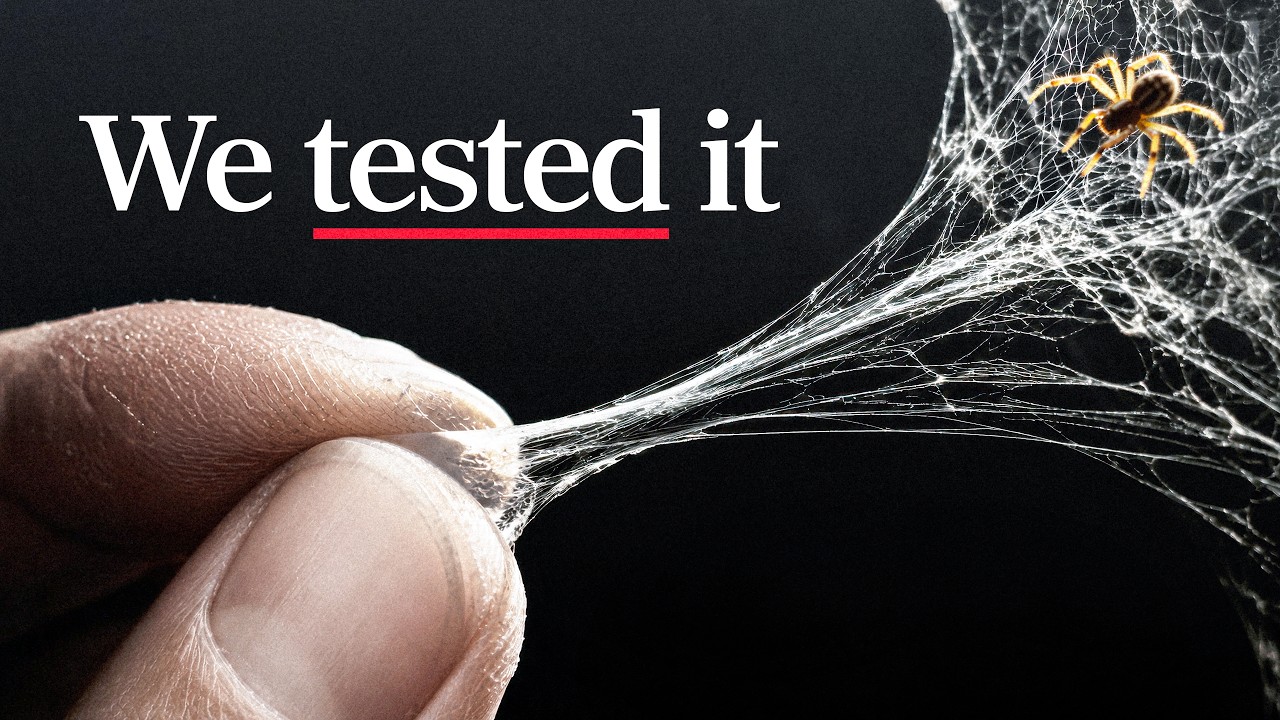
Is Spider Web Really Stronger Than Steel?
This documentary investigates the material properties of spider silk, specifically addressing the common assertion that it is stronger than steel. The program examines the scientific basis for this claim by exploring the tensile strength, elasticity, and molecular structure of various types of spider silk. It also contrasts spider silk with other high-strength materials such as Kevlar and steel.
The investigation includes laboratory testing of spider silk, discussions with experts in biomaterials and arachnology, and an exploration of the challenges and advancements in engineering synthetic spider silk. The documentary details the nanostructure responsible for spider silk’s unique properties, the difficulties in farming spiders for silk production, and the potential real-world applications of both natural and engineered spider silk, including the feasibility of creating a spider-silk swing.
Key Themes & Topics Examined
- Comparative analysis of spider silk’s strength against steel and Kevlar.
- Methodologies for testing the tensile strength of biological materials.
- The role of nanostructure in determining the mechanical properties of spider silk.
- Challenges associated with large-scale natural spider silk production.
- Advances in genetic engineering and biotechnology for creating synthetic spider silk, including the use of transgenic silkworms.
- Potential applications of spider silk in various industries.
Archival & Investigative Sources
- Research conducted at the Blackledge Spider Lab at the University of Akron.
- Insights from Kraig Biocraft Laboratories regarding transgenic silk production.
- Expert contributions from professors specializing in biomaterials, spider biology, and material science, including Keiji Numata, Chris Holland, Sara Goodacre, Greg Holland, Ingi Agnarsson, and Thomas Scheibel.
- Laboratory demonstrations and comparative material testing.
Recommended Companion Viewing
Explore authoritative investigative documentaries on related historical events and investigative subjects.
Why Does Every Mammal Get 1 Billion Heartbeats in Their Life?
Bigfoot Caught on Camera?
Frequently Asked Questions
Is spider silk actually stronger than steel?
Spider silk exhibits a higher tensile strength-to-weight ratio than steel, meaning that for the same weight, spider silk is stronger. However, steel generally has a higher absolute tensile strength. The documentary explores this distinction by comparing specific properties like tensile strength and toughness.
Why is it difficult to produce spider silk on a large scale?
Spiders are territorial and cannibalistic, making it impractical to farm them in dense populations. This behavioral trait prevents the large-scale harvesting of natural spider silk, leading researchers to explore alternative production methods.
How is synthetic spider silk engineered?
Synthetic spider silk is engineered through various biotechnological approaches, including genetic modification of organisms like bacteria, yeast, or silkworms. These organisms are engineered to produce the specific proteins that constitute spider silk, which can then be spun into fibers.