Archeologists Unearth The Remains Of Britain’s Oldest Anglo-Saxon Warrior
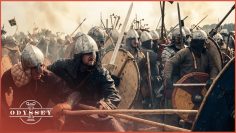
This documentary investigates the historical narrative surrounding the Anglo-Saxon presence in post-Roman Britain, specifically examining whether their arrival constituted a violent mass invasion or a process of cultural assimilation. The program re-evaluates existing archaeological evidence and historical interpretations.
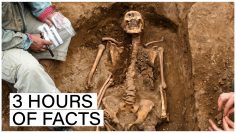
Archaeologist Julian Richards leads an investigation at two excavation sites in East Anglia: RAF Lakenheath and Ower Moigne (Allwalton). The research incorporates contributions from forensic scientists, geneticists, and specialists from the British Museum. Methodologies employed include high-precision carbon dating, isotope analysis, and population DNA profiling to analyze 1,500-year-old skeletal remains, pattern-welded iron swords, and horse burials.
Key Themes & Topics Examined
- The nature of Anglo-Saxon arrival in Britain (invasion vs. assimilation)
- Archaeological excavation techniques and findings
- Forensic analysis of ancient human remains
- Technological advancements in dating and genetic analysis (carbon dating, isotope analysis, DNA profiling)
- Material culture of the Anglo-Saxons (swords, burial practices)
Archival & Investigative Sources
- Excavation sites at RAF Lakenheath and Ower Moigne (Allwalton)
- 1,500-year-old skeletal remains
- Pattern-welded iron swords
- Horse burials
- Forensic scientific data
- Genetic analysis data
- Specialist input from the British Museum
Frequently Asked Questions
What is the central question addressed by the documentary?
The documentary investigates whether the Anglo-Saxons initiated a violent mass invasion of post-Roman Britain or if their presence was characterized by cultural assimilation and survival.
Which scientific methods are utilized in the investigation?
The investigation employs modern high-precision carbon dating, isotope analysis, and population DNA profiling to analyze archaeological findings.
Who are the primary experts involved in the documentary?
Archaeologist Julian Richards leads the investigation, supported by forensic scientists, geneticists, and specialists from the British Museum.