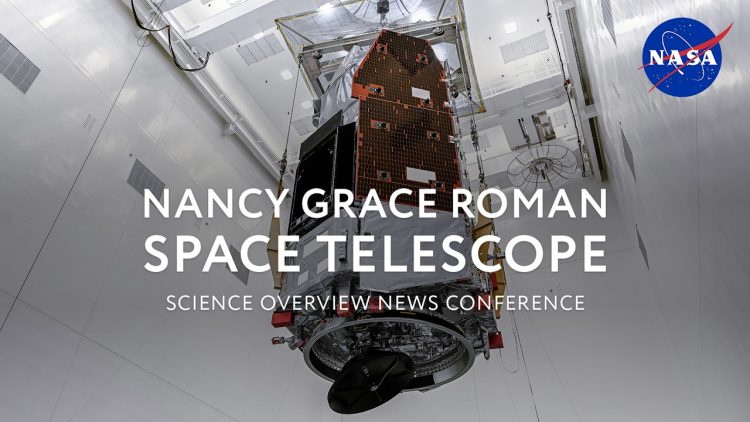
Nancy Grace Roman Space Telescope Science Overview News Conference
What will the Roman Space Telescope actually look at? This film is the science briefing, in which mission experts lay out the telescope’s goals: wide-field surveys to study dark energy and dark matter, discover and characterise exoplanets, map billions of galaxies and explore black holes.
The speakers — including Shawn Domagal-Goldman, Julie McEnery, Vanessa Bailey, Kristen McQuinn and Lee Armus — explain a mission that reaches from objects in our own solar system to the edge of the observable universe. The telescope is named for Nancy Grace Roman, NASA’s first chief astronomer.
Key Themes & Topics Examined
- The scientific objectives of the Roman Space Telescope.
- Dark energy and dark matter.
- Discovering and characterising exoplanets.
- Mapping billions of galaxies.
- Black holes and the edge of the observable universe.
- The mission experts behind the science.
Archival & Investigative Sources
- NASA mission experts.
- NASA Goddard Space Flight Center.
- NASA Jet Propulsion Laboratory.
- Space Telescope Science Institute.
- Caltech/IPAC.
Recommended Companion Viewing
Explore authoritative investigative documentaries on related historical events and investigative subjects.

NASA's SpaceX Crew-13 Launch
NASA's SpaceX Crew-13 Arrival & Welcome Remarks
NASA's SpaceX Crew-13 Prelaunch News Conference
Artemis II Congressional Space Medal of Honor Ceremony
Frequently Asked Questions
What is the primary purpose of the Nancy Grace Roman Space Telescope?
The primary purpose of the Nancy Grace Roman Space Telescope is to conduct wide-field surveys to investigate dark energy, dark matter, exoplanets, and to map galaxies, among other astronomical studies.
Who is Nancy Grace Roman?
Nancy Grace Roman was NASA’s first chief astronomer, and the space telescope is named in her honor.
What are some of the specific scientific areas the telescope will explore?
The telescope will explore areas such as dark energy, dark matter, exoplanets, galactic mapping, black holes, and objects within our solar system and the observable universe.