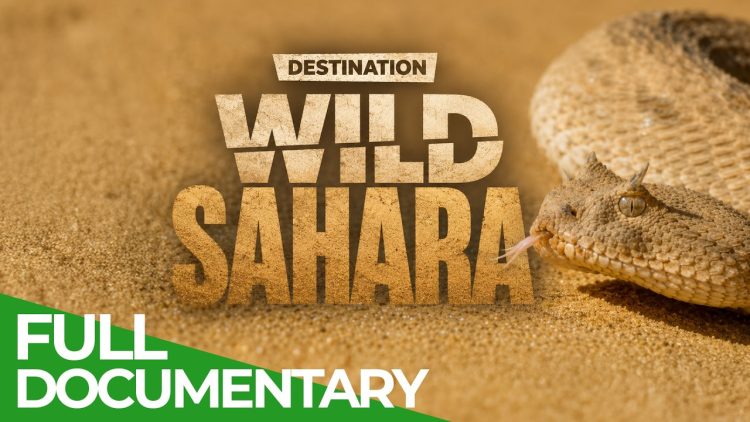
Destination Wild: The Sahara
The Sahara is one of the driest places on Earth, and yet it is full of life. This film crosses the desert to find it: elephants that travel enormous distances between waterholes, fennec foxes that hunt by night to escape the heat, camels built for the dry, and — most unexpectedly of all — flamingos, standing in desert lakes that appear and vanish with the seasons.
Every animal here survives on a trick the others do not have: a way to find water, to keep cool, or to go without. The film shows how those adaptations work — the behaviour and the physiology — and how a landscape that looks empty from a distance is, up close, one of the most demanding environments any animal has learned to live in.
Key Themes & Topics Examined
- The Sahara Desert and the challenge of water scarcity.
- Desert elephants, fennec foxes, camels and snakes.
- Flamingos in unexpected desert lakes.
- Adaptations to extreme heat and aridity.
- Biodiversity in one of Earth’s harshest landscapes.
Archival & Investigative Sources
- Field observations of desert wildlife.
- Ecological studies of arid regions.
- Behavioral analysis of desert animals.
Recommended Companion Viewing
Explore authoritative investigative documentaries on related historical events and investigative subjects.

Viper Queens
Masai Mara: African Wildlife Stories
Rumble in the Jungle
Nature's Smartest Animals
Frequently Asked Questions
What geographical region does the documentary cover?
The documentary primarily covers the Sahara Desert, a large desert located in North Africa.
What types of animals are featured in the program?
The program features a range of animals including desert elephants, fennec foxes, various snake species, camels, and flamingos.
What is a central theme of the documentary regarding animal life?
A central theme is the extraordinary adaptations and resilience of animals that enable them to survive in the Sahara’s harsh, water-scarce environment.