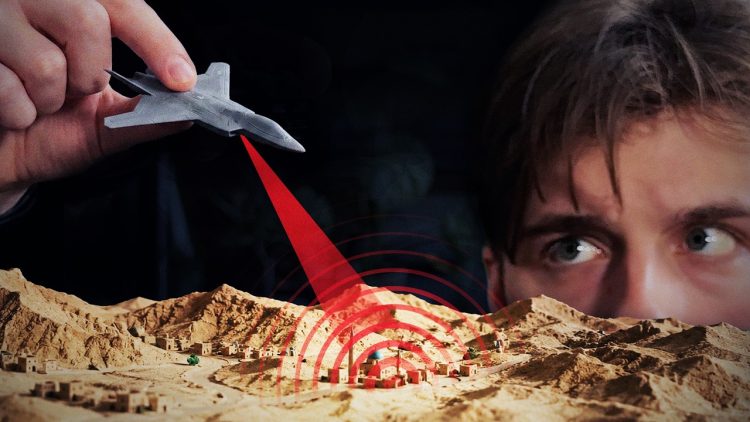
The CIA’s New Tech Doesn’t Make Sense
The CIA is said to have a technology called ‘Ghost Murmur’ that can detect a heartbeat from a distance. This Veritasium film asks whether that is scientifically plausible, drawing on physicists who work on NV magnetometry, biomagnetism and quantum diamond sensing.
The film weighs the principles and the limits — what the physics would allow, and what it would not — alongside perspectives from people experienced in intelligence operations and in deception and propaganda. Published scientific literature and news reports on the ‘Ghost Murmur’ claim provide the evidence it tests.
Key Themes & Topics Examined
- The CIA’s purported ‘Ghost Murmur’ technology
- Detecting heartbeats from a distance
- NV magnetometry and quantum diamond sensing
- The physics and its limitations
- Intelligence, deception and propaganda
Archival & Investigative Sources
- Interviews with experts in NV magnetometry, biomagnetism, and quantum diamond sensing from institutions including the University of Basel, Fraunhofer Institute, Oakland University, Vanderbilt University, and IEEE.
- Input from a retired CIA Senior Operations Officer.
- Consultation with experts on deception and propaganda from Stanford University and the University of Notre Dame.
- References to articles from the New York Post and Scientific American concerning the ‘Ghost Murmur’ technology.
- Citations of scientific papers on biomagnetism and nitrogen-vacancy color centers in diamond.
- Footage from YouTube discussions on quantum diamond sensors.
Recommended Companion Viewing
Explore authoritative investigative documentaries on related historical events and investigative subjects.

Putin’s fleet - Russian espionage in the Baltic Sea
The Latin Dance Teacher Directing Russia's Sabotage in Europe
Why Berlin is still the Spy Capital
Frequently Asked Questions
What is the ‘Ghost Murmur’ technology?
The ‘Ghost Murmur’ is a purported technology attributed to the CIA, claimed to be capable of detecting human heartbeats from a significant distance.
What scientific principles are relevant to detecting heartbeats remotely?
Remote heartbeat detection would primarily involve principles of biomagnetism and magnetometry, which measure the weak magnetic fields generated by biological processes, such as the electrical activity of the heart.
What are the primary challenges in developing long-range heartbeat detection?
Significant challenges include the extremely weak nature of biomagnetic signals, the rapid decrease in signal strength with distance, and the presence of environmental magnetic noise that can interfere with detection.