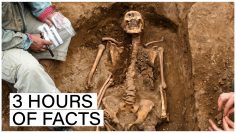
The First Real Roman Found In Ancient Britain? DNA & Forensic Science Revealed
This documentary investigates the application of contemporary forensic science and DNA analysis to archaeological findings from late Roman Britain. The program examines how these scientific methodologies are re-evaluating established understandings of the period, particularly concerning the identity and origins of individuals within ancient British populations.
Host Julian Richards revisits two archaeological excavation sites to observe the integration of advanced scientific techniques. The documentary focuses on the use of isotope analysis and newly discovered DNA evidence to interpret human remains, aiming to provide insights into migration patterns, genetic heritage, and the demographic composition of Roman Britain. The findings presented challenge previous historical assumptions regarding the presence and integration of individuals of Roman origin within the province.
Key Themes & Topics Examined
- The application of forensic science in archaeology.
- The use of DNA analysis to determine ancestry and origin in ancient populations.
- Isotope analysis as a method for reconstructing ancient diets and geographical origins.
- Re-evaluation of historical narratives concerning late Roman Britain.
- The demographic characteristics of Roman Britain.
Archival & Investigative Sources
- Archaeological excavation sites in Britain.
- Forensic scientific laboratories.
- DNA analysis results from ancient human remains.
- Isotope analysis data from ancient human remains.
Frequently Asked Questions
What is the primary focus of the documentary?
The documentary primarily focuses on how modern forensic science, DNA analysis, and isotope analysis are being used to re-examine archaeological discoveries from late Roman Britain, specifically concerning the origins and identities of individuals.
Who is the host of the program?
The program is hosted by Julian Richards.
What scientific methods are highlighted in the documentary?
The documentary highlights cutting-edge forensic science, isotope analysis, and DNA analysis as key methodologies employed in the investigation.