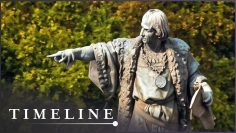
The Real Hernán Cortés: The Brutal Truth Behind The Conquest Of The Aztecs
This documentary examines the 1519 arrival of Hernán Cortés and his Spanish forces in Central America, focusing on the subsequent conflict with the Aztec Empire. It details the strategic decision by Cortés to scuttle his fleet, thereby committing his men to the conquest. The program explores the confrontation between the Spanish expedition and the established Aztec civilization.
The narrative covers the scale of the Aztec Empire, the leadership of Emperor Montezuma, and the eight-month siege of Tenochtitlan. It investigates the factors contributing to the Spanish victory, including military technology, disease, and the impact on indigenous populations, presenting the events as a significant historical turning point for the region.
Key Themes & Topics Examined
- The strategic decisions and actions of Hernán Cortés.
- The structure and power of the Aztec Empire prior to European contact.
- The siege and fall of Tenochtitlan.
- The role of military technology, disease, and cultural differences in the conquest.
- The historical consequences of the Spanish conquest for Central American civilizations.
Archival & Investigative Sources
- Historical accounts of the Spanish conquest.
- Archaeological evidence related to the Aztec Empire and Tenochtitlan.
- Expert analysis on military tactics and disease transmission during the period.
Frequently Asked Questions
Who was Hernán Cortés?
Hernán Cortés was a Spanish conquistador who led the expedition that caused the fall of the Aztec Empire and brought large parts of mainland Mexico under the rule of the King of Castile in the early 16th century.
What was the Aztec Empire?
The Aztec Empire was a Mesoamerican civilization that flourished in central Mexico from 1300 to 1521. It was characterized by a complex social, political, and religious structure, with its capital city being Tenochtitlan.
What was the significance of Tenochtitlan?
Tenochtitlan was the capital city of the Aztec Empire, located on an island in Lake Texcoco. It was a major urban center known for its advanced engineering, agriculture, and monumental architecture, and served as the political and economic heart of the empire.