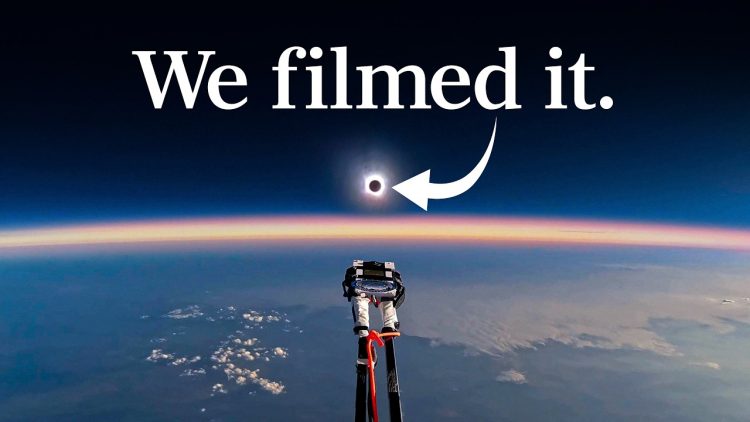
We Sent a Camera to Space to Film the Solar Eclipse
To film a total solar eclipse properly, you need to get above the weather, and this Veritasium documentary goes to the edge of space to do it. The film follows an expedition to Spain to film the 2026 eclipse from a high-altitude balloon.
The team worked with the Montana State University NASA Ballooning Team and the Exploratorium, with experts from NASA’s Goddard Space Flight Center explaining what the footage shows. The film looks at shadow bands, the changing colour of the Sun during totality, and the old scientific ideas about eclipses that turned out to be wrong.
Key Themes & Topics Examined
- A total solar eclipse seen from the upper atmosphere
- Why eclipses happen where and when they do
- Shadow bands and the solar corona
- Old scientific misconceptions about eclipses
- High-altitude imaging of a celestial event
Archival & Investigative Sources
- Footage and data from the Montana State University NASA Ballooning Team
- Insights and footage from the Exploratorium Team
- Consultations with experts from NASA’s Goddard Space Flight Center
Recommended Companion Viewing
Explore authoritative investigative documentaries on related historical events and investigative subjects.

You've (Likely) Been Playing The Game Of Life Wrong
NASA’s SpaceX Crew-12 Pre-Departure News Conference
Relativity is so much weirder than we thought...
Bigfoot Caught on Camera?
Frequently Asked Questions
What is the primary objective of filming a solar eclipse from the edge of space?
The primary objective is to obtain a unique perspective of the eclipse, allowing for observations of atmospheric effects and the solar corona with reduced atmospheric interference, which can enhance scientific understanding of the event.
What are ‘shadow bands’ observed during a solar eclipse?
Shadow bands are faint, rapidly moving, wavy lines of alternating light and dark that can be seen on plain surfaces just before and after a total solar eclipse. They are believed to be caused by atmospheric turbulence refracting the thin sliver of sunlight from the crescent sun.