
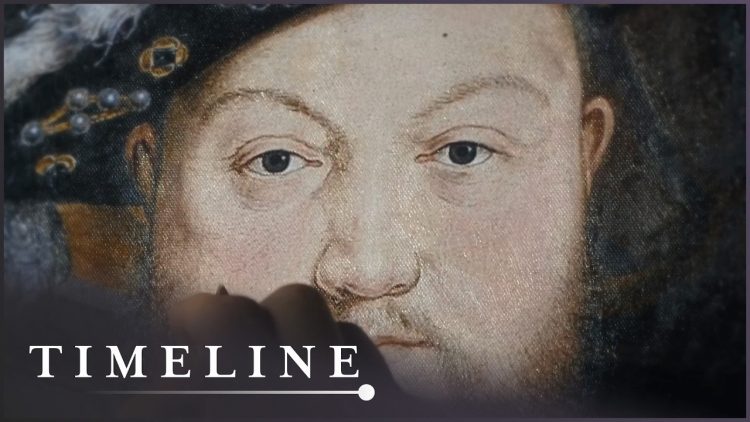
The Real Story Of Henry VIII: Inside The Mind Of A Tudor Tyrant
Henry VIII is one of history’s most caricatured kings: six wives, two executions, a break with Rome, a belly and a temper. This documentary sets the caricature aside and asks a harder question — what kind of mind produces a reign like that? Drawing on Tudor historians and on Henry’s own words, it presents the king not as a cartoon tyrant but as a figure shaped by insecurity and paranoia, whose personal fears steered the course of a nation.
The film follows Henry’s transformation across his reign. He began as a charismatic Renaissance prince, athletic, cultured, and widely admired. Over the decades, that figure gave way to something else: a monarch who initiated the English Reformation, broke with Rome, seized the wealth of the monasteries, and ordered the executions of wives, ministers, and close associates. The documentary argues that this transformation cannot be understood through politics alone. It was driven by a man who saw threats everywhere — to his dynasty, to his authority, to his own person — and who answered those threats with ever greater displays of power.
The evidence for that reading comes from the documents Henry left behind. The film draws on his love letters to Anne Boleyn, preserved in the Vatican Archives, on the 1534 Treason Act, which made it a crime even to speak against the king’s supremacy, and on his last will and testament. Read together, and read with the help of leading Tudor historians, these documents show a king whose public acts were inseparable from his private anxieties: the desperate need for a male heir, the fear of being controlled by those around him, the conviction that loyalty had to be proved again and again.
That reading has consequences for how we understand the events of the reign. The break with Rome, the dissolution of the monasteries, the executions — the film presents these not only as political decisions but as expressions of a personality. Henry’s reign changed England’s religion, its finances, and its relationship with Europe, and the documentary’s argument is that none of that can be fully explained without understanding the man at the centre of it.
What the Film Explores
The documentary explores the relationship between psychology and power. Kings are not exempt from the fears and insecurities that shape ordinary people; they simply have more power with which to act on them. The film asks what happens when a paranoid man is given absolute authority, and it follows the answer through the reign: the narrowing circle of trust, the escalating punishments, the rewriting of laws to match the king’s needs.
It also explores the limits of that explanation. The film is careful not to reduce a complex reign to a single psychological diagnosis, and it uses the historians’ voices to keep the argument grounded in evidence — in letters, laws, and wills — rather than speculation. The result is a portrait that is more unsettling than the caricature: a king who was, by turns, brilliant and terrifying, and whose worst acts were often the logical conclusion of his own fears.
Key Themes & Topics Examined
- The psychological profile of Henry VIII, including aspects of insecurity and paranoia.
- The evolution of Henry VIII’s character and leadership style throughout his reign.
- The political and religious motivations behind the English Reformation and the break with Rome.
- The financial implications of Henry VIII’s policies on the English state.
- The role of key historical documents in understanding Henry VIII’s rule.
- The transformation from charismatic Renaissance prince to feared monarch.
- The executions of wives and close associates, and what drove them.
Archival & Investigative Sources
- Henry VIII’s original love letters to Anne Boleyn, held in the Vatican Archives.
- The 1534 Treason Act.
- Henry VIII’s last will and testament.
- Analysis by leading Tudor historians.
Recommended Companion Viewing
Explore authoritative investigative documentaries on related historical events and investigative subjects.

What Historians Get Wrong About The Knights Templar In America
How Did Viking Raiders Turn Into Europe’s Greatest Medieval Rulers?
Archaeologists Re-examine Artifacts From Post-Roman Britain
King Canute: The Ruthless Viking Conqueror Who Became King Of England
Frequently Asked Questions
What is the central premise of the documentary?
The documentary’s central premise is to explore the psychological dimensions of King Henry VIII’s rule, presenting him as an insecure and paranoid figure whose personal traits significantly influenced his reign and England’s history.
What historical period does this documentary cover?
This documentary covers the Tudor period, focusing on the reign of King Henry VIII in England.
What documents does the film draw on?
The film draws on Henry’s love letters to Anne Boleyn, the 1534 Treason Act, and his last will and testament, alongside analysis by Tudor historians.
How did Henry VIII change England?
He initiated the English Reformation and the break with Rome, significantly affected England’s finances through the dissolution of the monasteries, and reshaped the country’s religious and political landscape.

