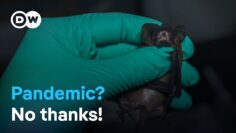
The World’s Oldest Virus Research Lab
This documentary examines the operations of the Friedrich Loeffler Institute, a high-security virus research laboratory located on the Baltic Sea island of Riems. The facility is presented as one of three such laboratories globally, and the sole institution in Europe, capable of researching dangerous diseases using live animals under stringent biosecurity conditions. The institute’s work focuses on understanding pathogen spread and developing vaccines, particularly in response to the increasing global prevalence of viruses previously confined to tropical regions.
The program highlights the institute’s role in addressing specific viral threats, including Ebola, Rabies, Swine Fever, Crimean-Congo Fever, and Sars-CoV-2. A significant portion of the documentary details the research into African Swine Fever (ASF), which has been detected in Eastern Europe and Germany. The potential economic impact of an ASF outbreak in Germany, a major pork producer, is discussed, alongside the institute’s efforts in testing a potential vaccine for the disease.
Key Themes & Topics Examined
- The function and significance of high-security virus research laboratories.
- The global spread of emerging and re-emerging viral diseases.
- The methodology of pathogen research and vaccine development.
- The specific case of African Swine Fever and its potential economic consequences.
- The role of isolated geographical locations in biosecurity protocols.
Archival & Investigative Sources
- Footage from within the Friedrich Loeffler Institute, showcasing laboratory procedures and animal research facilities.
- Interviews with researchers and scientists involved in virology and vaccine development.
- Visual documentation of the Baltic Sea island of Riems and its infrastructure.
Frequently Asked Questions
What is the primary function of the Friedrich Loeffler Institute?
The Friedrich Loeffler Institute serves as a high-security research laboratory dedicated to studying dangerous viruses and developing vaccines, often utilizing live animals under controlled conditions.
Which specific viruses are mentioned as being researched at the institute?
The documentary mentions research on Ebola, Rabies, Swine Fever, Crimean-Congo Fever, and Sars-CoV-2.
Why is the institute’s location on the island of Riems considered vital?
The isolated location on the Baltic Sea island of Riems is considered vital for maintaining biosecurity, given the dangerous nature of the viruses stored and researched there.
What is the significance of African Swine Fever in the context of the documentary?
African Swine Fever is presented as a current threat, particularly in Eastern Europe and Germany, with the institute actively researching its spread and developing a potential vaccine due to its significant economic implications for pork production.