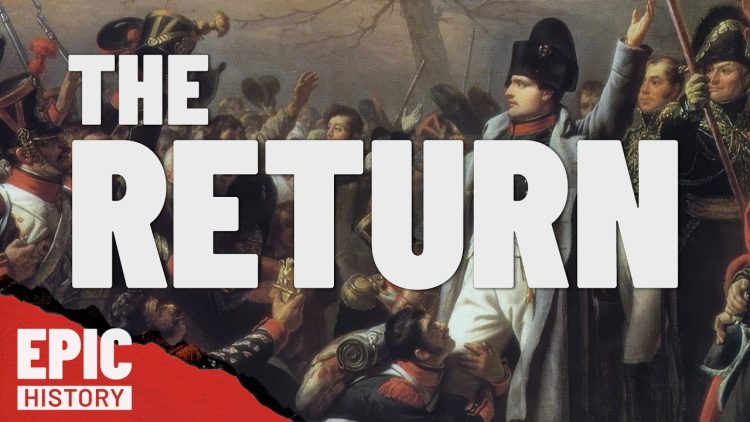
Napoleon’s Greatest Gamble: Return from Elba
In February 1815, Napoleon Bonaparte slipped away from his exile on the island of Elba with about a thousand men and landed at Golfe-Juan on the French coast. What followed was one of the great gambles in history: a march on Paris to reclaim an empire he had lost the year before.
As he advanced, former soldiers rallied to him and the restored Bourbon government of Louis XVIII collapsed. With historical consultant Dr. Zack White, host of the Napoleonic Wars Podcast, the film follows Napoleon’s return step by step — and the European powers already preparing for the war that would end at Waterloo.
Key Themes & Topics Examined
- Napoleon’s escape from Elba in February 1815.
- The landing at Golfe-Juan with about 1,000 men.
- The march on Paris and the collapse of the Bourbon restoration.
- The political and military landscape of Europe in 1815.
- The opening of the Hundred Days campaign.
- The road to Waterloo.
Archival & Investigative Sources
- Historical consultant Dr. Zack White, host of the Napoleonic Wars Podcast.
Recommended Companion Viewing
Explore authoritative investigative documentaries on related historical events and investigative subjects.

New London School Explosion: The American Nightmare You've Probably Never Heard Of
Retold - History's Forgotten Stories: The Burning Sea
The Untold Story of the Reagan Presidency
Rare Footage From The 20th Century's Most Critical Turning Points
Frequently Asked Questions
What was the primary objective of Napoleon’s return from Elba?
Napoleon’s primary objective was to reclaim his position as Emperor of France and re-establish his political and military authority over the nation, which he had lost following his abdication in 1814.
How many men did Napoleon initially have when he departed Elba?
Napoleon departed Elba with approximately 1,000 men, a relatively small force for such an ambitious undertaking.
What was the immediate impact of Napoleon’s landing in France?
Upon landing in France, Napoleon began a march towards Paris, gathering support from former soldiers and segments of the population, which led to the collapse of the Bourbon restoration government under King Louis XVIII.