1943-1945: The Complete Story Of The WW2 Italian Campaign
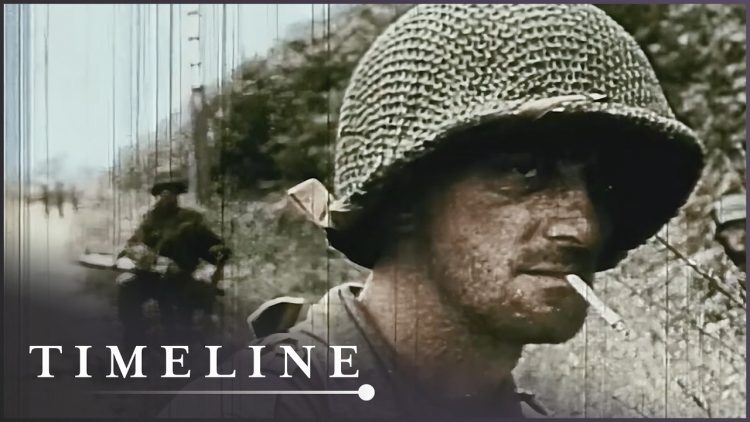
The Italian Campaign of 1943 to 1945 is often overshadowed by D-Day and the fighting in France, but for the soldiers who fought it, it was one of the hardest campaigns of the Second World War. This documentary tells its complete story, from the Allied landings in Sicily and Salerno to the final battles along the Gothic Line, through archival combat footage and the testimony of the men who were there.
The campaign began in 1943 with the invasion of Italy, and the Allies — more than 300,000 soldiers — faced an enemy that had turned the country’s geography into a weapon. The fighting moved north through a landscape of mountains, rivers, and fortified lines, and every advance was paid for in casualties. The documentary follows the sequence of the great battles: Sicily and Salerno, where the Allies first came ashore; Monte Cassino, where a months-long struggle centred on a hilltop monastery; Anzio, where a landing became a siege; and the Gothic Line, the last great defensive position in northern Italy.
What makes the film distinctive is its use of personal testimony. Audie Murphy, who would become the most decorated American soldier of the war; Felix Sparks, who commanded troops at Dachau’s liberation and fought in Italy before that; Vernon Baker and Daniel Inouye, whose service in segregated and Japanese-American units respectively tells a story about who fought the war and how they were treated. Their accounts give the campaign a human scale that maps and casualty figures cannot, showing what it meant to fight up a mountain under fire, to hold a position through the winter, to lose friends to ground you had only just taken.
The strategic objective was clear: break through the Axis lines and reduce German control in southern Europe, drawing German forces away from other fronts. But the film is honest about the cost of that strategy. The Italian Campaign was slow, grinding, and expensive in lives, and the documentary does not shy away from the question of whether the price was worth the gain. Its answer is not a verdict but a portrait: of soldiers who fought a war that history has half-forgotten, in a country whose mountains made every mile a battle.
What the Film Explores
The documentary explores the difference between a campaign as planned and a campaign as fought. On the map, the invasion of Italy looked like a straightforward advance up a peninsula. On the ground, it was a succession of river crossings, mountain assaults, and fortified positions, each one defended by an enemy that knew the terrain. The film follows that reality through the testimony of the men who lived it, showing how strategy dissolves into mud, cold, and the next hill.
It also explores the diversity of the Allied force. The soldiers whose stories the film tells came from very different Americas — Murphy from Texas, Baker from a segregated army, Inouye from a Japanese-American regiment whose families were in internment camps. Their service, and the recognition it eventually received, is part of the campaign’s story too, and the film treats it as central rather than incidental.
Key Themes & Topics Examined
- The strategic initiation of the Allied invasion of Italy in 1943.
- Major battlefronts and engagements, including Sicily, Salerno, Monte Cassino, Anzio, and the Gothic Line.
- The tactical challenges posed by fortified Axis lines and mountainous terrain.
- The human cost and casualty rates experienced by Allied forces.
- The broader impact of the Italian Campaign on the progression of World War II.
- The testimony of Audie Murphy, Felix Sparks, Vernon Baker, and Daniel Inouye.
- The experience of fighting in a campaign history has half-forgotten.
Archival & Investigative Sources
- Frontline combat footage from the 1943-1945 period.
- Firsthand accounts and testimonies from military personnel, including Audie Murphy, Felix Sparks, Vernon Baker, and Daniel Inouye.
Recommended Companion Viewing
Explore authoritative investigative documentaries on related historical events and investigative subjects.

Black People in Nazi Germany - Lionel Romney's Survival in a Concentration Camp
Road to WW2: 1937
The Lost Home Movies of Nazi Germany
Forgotten Heroes: The WWII Rescue Pilots
Frequently Asked Questions
When did the Allied invasion of Italy begin?
The Allied invasion of Italy commenced in 1943.
What were some of the significant battles during the Italian Campaign?
Significant battles included those at Sicily, Salerno, Monte Cassino, Anzio, and the Gothic Line.
What was the primary objective of the Allied forces in Italy?
The primary objective was to break through Axis lines and reduce German control in southern Europe.
How large was the Allied force?
The Allied forces in the campaign comprised over 300,000 soldiers.
Why is the Italian Campaign less well known than D-Day?
Because it was a slow, grinding campaign overshadowed by the landings in France, even though it was among the hardest-fought campaigns of the war.