The Untold Story of the Reagan Presidency
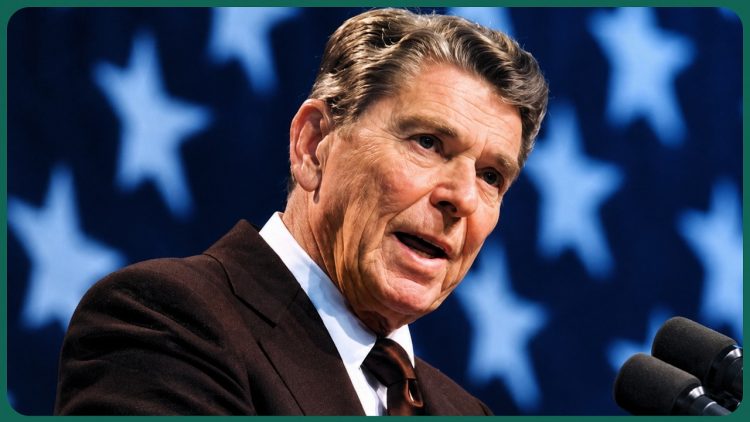
Ronald Reagan is one of the most consequential and most contested presidents in American history. To his supporters, he revived American confidence, rebuilt its economy, and won the Cold War. To his critics, he deepened inequality, ignored crises, and left a legacy of debt and division. This documentary, running nearly three hours, examines the full arc of his presidency — its triumphs, its scandals, and its long shadow over the decades that followed.
The film begins with the economy. “Reaganomics” — the supply-side programme of tax cuts, deregulation, reduced government spending, and tight money — is presented as the defining domestic project of the administration, and the documentary examines both its intentions and its effects. It looks at who benefited and who did not, and at how the policies reshaped the relationship between government, business, and ordinary Americans. The PATCO strike, in which Reagan fired striking air traffic controllers, is treated as a turning point in American labour relations, a moment that signalled a new era in how employers could treat organised labour.
On foreign policy, the film follows the administration’s two great dramas: the Cold War and the Middle East. It examines Reagan’s nuclear diplomacy with the Soviet Union — the arms build-up, the rhetoric, and the eventual negotiations — and asks how much of the Cold War’s end can be credited to American policy and how much to forces inside the Soviet Union itself. The 1983 Beirut barracks bombing, in which 241 American servicemen were killed, is presented as a turning point for American involvement in the Middle East, one whose consequences are still being felt.
Running through the film is the Iran-Contra scandal, the covert operation in which the administration secretly sold arms to Iran, then under an arms embargo, in exchange for the release of American hostages, and diverted the proceeds to fund the Contras in Nicaragua in defiance of Congress. The documentary lays out the arrangement, the investigations, and the convictions of several administration officials, and explores what the scandal revealed about the administration’s attitude to congressional oversight and to the law. It is, the film argues, the episode that most complicates the heroic version of the Reagan story — and the one that raises the hardest questions about executive power.
What the Film Explores
The documentary explores the tension between Reagan the symbol and Reagan the president. As a communicator, Reagan was unmatched: he gave Americans a story about their country that many of them wanted to believe. As a president, he presided over policies and decisions whose effects were mixed and contested. The film holds both of those realities together, refusing to choose between them, and asks what it means that a presidency can be both inspiring and damaging at the same time.
It also explores the long-term influence of the 1980s on the present. The economic policies, the approach to the Soviet Union, the entanglements in the Middle East, the expansion of executive power — the film argues that the world of the decades after Reagan was shaped by decisions made in his White House, for better and for worse. Understanding Reagan, it suggests, is not an exercise in nostalgia. It is a way of understanding the country we live in now.
Key Themes & Topics Examined
- The economic policies of “Reaganomics” and their societal impact.
- The administration’s response to the PATCO strike.
- Diplomatic and military strategies concerning the Soviet Union and the Cold War.
- The 1983 Beirut barracks bombing and its implications for Middle Eastern foreign policy.
- The Iran-Contra affair and its political ramifications.
- The long-term influence of Reagan’s presidency on American and global affairs.
- The tension between Reagan as a communicator and Reagan as a policymaker.
Archival & Investigative Sources
- The documentary draws on historical records and analysis of defining moments of the Reagan presidency.
- It examines contradictions and covert dealings associated with the administration.
Recommended Companion Viewing
Explore authoritative investigative documentaries on related historical events and investigative subjects.

Rare Footage From History's Biggest Turning Points
Rare Footage From The 20th Century's Most Critical Turning Points
Napoleon's Greatest Gamble: Return from Elba
New London School Explosion: The American Nightmare You've Probably Never Heard Of
Frequently Asked Questions
What were the central tenets of “Reaganomics”?
“Reaganomics” referred to the economic policies promoted by U.S. President Ronald Reagan during the 1980s, characterized by supply-side economics. Key pillars included reducing the growth of government spending, cutting the federal income tax and capital gains tax, reducing government regulation, and tightening the money supply to reduce inflation.
What was the significance of the Iran-Contra scandal?
The Iran-Contra scandal involved the Reagan administration’s secret arrangement to facilitate the sale of arms to Iran, which was then subject to an arms embargo, in exchange for the release of American hostages. Funds from these sales were subsequently diverted to illegally support the Contras, a right-wing rebel group in Nicaragua. The scandal led to investigations and convictions of several administration officials, raising questions about executive accountability and adherence to congressional oversight.
What was the PATCO strike?
The PATCO strike was a strike by air traffic controllers that Reagan ended by firing the strikers, a moment the film treats as a turning point in American labour relations.
What was the Beirut barracks bombing?
In 1983, a bombing of the U.S. Marine barracks in Beirut killed 241 American servicemen, a turning point for American involvement in the Middle East.