San Bernardino Train Crash: What Caused This 100mph Runaway Train?
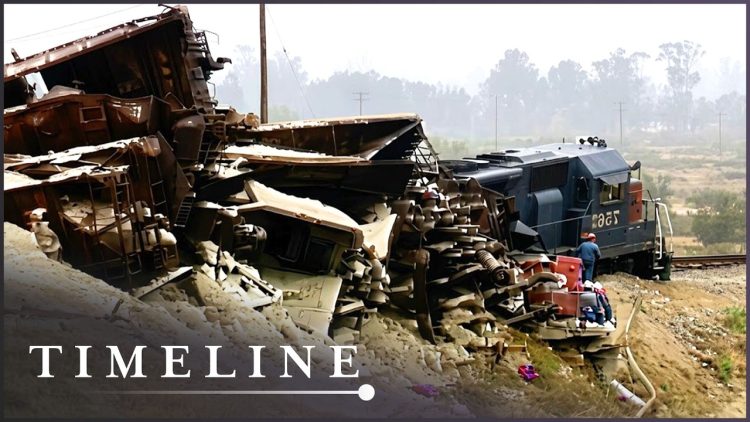
On 12 May 1989, Southern Pacific freight train 7551 came down the Cajon Pass into San Bernardino, California, at more than 100 mph — and derailed into a residential neighbourhood. Four people were killed and seven homes destroyed. Thirteen days later, the same place was hit again.
A pipeline damaged in the crash ruptured and ignited, setting the neighbourhood on fire. This Timeline film traces the chain of errors behind both disasters: cargo weight miscalculated, brakes failing, oversight lapsing — and asks what the official investigations found.
Key Themes & Topics Examined
- Train 7551 and the Cajon Pass, 12 May 1989
- A runaway train at over 100 mph
- Four killed, seven homes destroyed
- A pipeline rupture and fire thirteen days later
- Weight, brakes and oversight
Archival & Investigative Sources
- Eyewitness accounts from residents and first responders.
- Official reports and findings from accident investigations.
- Archival footage of the derailment site and subsequent fire.
- Expert analysis on railway engineering and accident reconstruction.
Recommended Companion Viewing
Explore authoritative investigative documentaries on related historical events and investigative subjects.

Frequently Asked Questions
What was the primary cause of the San Bernardino train derailment?
The primary cause of the derailment was attributed to fatal weight miscalculations of the train’s cargo and subsequent brake failures, which led to the train exceeding safe operating speeds down the Cajon Pass.
How many fatalities resulted from the initial train crash?
The initial train derailment on May 12, 1989, resulted in four fatalities.
What secondary disaster occurred after the train crash?
Thirteen days after the derailment, a damaged underground pipeline, compromised by the initial crash, ruptured and ignited, causing a large fire in the same San Bernardino neighborhood.