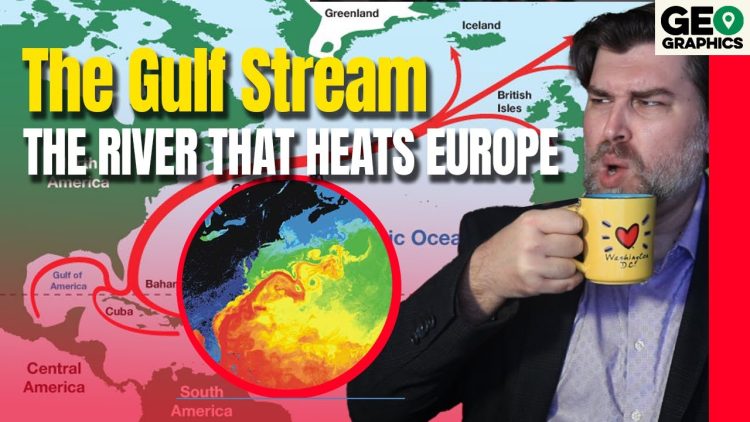
The Gulf Stream: Warming the North Atlantic
The Gulf Stream is one of the most powerful currents on Earth, carrying warm water from the Gulf of Mexico along the eastern coast of North America and across the Atlantic toward Europe. This Geographics film follows its path and explains why it matters so much to the climate of Western Europe, where it softens winters far beyond what the latitude alone would suggest.
Drawing on oceanographic data, historical charts and research from organisations such as NOAA and WHOI, the film looks at how the current is warming and shifting, and what those changes could mean for regional and global climate. It sets out the science behind the temperature, speed and depth of the current, and the consequences if its flow continues to change.
Key Themes & Topics Examined
- The geographical path and physical properties of the Gulf Stream
- How the current was mapped and understood over time
- The Gulf Stream’s influence on the climate of Western Europe
- Scientific findings on the warming and shifting of the current
- What changes in the current could mean for the environment
Archival & Investigative Sources
- Historical charts and navigational records related to the Gulf Stream.
- Oceanographic data and climate models.
- Scientific studies and research papers on ocean currents and climate change.
- Reports from organizations such as NOAA and WHOI.
Recommended Companion Viewing
Explore authoritative investigative documentaries on related historical events and investigative subjects.

Raja Ampat: Life in the Coral Kingdom
Forgotten Islands: The Last Coral Paradise
Wonder Shore: Africa's Wild Paradise
Wonder Shore: Africa's Most Spectacular Coastline
Frequently Asked Questions
What is the Gulf Stream?
The Gulf Stream is a strong, warm ocean current that flows from the Gulf of Mexico, along the eastern coast of North America, and across the Atlantic Ocean towards Europe.
How does the Gulf Stream affect climate?
The Gulf Stream transports warm water and heat from the tropics to higher latitudes, significantly influencing the climate of Western Europe by moderating temperatures and contributing to milder winters than would otherwise be expected at those latitudes.
Are there observed changes in the Gulf Stream?
Scientific studies have indicated that the Gulf Stream is experiencing warming and shifts in its flow patterns, with ongoing research investigating the causes and potential long-term implications of these changes.