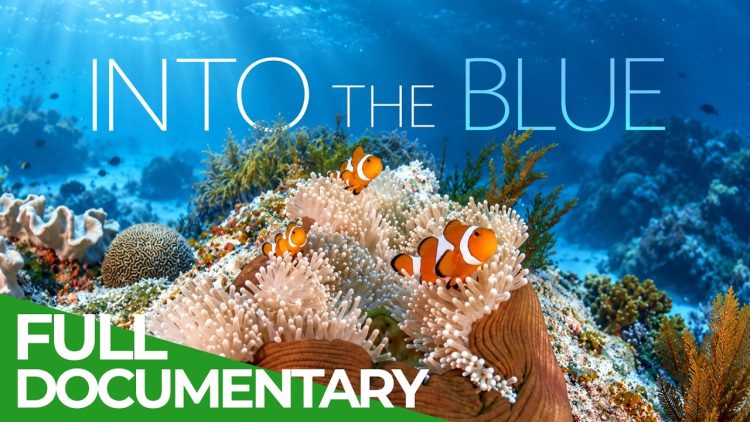
Forgotten Islands: The Last Coral Paradise
Welcome to the Forgotten Islands, also known as the Southeast Moluccas or Maluku Tenggara, in Eastern Indonesia, where untouched coral reefs are alive with extraordinary encounters. This is a corner of the ocean that most maps pass over and most travellers pass by, a scatter of remote islands in the Banda Sea that sit at the heart of the Coral Triangle, the richest marine region on Earth. The film dives into waters that are rarely filmed, and finds a reef system that looks the way coral reefs looked before the pressures of the modern world reached them.
The Coral Triangle is the global centre of marine biodiversity, a region spanning the waters of Indonesia, Malaysia, the Philippines, Papua New Guinea, the Solomon Islands and Timor-Leste. It holds more species of coral and reef fish than anywhere else on the planet, and the Forgotten Islands sit at its eastern edge, in the Banda Sea between Alor and Raja Ampat. The islands are called forgotten because the boats travelling between those better-known destinations simply pass them by, and that neglect has been their protection: with little tourism, little fishing pressure and almost no development, their reefs have stayed close to pristine.
The film follows the life of the reef, and it is crowded. Cuttlefish battle for a mate, flashing colour and pattern at each other in contests that are as much display as combat. Venomous sea snakes wind through the coral, hunting in the crevices where fish hide. Sharks patrol the reef edge, barracudas hang in silver schools in the blue water, and a gentle dugong, the shy sea cow of the Indo-Pacific, grazes the seagrass meadows. It is a portrait of a reef at full strength, where every niche is filled and every animal has its place.
The islands themselves are part of the story. The Forgotten Islands stretch roughly a thousand kilometres across the Banda Sea, an arc of volcanic atolls, isolated seamounts and limestone formations that rarely appear on any itinerary. Cold, nutrient-rich water wells up from depths of more than seven thousand metres, feeding reef systems of unusual density and variety. Some of the islands are active volcanoes rising from the deep sea, and their surrounding reefs are among the most dramatic dive sites in Indonesia, while others are tiny atolls in the open ocean, with walls encrusted in giant sea fans and barrel sponges.
What the Film Explores
The film explores the reef itself first, and it treats the animals as the main characters. The cuttlefish are the opening act, and the film shows their battles for a mate in full: males flashing bands of colour, extending their arms, and trying to out-display their rivals without a fight to the death. The sea snakes come next, and the film follows them as they hunt through the reef, their venom making them among the most feared animals in the sea, even though they are shy and rarely threaten divers. The sharks and barracudas are the reef’s predators, and the film shows them patrolling the drop-offs where the reef meets the open ocean.
A second thread follows the dugong, and the film gives it the gentlest treatment. Dugongs are slow, shy grazers that feed on seagrass, and they are endangered across much of their range. The waters of Southwest Maluku are one of their strongholds: a 2025 expedition by Indonesia’s Ministry of Marine Affairs and Fisheries and WWF found what is believed to be the largest documented dugong pod in the world, thirty-two animals in a single area off Romang island. The film’s encounter with a dugong is the emotional centre of the journey, a reminder that the reef is not just coral and fish, but a home for animals that have almost nowhere left to go.
A third thread follows the geography, and the film is interested in why this reef is still intact. The answer is isolation, and the film shows what isolation means in practice: islands with small populations living on traditional fishing and cultivation, supplies shipped in from distant towns, and almost no dive tourism. The Banda Sea is highly seasonal, and the best conditions come in the short windows between the monsoons, which limits the number of boats that can reach the islands at all. The film treats that difficulty as a blessing, and asks what will happen when the boats start coming in greater numbers.
Key Themes & Topics Examined
- The Forgotten Islands, also known as the Southeast Moluccas or Maluku Tenggara
- The Coral Triangle, the global centre of marine biodiversity
- Cuttlefish battling for a mate, flashing colour and pattern
- Venomous sea snakes hunting through the reef
- Sharks and barracudas patrolling the reef edge
- The gentle dugong, grazing the seagrass meadows
Production & Background
The film is a Free Documentary – Nature production, part of the channel’s series on the natural world. Free Documentary – Nature is the nature channel of the Free Documentary network, which aims to provide high-quality documentaries on YouTube for free, working with renowned filmmakers and production studios and using the latest camera technology.
Recommended Companion Viewing
Explore authoritative investigative documentaries on related historical events and investigative subjects.

High-Tech Shark Deterrence - Australia's New Strategy for Safe Beaches
Wonder Shore: Africa's Wild Paradise
Wonder Shore: Africa's Most Spectacular Coastline
Africa’s Wildest Coast: Life At The Sweeping Edge
Frequently Asked Questions
What is the film about?
The coral reefs of the Forgotten Islands in Eastern Indonesia, also known as the Southeast Moluccas, one of the richest and least disturbed underwater worlds on Earth.
Where are the Forgotten Islands?
In the Banda Sea in Eastern Indonesia, between Alor and Raja Ampat, at the heart of the Coral Triangle. They are also known as the Southeast Moluccas or Maluku Tenggara.
What animals does the film show?
Cuttlefish battling for a mate, venomous sea snakes, sharks, barracudas and a gentle dugong, among the many species of the reef.
Why are the reefs still intact?
Because the islands are remote and rarely visited, with little tourism or fishing pressure, so their reefs have escaped the damage seen elsewhere in the Coral Triangle.