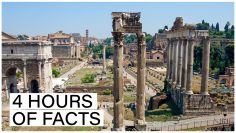
The Most Disastrous Emperors In Roman History
This documentary examines the factors contributing to the eventual decline of the Roman Empire. It investigates the establishment of the Roman imperial system under Augustus and analyzes the reigns of emperors identified as contributing to the empire’s instability. The program also explores the impact of early Eastern religious movements on the Roman state.
The documentary focuses on the period of Roman history characterized by its peak influence, known as the Pax Romana, and subsequently investigates the internal and external pressures that led to its eventual collapse. It details the transition from a period of stability and prosperity to one marked by imperial tyranny and vulnerability.
Key Themes & Topics Examined
- The establishment and structure of the Roman imperial system.
- The concept and historical period of the Pax Romana.
- The reigns and policies of specific Roman emperors.
- Factors contributing to the decline and eventual collapse of the Roman Empire.
- The influence of emerging religious movements on Roman society and governance.
Archival & Investigative Sources
- Historical accounts and analyses of the Roman Empire.
- Discussions of imperial governance and societal structures.
- Explorations of religious developments within the Roman world.
Frequently Asked Questions
What was the Pax Romana?
The Pax Romana was a period of relative peace and minimal expansion by military force experienced by the Roman Empire from 27 BCE to 180 CE. It was initiated by Augustus and characterized by stability and prosperity.
Who was Augustus?
Augustus was the first Roman emperor, reigning from 27 BCE until his death in 14 CE. He is credited with establishing the Roman imperial system and initiating the Pax Romana.
What factors contributed to the collapse of the Roman Empire?
Factors contributing to the collapse of the Roman Empire include internal political instability, economic challenges, military overextension, external invasions, and societal changes, including the rise of new religious movements.