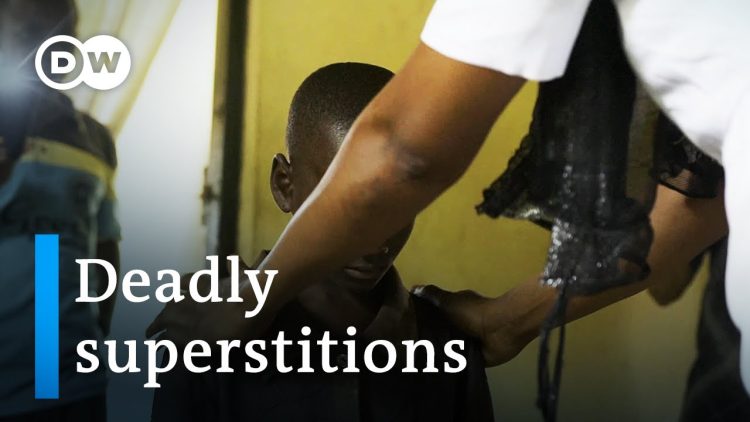
Deadly superstitions – Nigeria’s “witch children”
Children are being banished, raped, and even murdered. Aid organizations estimate that thousands of boys and girls are accused of being witches every year. Often, it is their own parents who think their sons or daughters are possessed by demons.
In the state of Akwa Ibom in southeastern Nigeria, it is common for children to be branded witches and face neglect and physical harm. Some Christian churches even perpetuate these superstitious beliefs, and self-proclaimed healers make good money performing strange exorcism rituals. The film shows a belief that has become an economy: accusations that cost children their homes, and rituals that pay the people who perform them.
David Umen and his wife Anja Lovén have made it their mission to fight this witch craze. They give the young victims a new home — but these boys and girls struggle to cope with the trauma of being abused and abandoned by their own parents. The film’s hardest scenes are not the accusations themselves but their aftermath: children who have been given shelter, and who still carry what was done to them.
The film is a report by Jan-Philipp Scholz, and it does not look away from the question at its centre: how does a belief like this take hold so widely that parents turn on their own children? The answer the film offers is not a single cause but a system — churches that repeat the belief, healers who profit from it, and families under pressure who are given a supernatural explanation for misfortune.
What the film leaves the viewer with is the work of Umen and Lovén, and the children they have taken in. A new home cannot undo abandonment, and the film is honest about that: the boys and girls struggle to cope with the trauma of being abused and abandoned by their own parents. But the home exists, the fight continues, and the film’s purpose is to make sure the rest of the world knows what is happening to these children.
What the Film Explores
The film explores the scale of the problem first. Aid organizations estimate that thousands of boys and girls are accused of being witches every year — and the accusation itself is the beginning of the harm. Children are banished, and the film states plainly that they are also raped and murdered. Often it is their own parents who think their sons or daughters are possessed by demons.
A second thread follows the belief in Akwa Ibom state in southeastern Nigeria, where it is common for children to be branded witches and to face neglect and physical harm. Some Christian churches even perpetuate these superstitious beliefs, and self-proclaimed healers make good money performing strange exorcism rituals. The film shows how a superstition survives: because institutions repeat it, and because people profit from it.
A third thread follows David Umen and his wife Anja Lovén, who have made it their mission to fight this witch craze. They give the young victims a new home — a direct, practical answer to abandonment. But the film does not pretend the rescue is the end of the story: the boys and girls struggle to cope with the trauma of being abused and abandoned by their own parents, and the film stays with that difficulty rather than turning the rescue into a happy ending.
Running through the film is the question of responsibility. The parents who accuse their children, the churches that perpetuate the belief, the healers who charge for exorcisms — the film distributes the blame across all of them, and it does so without sensationalism. Its argument is quieter and harder: that a belief becomes deadly not because one person holds it, but because a whole system holds it together. And the counterweight to that system, in the film, is two people who decided to give the children somewhere else to go.
Key Themes & Topics Examined
- Thousands of boys and girls accused of being witches every year
- Children banished, abused and murdered after accusations
- Parents who believe their own children are possessed by demons
- Akwa Ibom state in southeastern Nigeria
- Christian churches that perpetuate the superstitious beliefs
- Self-proclaimed healers profiting from exorcism rituals
- David Umen and Anja Lovén — a new home for the young victims
- The trauma of being abused and abandoned by their own parents
Production & Background
The documentary is a DW Documentary report by Jan-Philipp Scholz, filmed in Akwa Ibom state in southeastern Nigeria. It follows David Umen and his wife Anja Lovén in their work against the witch craze, and the children they have given a new home.
The film’s structure follows the problem and the response: first the accusations and the system that sustains them — the churches, the healers, the frightened parents — and then the people fighting back, and the children learning to live after abandonment.
Recommended Companion Viewing
Explore authoritative investigative documentaries on related historical events and investigative subjects.

The Pope’s mysterious army
Young Muslim women in Germany
Ludovic - Imam and gay
Frequently Asked Questions
What is this documentary about?
It reports on the children in Nigeria who are branded witches — thousands every year, according to aid organizations — and on David Umen and Anja Lovén, who are fighting to save them.
How many children are affected?
Aid organizations estimate that thousands of boys and girls are accused of being witches every year.
Where does this happen?
In the state of Akwa Ibom in southeastern Nigeria, where it is common for children to be branded witches and face neglect and physical harm.
Who profits from the belief?
Some Christian churches perpetuate the superstitious beliefs, and self-proclaimed healers make good money performing strange exorcism rituals.
What do David Umen and Anja Lovén do?
They have made it their mission to fight the witch craze and give the young victims a new home — though the children struggle to cope with the trauma of being abused and abandoned by their own parents.