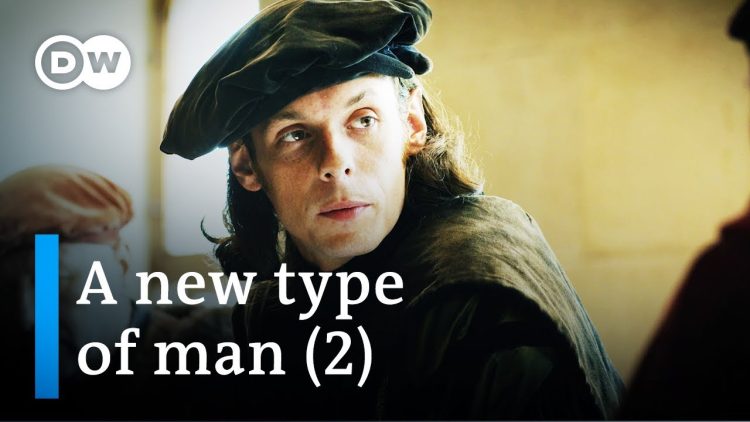
The Renaissance – The Age of Michelangelo and Leonardo da Vinci (2/2)
Watch Part 1: The Renaissance – The Age of Michelangelo and Leonardo da Vinci (1/2)
Beginning at the end of the 14th century, the Renaissance created a new type of man, triggering economic, scientific, technical, religious, social and cultural developments that are unique in history. This film is the second part of DW Documentary’s two-part journey through that age — the age of Michelangelo and Leonardo da Vinci — and it continues the search begun in Part 1 for the “Renaissance factor”: the combination of influences that made so much change so fast, and only once.
The Renaissance is an epoch unique in human history: never before have art, culture, economics and science developed so rapidly within a single century. The film follows that idea through the two artists whose names define the age: Michelangelo, whose works include the Sistine Chapel and David, and Leonardo da Vinci, painter of the Last Supper. Between them, they stand for the new type of man the Renaissance created.
The journey is a physical one as well as a journey through time. We travel with Michelangelo to the major construction site that was to become St. Peter’s Basilica, to the banking houses of the Medicis and to the workshop of Johannes Gutenberg. Each stop is a piece of the puzzle: the artist, the banker and the printer, each changing the world in a different way, and each depending on the others.
We examine some of the many innovations of the Renaissance, such as linear perspective, the printing press and double-entry bookkeeping. These are not presented as separate inventions but as parts of a single transformation — a new way of seeing, a new way of spreading knowledge and a new way of keeping track of money, all arriving at once.
We ask what these achievements mean to us today, and how — almost half a millennium later — we continue to benefit from the Renaissance factor. And we delve deeper with the help of spectacular reenactments and our special investigators: modern-day trendsetters, scientists, business tycoons, fashion designers and artists, who look at the Renaissance through the eyes of the present and find it still at work.
What the Film Explores
The film explores the second half of the question Part 1 opened: what was the catalyst — what is the Renaissance factor? The answer the two-part documentary builds towards is not a single cause but a convergence. In this second part, the search continues through the age of Michelangelo and Leonardo da Vinci, the moment when the new type of man the Renaissance created was most visible, and when art, culture, economics and science were advancing faster than ever before in a single century.
A second thread follows the two artists themselves and the works that have come to define the age. The Sistine Chapel and David belong to Michelangelo; the Last Supper belongs to Leonardo — works the film’s own subject matter places at the heart of the Renaissance story. Around them, the film keeps returning to the places where the age was made: the construction site of St. Peter’s Basilica, the banking houses of the Medicis and the workshop of Johannes Gutenberg.
A third thread follows the journey through time that runs through both parts: from Ancient Rome to the Crusades and the Black Death in the 14th century. Each of these events defined the developments of the Renaissance in a different way — Rome as the model to be rediscovered, the Crusades as the contact with a wider world, and the Black Death as the catastrophe that cleared the ground for something new. The film shows how an age of upheaval became an age of creation.
Running through the film is the question of what the Renaissance means today. Almost half a millennium later, we continue to benefit from the Renaissance factor — in the way we see, the way we print and read, and the way we do business. The film’s special investigators — modern-day trendsetters, scientists, business tycoons, fashion designers and artists — are there to make that connection visible, showing that the Renaissance is not a closed chapter of history but a way of thinking that is still at work in the present.
Key Themes & Topics Examined
- The Renaissance factor — the search continued
- The age of Michelangelo and Leonardo da Vinci — the Sistine Chapel, David and the Last Supper
- From Ancient Rome to the Crusades and the Black Death
- Michelangelo and the construction of St. Peter’s Basilica
- The banking houses of the Medicis
- Johannes Gutenberg’s workshop
- Linear perspective, the printing press and double-entry bookkeeping
- What the Renaissance means to us today
Production & Background
The documentary is a DW Documentary production and the second part of a two-part film about the Renaissance. It combines spectacular reenactments with the voices of its special investigators — modern-day trendsetters, scientists, business tycoons, fashion designers and artists — who examine the age from the perspective of the present. The first part of the film is also available on this site.
The film has been watched more than three million times on YouTube, a measure of how widely the story of the Renaissance still travels. Its structure follows the same journey as Part 1 — through time, from Ancient Rome through the Crusades and the Black Death, and through place, to St. Peter’s Basilica, the Medici banking houses and Gutenberg’s workshop — bringing the two-part search for the Renaissance factor to its conclusion in the age of Michelangelo and Leonardo da Vinci.
Recommended Companion Viewing
Explore authoritative investigative documentaries on related historical events and investigative subjects.

The missing Van Gogh
The magic of colors
Frequently Asked Questions
What is this documentary about?
It is the second part of DW Documentary’s two-part film about the Renaissance, continuing the search for the Renaissance factor — the combination of influences that made art, culture, economics and science develop faster in a single century than ever before in history.
Do I need to watch Part 1 first?
Part 1 opens the search for the Renaissance factor and introduces the journey from Ancient Rome through the Crusades and the Black Death; Part 2 continues it in the age of Michelangelo and Leonardo da Vinci. The two parts tell one story, so watching Part 1 first gives the full picture.
Who are the two artists in the title?
Michelangelo and Leonardo da Vinci, the two artists whose age the film covers — Michelangelo of the Sistine Chapel and David, and Leonardo, painter of the Last Supper.
What innovations does the film examine?
Linear perspective, the printing press and double-entry bookkeeping — a new way of seeing, sharing knowledge and counting wealth.
Who are the film’s special investigators?
Modern-day trendsetters, scientists, business tycoons, fashion designers and artists, who look at the Renaissance through the eyes of the present.