How much influence do the super rich have?
What does it mean for democracy when rich citizens can change an entire city? Do the interests of big donors always serve the common good? This film delves into the world of the super-rich and takes a hard look at how much influence they exert — not in the abstract, but through the concrete places and decisions their money touches.
In Kiel, a dispute has flared up over the Holstein stadium. Soccer patron Gerhard Lütje, founder of the CITTI trading company, wants to modernize the stadium — and turn it into a car-friendly business center at the same time. Critics find this approach environmentally unsustainable. But they are being ignored, they say. Kiel’s mayor Ulf Kämpfer of the SPD is in a tight spot: he must negotiate without scaring off financial backers, and the film shows just how narrow that room for manoeuvre really is.
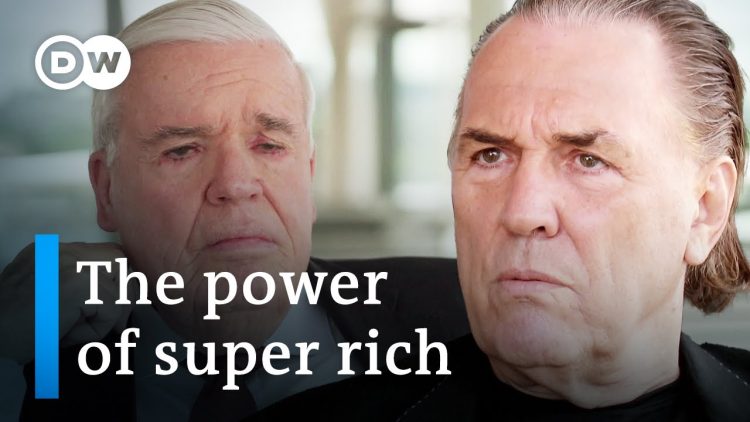
The film team meets billionaire Klaus-Michael Kühne, one of Germany’s richest men, at his luxury hotel on Hamburg’s Alster. The 85-year-old donates generously: he supports the HSV soccer club, runs a university in Hamburg’s HafenCity, wants to build an opera house and is a sponsor of the Elbphilharmonie concert hall. But Kühne does not pay any tax in Germany. That is because his official residence is Switzerland. “It’s a well-known fact that the state can’t do business properly,” says Kühne, who believes he can distribute his money better himself.
Lidl founder Dieter Schwarz donated a gigantic education campus to the city of Heilbronn — another case of a single wealthy individual reshaping a city’s public life. The film does not present these gifts as simple acts of generosity. It asks, again and again, who decides what a city needs, and what happens to democratic decision-making when the answer increasingly depends on the preferences of a few very rich people.
The film also gives voice to the other side of the argument. The daughter of a rich family involved in the “Taxmenow” initiative says the interests of big donors do not always serve the common good — and around 50 millionaires in the initiative are demanding that they finally be taxed fairly. Their presence in the film turns the question around: if even some of the wealthy think the system is broken, what is it about the system that needs to change?
What the Film Explores
The film explores the Kiel stadium dispute first, as a case study in how donor power works in practice. A soccer patron wants to modernize a stadium and add a car-friendly business centre; critics call the plan environmentally unsustainable and say they are being ignored; the mayor must keep the financial backers on board. The stadium becomes a small, concrete picture of a much larger question: who actually decides what a city becomes?
A second thread follows Klaus-Michael Kühne and the logic of philanthropy. His donations — to a soccer club, a university, an opera house, a concert hall — are real, and the film does not dismiss them. But it sets them next to the fact that he pays no tax in Germany, and next to his own words: that the state cannot do business properly, and that he can distribute his money better himself. The question the film poses is whether a city should depend on one man’s judgment about what is worth funding.
A third thread follows Dieter Schwarz and the education campus in Heilbronn — a gift on a scale that transforms a city’s educational landscape in a single stroke. The film treats it as the same pattern in a different form: public goods, provided privately, on terms set by the donor. The benefit is obvious; the film’s interest is in the price, and in who pays it.
Running through the film is the Taxmenow initiative, in which around 50 millionaires are demanding to be taxed fairly. Their argument is the film’s sharpest one: that the interests of big donors do not always serve the common good, and that a democracy which relies on the generosity of the super-rich has already given up part of its ability to decide for itself. The film leaves the viewer with that tension unresolved — the gifts are real, the influence is real, and both are true at the same time.
Key Themes & Topics Examined
- The Holstein stadium dispute in Kiel and soccer patron Gerhard Lütje
- Mayor Ulf Kämpfer negotiating without scaring off financial backers
- Billionaire Klaus-Michael Kühne and his donations in Hamburg
- Kühne’s Swiss residence and paying no tax in Germany
- Lidl founder Dieter Schwarz and the education campus in Heilbronn
- The Taxmenow initiative — around 50 millionaires demanding fair taxation
- Do the interests of big donors always serve the common good?
- Philanthropy versus democracy: who decides what a city needs?
Production & Background
The documentary is a DW Documentary production filmed in Kiel, Hamburg and Heilbronn. It follows the stadium dispute in Kiel, meets Klaus-Michael Kühne at his luxury hotel on Hamburg’s Alster, and traces Dieter Schwarz’s campus donation in Heilbronn, alongside the voices of critics and of the Taxmenow initiative.
The film’s structure follows its central question from the specific to the general: a stadium, a billionaire, a campus — and then the democratic question underneath all three, about what happens when public life depends on private fortunes.
Recommended Companion Viewing
Explore authoritative investigative documentaries on related historical events and investigative subjects.

Off to Scotland - Happiness, Solitude and Oysters
Overworked Underpaid: The Strange Economics of Essential Jobs
Luxury Living and the Ultra-Rich - When Money is No Object
Why Can't Kids Read Anymore?
Frequently Asked Questions
What is this documentary about?
It delves into the world of the super-rich and asks how much influence they exert — and what that means for democracy when rich citizens can change an entire city.
What is happening in Kiel?
A dispute has flared up over the Holstein stadium. Soccer patron Gerhard Lütje wants to modernize it and turn it into a car-friendly business center; critics find the approach environmentally unsustainable and say they are being ignored.
Who is Klaus-Michael Kühne?
One of Germany’s richest men, aged 85. He supports the HSV soccer club, runs a university in Hamburg’s HafenCity, wants to build an opera house and sponsors the Elbphilharmonie — but pays no tax in Germany, because his official residence is Switzerland.
What did Dieter Schwarz donate?
The Lidl founder donated a gigantic education campus to the city of Heilbronn.
What is Taxmenow?
An initiative in which around 50 millionaires are demanding that they finally be taxed fairly — because, as one member puts it, the interests of big donors do not always serve the common good.