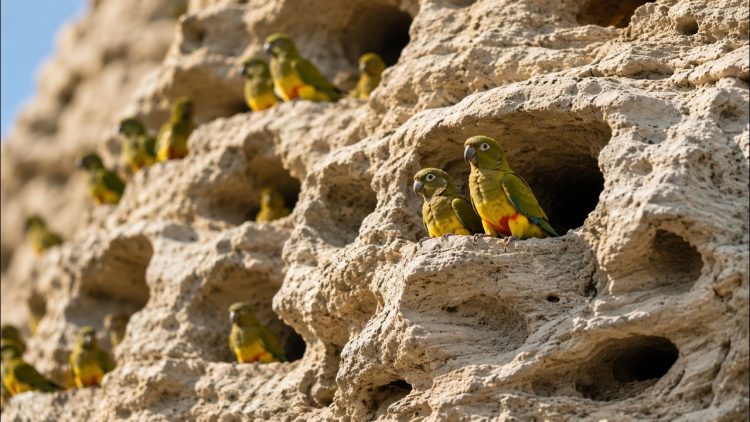








Nature’s Social Network
In the wild, going it alone is often a bad strategy. This film looks at the animals that survive by working together: wolves that hunt as a pack, buffalo that defend the herd as one, monkeys and gorillas that raise their young communally — and the insect societies, from bee colonies to weaver ants and social spiders, that run on cooperation at a scale we barely understand.
The film moves from the obvious to the surprising — parrots that learn from each other, baboons and lemurs with strict hierarchies, spiders that share a web instead of eating each other — and shows what cooperation buys: protection, food, and young that actually make it to adulthood. It is a tour of nature’s social networks, and of the advantages of living in a group.
Key Themes & Topics Examined
- Animal social structures, from wolf packs to bee colonies.
- Cooperative hunting and collective defence.
- Communal raising of young.
- Hierarchies in baboons, lemurs and other primates.
- The survival advantages of group living.
Archival & Investigative Sources
- Field observations of animal behavior.
- Wildlife cinematography of social species in their habitats.
Recommended Companion Viewing
Explore authoritative investigative documentaries on related historical events and investigative subjects.

Attack and Defend: Cold Blooded Killers
Destination Wild: The Sahara
Extreme Nature: Earth’s Wildest Frontiers
Call of the Wild
Frequently Asked Questions
What is the central theme of the documentary?
The central theme is the role of social interaction and cooperation in the survival of various animal species.
Which animal groups are featured in the program?
The program features wolves, buffalo, monkeys, gorillas, bees, weaver ants, social spiders, parrots, baboons, and lemurs.
What aspects of animal behavior are explored?
The documentary explores aspects such as coordinated hunting, collective defense, communal raising of young, and hierarchical social organizations.