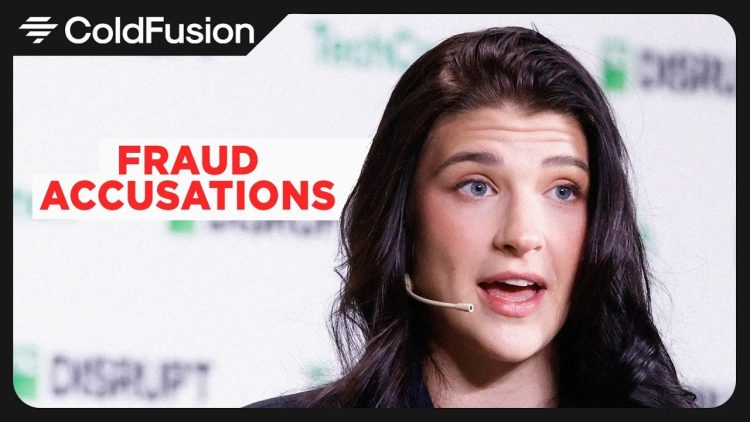
Bill Gates’ Daughter is in Trouble
Phoebe Gates, the youngest daughter of Bill and Melinda Gates, built an AI shopping startup called Phia with her Stanford roommate Sophia Kianni, and for a while the story looked like a perfect one: two young founders, a clever product, famous investors, and a valuation in the hundreds of millions. Then, in August 2026, a Bloomberg investigation published findings that changed the story entirely, and this episode of ColdFusion, presented by Dagogo Altraide, walks through what happened, how the company made its money, and what the case says about startup culture. The video’s title frames the story as trouble for Gates, and no charges have been filed against either founder.
Phia launched in April 2025 as a free AI-powered shopping tool, a mobile app and a browser extension that promised to help shoppers find the best prices. The pitch was simple and appealing: the tool would compare prices across retailers, flag the best deals, and earn its money from affiliate commissions, the small payments retailers make when a shopper buys through a referral link. The founders, who had met as randomly assigned roommates at Stanford, raised money quickly. According to the reporting the episode draws on, Phia raised 43.5 million dollars and reached a valuation of 185 million dollars.
The problem, according to Bloomberg’s investigation, was in how those commissions were being earned. The investigation found that Phia’s extension was running a hidden scheme known as cookie stuffing: it was placing affiliate tracking cookies on shoppers’ browsers without their knowledge, so that Phia claimed credit, and commission, for sales it had never driven. The episode explains the mechanism in detail, working through three separate features of the product that each contributed to the scheme. Affiliate marketing works on trust: retailers pay for referrals, and if a tool can claim credit for sales it did not cause, it is taking money for nothing.
Bloomberg’s reporting was built on testing and documents. Working alongside Ben Edelman, a former Harvard Business School professor and a leading researcher in affiliate-marketing fraud, Bloomberg tested Phia’s extension across more than fifty retail websites. It also obtained internal Slack messages shared by anonymous employees, which the episode presents as showing that the founders were aware of what was happening: on 18 December 2025, Phoebe Gates wrote to her technical team concerned that Phia was not capturing enough commissions from Etsy. Bloomberg reached out to Phia on 7 July 2026, and the same day the company switched the features off.
The consequences were swift. When the features were switched off, the episode reports, Phia’s revenue collapsed, a sign of how much of its income had depended on them. A follow-up investigation published on 11 August 2026 undercut the company’s account further. Phia said the features had been removed, that transactions would be reversed, and that it was hiring a new head of compliance. The episode also draws a comparison with the Honey and PayPal litigation, in which a browser extension was accused of similar practices, and with a 2014 wire-fraud precedent. A corporate attorney quoted in the coverage noted that cookie stuffing typically constitutes federal wire fraud in United States courts, carrying a maximum penalty of up to twenty years in prison, though the episode stresses that this is potential exposure, not a charge that has been brought.
What the Film Explores
The film explores the mechanics of affiliate-marketing fraud, and it does so carefully, explaining how tracking cookies work, how a browser extension can claim credit for a sale, and why the practice is so hard for shoppers and retailers to detect. Its value as a piece of explanation is that it takes a technical subject and makes it understandable, walking through the three features Bloomberg identified and showing how each one contributed to the same result. For viewers who have never thought about how shopping extensions make money, it is a clear introduction to an industry built on invisible commissions.
It also explores the culture that produced the case. The episode asks why someone with every advantage would take such a risk, and its answer is about founder worship: a startup world in which being a founder is treated as a mark of genius, in which raising money is treated as proof of value, and in which the pressure to show growth can push young companies towards shortcuts.
A third thread is the question of what counts as proof. The episode is built on Bloomberg’s reporting, on tests carried out with an academic expert, and on internal messages, and it is careful to distinguish what has been established from what has not. No charges have been filed against Gates or Kianni. The film’s closing point is that the gap between a startup’s public narrative and its internal revenue drivers is a story worth understanding, whatever the legal outcome turns out to be.
Key Themes
- Phia, the AI shopping tool founded by Phoebe Gates and Sophia Kianni
- How affiliate commissions work and how a shopping extension earns them
- Cookie stuffing: claiming credit for sales the tool never drove
- Bloomberg’s investigation and its testing across more than fifty retailers
- The internal Slack messages and what they show about awareness
- The collapse in revenue when the features were switched off
- The comparison with Honey and PayPal and the 2014 wire-fraud precedent
- Founder worship and the pressures that push startups towards shortcuts
Production and Background
Bill Gates’ Daughter is in Trouble is an episode of ColdFusion, the technology channel created and presented by Dagogo Altraide, with Tawsif Akkas as producer. The episode runs for about eighteen minutes and was published in October 2026, a few months after Bloomberg’s investigations appeared.
The facts at the centre of the story are a matter of public record. Phia was founded by Phoebe Gates and Sophia Kianni, launched in April 2025, and raised 43.5 million dollars at a valuation reported at 185 million dollars. Bloomberg published its first investigation in August 2026 and a follow-up on 11 August 2026, after reaching out to the company on 7 July 2026. No charges have been filed against either founder.
Recommended Companion Viewing
Explore authoritative investigative documentaries on related historical events and investigative subjects.

Output 1-2
War World Three
How Germany's elite research institution fails young scientists
Epstein Goes Africa With Chris Tucker & Clinton
Frequently Asked Questions
What is Phia? An AI-powered shopping tool, a mobile app and browser extension, founded by Phoebe Gates and Sophia Kianni, which promised to help shoppers find the best prices and earned money from affiliate commissions.
What is cookie stuffing? The practice of placing affiliate tracking cookies on a shopper’s browser without their knowledge, so that a tool claims commission for sales it did not drive. It is a form of affiliate-marketing fraud.
What did Bloomberg find? That Phia’s extension was running a hidden cookie-stuffing scheme across three features, that the company switched the features off the day Bloomberg contacted it, and that its revenue collapsed when they were removed.
Has anyone been charged? No. No charges have been filed against Phoebe Gates or Sophia Kianni. The legal discussion in the episode, including the wire-fraud precedent, concerns potential exposure, not an indictment.
What happened to Phia? The company said it had removed the features, would reverse transactions, and was hiring a new head of compliance.