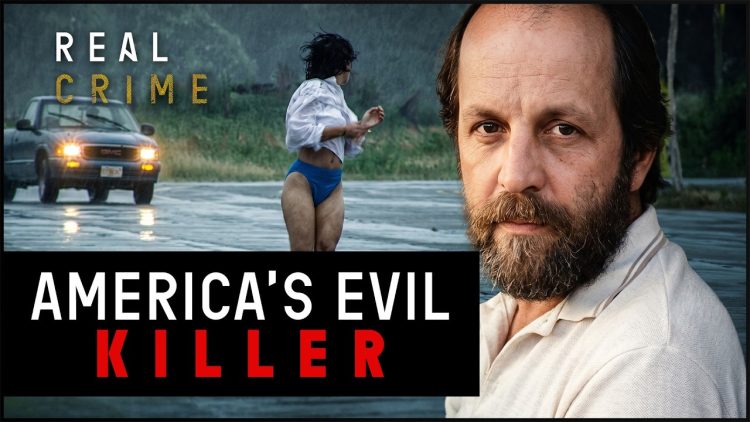
Inside The FBI’s Hunt For America’s Most Disturbing Serial Killers
Some killers leave so little trace, across so much ground, that only the FBI can catch them. This film from Real Crime brings together three of the Bureau’s most disturbing serial-killer hunts, each a race against time in a different corner of America.
The first case takes place in the rugged Alaskan wilderness, where a twisted predator targeted young women and hunted them like animals for sport. The killer was Robert Hansen, a respected Anchorage baker and avid big-game hunter who, through the 1970s and early 1980s, abducted women from around Anchorage, flew them in his private plane to remote country, and set them loose in the woods before tracking them down with a rifle. His victims were mostly sex workers and exotic dancers, women he believed no one would miss. The case broke in June 1983, when 17-year-old Cindy Paulson escaped from Hansen and ran, barefoot and handcuffed, to safety. FBI profiler John Douglas, a pioneer of criminal profiling, built a portrait of the killer from the bodies found in shallow graves along the Knik River, and a search of Hansen’s home turned up an aviation map marked with crosses at burial sites. Hansen confessed to killing 17 women, was sentenced to 461 years plus life in prison in 1984, and died in prison in 2014.
The second case is a disappearance in South Carolina, where a massive 500-square-mile search was launched when a 17-year-old girl vanished from her driveway in broad daylight, leaving behind only a running car and a taunting phone call to her family. The film follows the search as it widens from a single street to half a thousand square miles of countryside, with local police turning to the FBI for help. It is the most agonising kind of hunt in the film, because the investigators are chasing a shadow, and every hour narrows the chance of bringing the girl home alive.
The third case crosses state lines in the most literal sense. The killer was Christopher Wilder, a wealthy Australian-born businessman and successful race car driver who used the promise of fame to lure aspiring models into a terrifying nightmare. On 26 February 1984 he raced a Porsche at the Miami Grand Prix, and that same day 20-year-old Rosario Gonzalez, a part-time model and Miss Florida contestant working at the race, vanished. Wilder posed as a photographer and promised modelling contracts that did not exist. Over the next six weeks he abducted and murdered women across the country. The FBI placed him on its Ten Most Wanted Fugitives list on 5 April 1984. It ended on 13 April 1984 at a petrol station in Colebrook, New Hampshire, where state troopers recognised him and Wilder was killed in the struggle that followed. He was never tried.
What binds the three cases together is the way they were solved. In each one, local police reached their limits: the Alaskan wilderness was too vast, the South Carolina search too wide, the Wilder spree too fast-moving and too spread out. The FBI brought what only a federal agency could — profilers who could read a killer from the evidence he left behind, laboratories that could match bullets from bodies found a year apart, and the authority to follow a suspect across state lines.
What the Film Explores
The film explores how the FBI learned to hunt serial killers. When Hansen was killing in Alaska, criminal profiling was still a young discipline, and John Douglas’s portrait of the killer — an experienced hunter with a public reputation to protect — was an early demonstration that a killer’s psychology could be read from his crimes. The lessons fed directly into the behavioural analysis units the Bureau uses today.
It also explores the geography of American murder. Hansen used the Alaskan wilderness as a weapon, choosing ground so remote that bodies could lie undiscovered for years. The South Carolina case shows the opposite problem: a crime in an ordinary driveway, in daylight, and a search area that swallowed whole counties. Wilder’s spree shows a third kind of geography, the American highway, a killer who kept moving and left victims in a dozen states, so that no single police force ever saw the whole pattern. In each case, distance was the killer’s ally.
The film pays close attention to the victims, and to why some of them were overlooked for so long. Hansen chose women on the margins of Anchorage society, whose disappearances were easy to dismiss. Wilder chose young women with dreams of modelling, willing to trust a charming stranger with a camera. The film’s argument is that serial killers succeed when their victims are treated as less important than other people’s, and the FBI’s job begins with refusing to make that distinction. It also shows what a manhunt costs: the Wilder hunt filled the news for six weeks and ended in a shootout, and the Hansen case took a decade to close.
Key Themes
- The FBI’s role when a crime crosses state lines or outgrows local policing.
- Criminal profiling, and how John Douglas’s work on the Hansen case helped shape it.
- Robert Hansen, the Anchorage baker who hunted women in the Alaskan wilderness.
- Christopher Wilder, the race car driver who used modelling promises to lure victims.
- A 500-square-mile search for a 17-year-old girl taken from her own driveway.
- How killers use distance, wilderness and highways to hide their crimes.
- Why some victims are overlooked, and what that costs an investigation.
- The human price of a manhunt, for families, agents and whole communities.
Production and Background
The film is a Real Crime compilation, bringing three separate FBI cases into a single two-and-a-half-hour account, each case standing on its own while the three together show how federal hunting of serial killers developed. The Hansen and Wilder cases are among the best-documented serial-killer investigations in American history: Hansen’s crimes were the subject of the 2013 film Frozen Ground, and Wilder’s spree was one of the most widely reported manhunts of the 1980s.
Recommended Companion Viewing
Explore authoritative investigative documentaries on related historical events and investigative subjects.

Cheating Groom Executes His Bride 2 Days Before Their Wedding
How Christa Pike Became the Youngest Woman on Death Row
Frequently Asked Questions
Who was Robert Hansen? An Anchorage baker and hunter who, in the 1970s and early 1980s, abducted women, flew them to the Alaskan wilderness and hunted them. He confessed to 17 murders and was sentenced to 461 years plus life in 1984.
How was Hansen caught? A 17-year-old victim, Cindy Paulson, escaped in June 1983, and FBI profiler John Douglas built a profile that matched Hansen. A search of his home uncovered a map marked with crosses at burial sites.
Who was Christopher Wilder? An Australian-born businessman and race car driver who, in February and March 1984, lured young women with false modelling promises and murdered them across several states, starting at the Miami Grand Prix.
How did the Wilder manhunt end? The FBI put Wilder on its Ten Most Wanted list in April 1984. He was killed on 13 April 1984 during a struggle with state troopers at a petrol station in Colebrook, New Hampshire.
What happened in the South Carolina case? A 17-year-old girl vanished from her driveway in daylight, leaving a running car behind, and a 500-square-mile search was launched. The film follows the search as investigators work with almost no physical evidence.