Congo’s blood minerals – The high price of high-tech
Without coltan, the digital world would grind to a halt. The mineral is used in cellphones, computers and countless other high-tech products, and a significant share of the world’s supply is mined in the eastern Democratic Republic of the Congo. This DW Documentary follows coltan’s journey from the Kivu mines to the global market, and exposes a system in which resource wealth, violence and economic interest are closely interwoven.
Coltan is short for columbite-tantalite, the ore from which tantalum is extracted, and tantalum is the reason the mineral matters. It makes the tiny capacitors that store and regulate charge inside almost every electronic device. With no easy substitute that works as well in so small a space, the world’s hunger for raw materials has made a dull black ore from central Africa so valuable that control of its mines is worth fighting over.
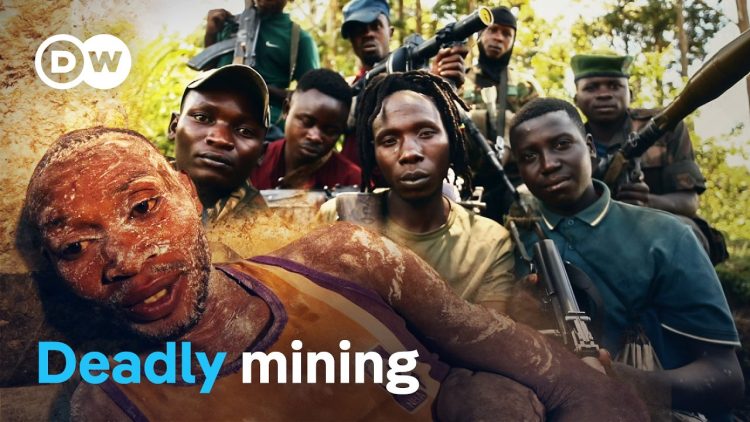
The consequences of that hunger are most visible in the eastern Congo, in the Kivu region, where the film is set. Armed groups fight for control over the lucrative deposits, and the men, women and children who mine the ore do so under threat, in life-threatening conditions. Much of the mining is artisanal, done by hand in open pits and tunnels with little safety equipment, for low pay. The film shows the people at the bottom of the chain, digging in mud and dust for a mineral bound for a phone.
From the mines, the film follows the mineral along the covert trading networks that deliver coltan to the global market. Ore changes hands many times on its way out of the Congo, crossing borders and passing through intermediaries until its origin is hard to trace. That opacity is the point: by the time coltan reaches the smelters, it is difficult for a buyer to know whether the tantalum in a phone was mined by a child under threat in Kivu or by a regulated operation elsewhere. The film argues this is not an accident of the trade but a feature of it, a system that keeps the violence at one end and the consumers at the other from ever meeting.
Consumers around the globe benefit from modern technology, and the film does not let them off. Every phone and laptop carries a supply chain that can often be traced back to the Kivu region and its mines, and the film asks what responsibility follows from that. It offers no simple answer, and does not pretend that refusing to buy a phone would fix the Congo. What it does, patiently and in detail, is show the chain, from the pit to the pocket, so that the question can no longer be avoided.
What the Film Explores
The film explores the paradox at the heart of the coltan trade: a mineral that makes the modern world possible is mined in one of its most violent places, and the wealth it creates does not stay with the people who dig it. The eastern Congo is rich in minerals and poor in almost everything else. Armed groups tax the mines, fight over them, and use the revenue to keep fighting, while the miners remain poor and the profits flow to traders, smelters and manufacturers abroad.
It also explores the human cost of artisanal mining. The film’s miners work without safety equipment, in pits that can collapse and tunnels that can flood, and many of them are children, working alongside their parents because the family needs the income. The work is dangerous, the pay is low, and the threat of violence is constant in a place where the law does not reach. The film lets the miners describe their own lives, and the description is enough.
The film looks closely at the trading networks that move coltan to the world market, and at how hard it is to make that trade transparent. Ore is bought, sold, mixed and re-exported across borders, and the paperwork is often unreliable. International rules now require companies in the United States and the European Union to check their supply chains for minerals from conflict areas, but the film shows how difficult that is in practice, when the ore passes through so many hands before it reaches a smelter.
Finally, the film explores the responsibility of the consumer. The tantalum in a phone is invisible, and its owner will never see the mine it came from, but the film argues that invisibility is itself part of the system. By following the mineral’s journey from the Kivu pits to the devices in our pockets, it makes the connection visible, and asks what a fair price for it would be.
Key Themes
- Coltan, the ore behind the tantalum in every phone and computer.
- The Kivu region of the eastern Democratic Republic of the Congo.
- Artisanal mining, and the men, women and children who do it under threat.
- Armed groups fighting for control of lucrative mineral deposits.
- Covert trading networks that move coltan to the global market.
- How mineral wealth fuels violence, not relief from poverty.
- The difficulty of tracing a supply chain across borders and intermediaries.
- The consumer’s share of responsibility for the high-tech trade.
Production and Background
The film is a DW Documentary production about the coltan trade in the eastern Democratic Republic of the Congo, following the mineral’s journey from the mines of the Kivu region to the global high-tech market. DW Documentary’s films are known for taking a single commodity and following it to its source, and this one applies that method to one of the most consequential supply chains in the modern economy. The film’s account of the mines, the armed groups and the trading networks is grounded in the reporting of journalists and researchers who have worked in the Kivu region.
The coltan trade has been a focus of international concern since the late 1990s, when the price of tantalum spiked and the world first learned where the mineral came from. The eastern Congo has been in conflict, on and off, for decades, and control of its minerals has driven that conflict throughout. The film does not pretend the trade can be fixed quickly, but it shows, in unusual detail, how the trade actually works, and that is the first step towards changing it.
Recommended Companion Viewing
Explore authoritative investigative documentaries on related historical events and investigative subjects.

How War Affects Civilians for Generations
North Korea's alliance with China and Russia
The Trump-Era Saudi-U.S. Relationship: An Insider's View
Afghanistan's raw materials - The race is on
Frequently Asked Questions
What is coltan? Coltan, short for columbite-tantalite, is the ore from which tantalum is extracted. Tantalum makes capacitors, the tiny components that store and regulate charge inside phones, computers and other electronics.
Where does coltan come from? A significant share of the world’s coltan is mined in the eastern Democratic Republic of the Congo, particularly the Kivu region.
Who mines it? Much of it is artisanal, done by hand by men, women and children, often under threat and in life-threatening conditions, for low pay.
How does coltan reach the global market? Through trading networks that move the ore across borders and through intermediaries, mixing it with ore from other sources, so its origin becomes hard to trace.
What can be done about the trade? International rules require companies to check their supply chains for minerals from conflict areas, but the film shows how difficult that is, and argues that transparency starts with understanding how the trade works.