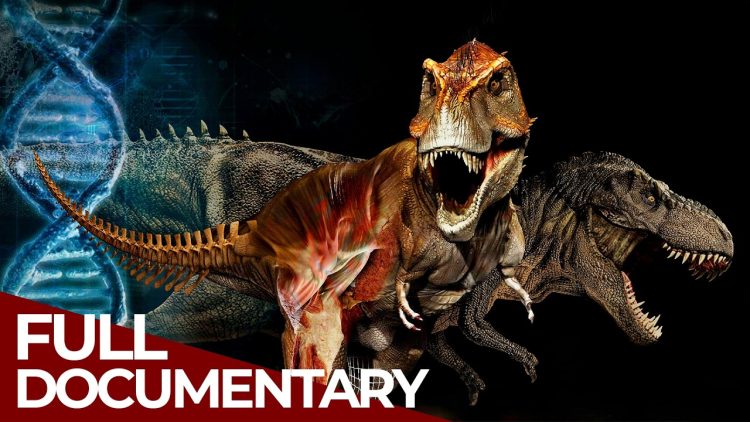
T. Rex: The Science Behind the Monster
T. rex is the most famous predator to have ever walked the Earth. It continues to capture the imagination of generations — the towering hunter, the huge skull, the tiny arms, the teeth like railway spikes. It is the dinosaur everyone can picture, and the one every child can name. But how much do we really know about this legendary creature? That is the question this film starts from, and its answer is less comfortable than the familiar image suggests.
The film is a myth-busting documentary, and it sets out to expose the inaccuracies and misrepresentations that have surrounded T. rex for centuries — or rather, for the century and more since its bones were first recognised. The T. rex of popular culture is a creature built up layer by layer: from early museum mounts and illustrations, from films and toys, from the retelling of the same handful of dramatic images. Some of those layers are true. Some of them, the film argues, are not, and they have stuck because they are vivid rather than because they are right.
What makes the film different from a simple correction is its method. It does not only tell the viewer that the old picture was wrong; it shows what the science now says, and it shows it in the most direct way possible — by building a new T. rex. The documentary culminates in the most accurate, photorealistic, fully animated CGI model of T. rex ever attempted: a creature rebuilt from the bones up, using the cutting-edge science the film has spent its running time explaining. The model is the argument made visible.
The film’s approach is to treat T. rex as a scientific problem rather than a monster. A predator that famous invites exaggeration, and the documentary is interested in how exaggeration happens: how a single dramatic feature — the size, the teeth, the reputation — can come to stand for the whole animal, and how the rest of the animal gets lost. The science, as the film presents it, is a process of taking the creature apart and putting it back together again, checking each part against the evidence rather than against the legend.
By the end, the film has done two things at once. It has given the viewer a new T. rex to look at — the photorealistic model, moving and hunting as the science says it would — and it has given the viewer a new way of looking at the old one: with more scepticism, and more curiosity. The most famous predator to have ever walked the Earth turns out to be more interesting than its reputation, and the film’s case is that the real animal, properly understood, is stranger and more impressive than the monster of the posters.
What the Film Explores
The film explores the misrepresentations first, and it is a long list. T. rex has been drawn, sculpted and filmed so many times that the image feels settled, and the documentary’s opening work is to unsettle it — to show where the familiar picture came from, and where it departs from what the bones actually say. The point is not that every old image was wrong, but that a creature this famous accumulates errors, and that the errors are the hardest thing to see because they are the most familiar part of the picture.
A second thread follows the science that corrects the picture, and the film is at its most engaging here. Cutting-edge science, as the documentary presents it, is not a single discovery but a slow accumulation: new fossils, new ways of reading old ones, new techniques for reconstructing muscle and movement from bone. The film follows that work step by step, showing how each piece of the animal — its stance, its speed, its senses, its hunting — gets re-examined in the light of what is now known.
A third thread follows the reconstruction itself, and it is the film’s centrepiece. The photorealistic, fully animated CGI model is not decoration; it is the documentary’s conclusion, built in public. Every choice in the model — the shape of the body, the way it moves, the way it hunts — is a claim about the science, and the film shows the work that went into each one. The model is what the science looks like when it is allowed to move.
Running through the film is the question of why T. rex matters so much in the first place. The documentary’s answer is that the animal is a test case for how we know things about the deep past. We cannot watch a T. rex hunt. We have only bones, and footprints, and the patient work of reading them. The film’s argument is that the picture we end up with is worth the effort — and that the effort itself, the myth-busting, is part of what makes the creature fascinating.
Key Themes & Topics Examined
- T. rex, the most famous predator to have ever walked the Earth
- How much do we really know about this legendary creature?
- The inaccuracies and misrepresentations surrounding T. rex
- Myth-busting: taking the familiar image apart
- Cutting-edge science, and what the bones really say
- Rebuilding the animal from the evidence
- The most accurate, photorealistic, fully animated CGI model ever attempted
- Why the real T. rex is stranger than the monster of the posters
Production & Background
The film is a Free Documentary – History production, from the channel’s series of science and history documentaries. It is presented as a myth-busting, cutting-edge science documentary, and its structure follows the work it describes: from the familiar image, through the science that challenges it, to the reconstruction that replaces it.
The documentary sits alongside the channel’s other dinosaur films — the description points viewers to ‘The Last Day of the Dinosaurs’ — and it follows the same pattern: a famous subject, a question about what we really know, and an answer built from the latest science rather than the oldest pictures.
Recommended Companion Viewing
Explore authoritative investigative documentaries on related historical events and investigative subjects.

Bigfoot Caught on Camera?
The Dumbest Ways to Die in Space
What Happens If You Drop 0.125 Grams of Antimatter?
BINGE: An Hour of Unexplained Alien Phenomena | Strange Evidence
Frequently Asked Questions
What is the film about?
How much we really know about T. rex. It is a myth-busting science documentary that exposes the inaccuracies and misrepresentations surrounding the most famous predator to have ever walked the Earth.
What makes this documentary different?
It does not only correct the old picture — it rebuilds the animal. The film culminates in the most accurate, photorealistic, fully animated CGI model of T. rex ever attempted.
Why does T. rex need myth-busting?
Because the creature is so famous that its image feels settled. The film argues that the familiar picture was built up from early mounts, illustrations, films and toys, and that some of its layers are wrong.
Who made the film?
Free Documentary – History, the channel behind a series of science and history documentaries presented free on YouTube.
Is there a related film?
Yes — the description points viewers to ‘The Last Day of the Dinosaurs’, another Free Documentary – History dinosaur film.