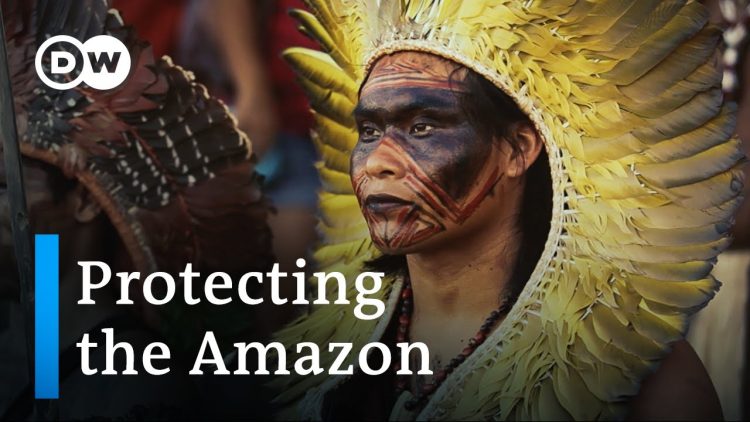
The Amazon in danger – Indigenous peoples and their struggle for the rainforest
“They used to kill us with guns, now they kill us with deforestation and dams.” The Brazilian government’s failure to protect the Amazon forest is forcing the Munduruku indigenous people to take action against land grabs and illegal logging — and try to save the rainforest on their own.
In an unprecedented movement led by Chief Juarez Saw Munduruku, for the last six years indigenous people have been fighting the theft and destruction of their forest home. It is not a protest that comes and goes: it is a sustained, organized defence of the land they live on, carried out by people who have decided that if the state will not protect the forest, they will.
The numbers behind the fight are stark. Since 1970, 20 percent of the Brazilian Amazon has been deforested. Logging and forest fires are threatening a further 20 percent. Scientists say that at 40 percent deforestation, we will reach the point of no return: the forest will be lost forever, replaced by savannahs — and the environmental consequences will be catastrophic. The Amazon is often known as the “lungs of the planet”, producing 6 percent of the world’s oxygen.
The mechanism of the destruction has a name: “grilagem”. In today’s Brazil, some 600,000 square kilometers of land — an area about the size of France — are farmed by farmers who don’t officially own it. The military dictatorship of 1964 to 1985 encouraged them to settle on state-owned land, but the farmers never became legal owners. As a result, speculators now seize the areas, clear the forests, then resell the plots with forged title deeds. This land grab has led to uncontrolled forest clearing and fierce conflicts.
The documentary was shot from 2014 to 2020, under three different Brazilian governments. It provides deep insights into the drama of the illegal occupation of state land and forest areas by organized crime groups. Several indigenous peoples have united under Juarez Saw Munduruku, leader of the Munduruku people, in a last-ditch bid to save the planet’s most important forest — a fight the film presents not as a local dispute, but as one of the decisive battles for the climate.
What the Film Explores
The film explores the Munduruku movement first: six years of organized resistance to land grabs and illegal logging, led by Chief Juarez Saw Munduruku, in which indigenous people have taken the protection of the forest into their own hands. The film’s point is that this is not a spontaneous reaction but a movement — unprecedented in its scale, and sustained over years.
A second thread follows the numbers, and the threshold they point to. Twenty percent of the Brazilian Amazon has been deforested since 1970, and a further 20 percent is threatened by logging and forest fires. At 40 percent, scientists say, the point of no return is reached: the forest is lost forever and replaced by savannahs. The Amazon produces 6 percent of the world’s oxygen, and the film makes clear that the loss would not be a Brazilian tragedy alone but a global one.
A third thread follows the land grab itself. Some 600,000 square kilometers — an area about the size of France — are farmed by people who don’t officially own the land, a legacy of the military dictatorship of 1964 to 1985, which encouraged settlement on state-owned land without ever granting legal ownership. Speculators seize those areas, clear the forests and resell the plots with forged title deeds. “Grilagem”, as the practice is known in Portuguese, has led to uncontrolled clearing and fierce conflicts — and behind it, the film shows, stand organized crime groups occupying state land.
Running through the film is the time it was made in. Shot from 2014 to 2020, under three different Brazilian governments, the documentary shows a problem that outlasts any single administration: a system in which the forest is cleared, the land is stolen, and the people who try to stop it are left to defend it themselves. The film ends where it began, with the Munduruku and the peoples united under Juarez Saw Munduruku — still fighting, in what the film calls a last-ditch bid to save the planet’s most important forest.
Key Themes & Topics Examined
- Chief Juarez Saw Munduruku and six years of indigenous resistance
- 20 percent of the Brazilian Amazon deforested since 1970
- A further 20 percent threatened — and the 40 percent point of no return
- The Amazon as the ‘lungs of the planet’, producing 6 percent of the world’s oxygen
- Grilagem — land grabs, forged title deeds and forest clearing
- 600,000 square kilometers farmed without legal ownership
- The military dictatorship of 1964–1985 and its legacy of unsettled land
- Organized crime groups occupying state land and forest areas
Production & Background
The documentary is a DW Documentary production shot from 2014 to 2020, under three different Brazilian governments. It follows the Munduruku people and the indigenous movement led by Chief Juarez Saw Munduruku, and documents the illegal occupation of state land and forest areas by organized crime groups.
The film’s structure follows the fight it documents: first the people and their leader, then the numbers that make the fight urgent, then the mechanism of the land grab — and finally the question the whole film poses, of whether the world’s most important forest can still be saved.
Recommended Companion Viewing
Explore authoritative investigative documentaries on related historical events and investigative subjects.

Rivers at risk - Water crisis on four continents
Lithium – New Gold Rush in the Andes
Frequently Asked Questions
What is this documentary about?
It follows the Munduruku indigenous people as they fight land grabs and illegal logging to save the Amazon rainforest — a struggle led by Chief Juarez Saw Munduruku.
How much of the Amazon has already been lost?
Since 1970, 20 percent of the Brazilian Amazon has been deforested. Logging and forest fires are threatening a further 20 percent.
What happens at 40 percent deforestation?
Scientists say that at 40 percent, we will reach the point of no return: the forest will be lost forever, replaced by savannahs.
What is grilagem?
The land grab in which speculators seize areas, clear the forests and resell the plots with forged title deeds. In today’s Brazil, some 600,000 square kilometers — an area about the size of France — are farmed by people who don’t officially own the land.
When was the documentary filmed?
It was shot from 2014 to 2020, under three different Brazilian governments.