The story of our planet, retold
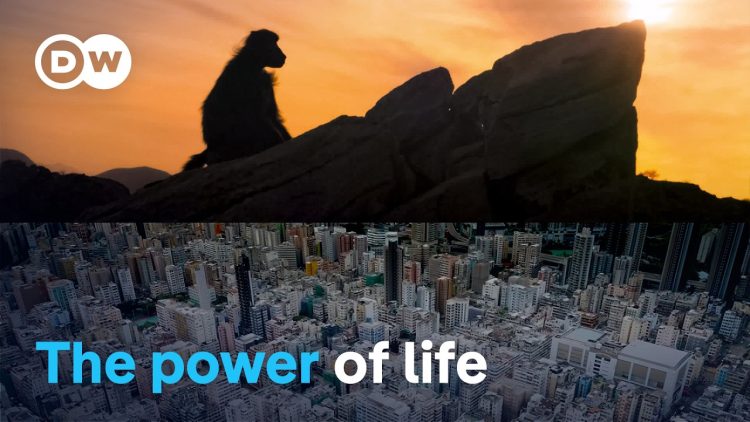
Earth influences all life on our planet — and the same is true in reverse. Animals, plants and even inanimate matter shape the habitats they live in, in a cycle that has been turning for billions of years. But humans are currently changing that dynamic cycle, and this documentary sets out to show just how deep the connection between the planet and its inhabitants really goes.
The film tells the evolutionary history of our planet, and it puts our own story firmly in perspective: the history of humankind represents only a brief moment in that history. Rocks existed on our planet long before the oceans, the forests, the plants and even the air came into being. From the very beginning, the earth itself was the foundation of creation — and the documentary follows how inanimate matter created life, shaped landscapes and eventually gave rise to civilizations.
To tell that story, the film travels the world, with spectacular images from the USA, Australia, France, Canada and Namibia, and interviews with internationally renowned scientists. It is a journey that moves from the smallest building blocks of the planet to the largest forces that shaped it, showing how the ground beneath our feet has always been an active participant in the story of life rather than a passive stage.
One of the film’s most striking threads is how living things and lifeless matter constantly remake each other. Certain types of plankton contributed to the formation of the cliffs of Étretat in Normandy long ago, and the mainland was probably first colonized by lichens — tiny partnerships of fungus and algae that turned bare rock into a place where life could take hold. Clay dust whipped up by the wind migrated from the Namib Desert across the oceans and formed the basis of life for marine organisms, while rock was eroded by sea urchins in California and by termites in Australia.
Many millennia later, humans entered the same cycle in a new way: they used rock to make fire and to build megalithic tombs, and stone became a tool. In the industrial age, rock mining accelerated, making it possible to build faster and higher than ever before. And today, a hybrid rock made of mineral material and melted plastic is produced on the island of Madeira — a testament to the massive changes taking place in our present day, and a reminder that the story of our planet is still being written by the very ground we stand on.
What the Film Explores
The film explores the idea that Earth and life are not two separate stories but one. The ground we walk on is not inert: it was the foundation from which the oceans, the forests and the air themselves emerged, and every living thing that followed was shaped by it. By starting the story with rock rather than with animals or humans, the documentary asks the viewer to see the planet as the main character of its own history.
A second thread follows the quiet, patient work of living things in shaping the world. Plankton building cliffs, lichens colonizing bare land, wind-blown clay dust from the Namib Desert feeding life in distant oceans, sea urchins and termites slowly wearing rock away — the film shows how the smallest organisms, given enough time, can move mountains and build coastlines. It is a story of deep time, in which tiny actions repeated over unimaginable spans become geological forces.
The third thread is the human one. For most of history, people used stone in the same slow rhythm as the rest of nature: fire, tools, tombs. The industrial age broke that rhythm, as mining accelerated and rock became the raw material for building faster and higher. The film follows that acceleration to the present day, where a hybrid rock of mineral material and melted plastic is being produced on Madeira — a new kind of stone that could only exist in a world where human activity has become a geological force in its own right.
Running through all of this is the question of what happens next. The cycle between Earth and life has always been dynamic, but humans are currently changing it faster than ever before. By showing how the planet made us, the film asks what kind of planet we are now making in return — and whether the brief moment of human history will leave a mark as lasting as the rocks that came before it.
Key Themes & Topics Examined
- How inanimate matter created life and shaped landscapes
- Rocks that existed long before the oceans, forests and air
- Plankton and the cliffs of Étretat in Normandy
- Lichens as the first colonizers of the mainland
- Clay dust from the Namib Desert feeding ocean life
- Sea urchins and termites eroding rock
- Humans using rock for fire, tools and megalithic tombs
- Industrial-age mining and building faster and higher
Production & Background
The documentary is a DW Documentary production that combines spectacular location filming in the USA, Australia, France, Canada and Namibia with interviews with internationally renowned scientists. Its scope is deliberately planetary: rather than focusing on a single place or a single era, it follows the story of matter itself across billions of years.
The film’s structure follows the chronology of the planet — from a world of bare rock, through the arrival of the oceans and the first life, to the age of humans and the industrial transformation of the landscape. The hybrid rock being produced on Madeira, part mineral and part melted plastic, serves as the film’s closing image: a new kind of stone for a new kind of age.
Recommended Companion Viewing
Explore authoritative investigative documentaries on related historical events and investigative subjects.

Our drinking water - Is the world drying up?
Istanbul: Readying for a major earthquake
Frequently Asked Questions
What is this documentary about?
It tells the evolutionary history of our planet, showing how inanimate matter created life, shaped landscapes and gave rise to civilizations — and how humans are now changing that cycle.
Why does the film start with rocks?
Because rocks existed on our planet long before the oceans, the forests, the plants and even the air came into being. The earth itself was the foundation of creation.
What role do tiny organisms play in the story?
A large one: plankton helped form the cliffs of Étretat in Normandy, lichens were probably the first colonizers of the mainland, and clay dust from the Namib Desert became the basis of life for marine organisms.
Where was the film shot?
It features spectacular images from the USA, Australia, France, Canada and Namibia, with interviews with internationally renowned scientists.
What is the hybrid rock on Madeira?
A rock made of mineral material and melted plastic that is being produced on the island today — a testament to the massive changes humans are making to the planet.