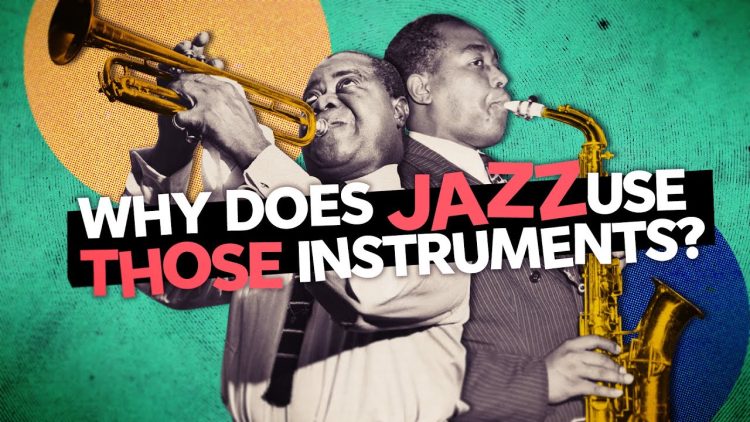
Why Does Jazz Use Those Instruments?
Why does jazz use those instruments? It is a question with a longer answer than it looks, because the instruments of jazz were not chosen. They were inherited — from brass bands, from dance halls, from churches and from the streets of New Orleans — and then remade by the musicians who played them.
Jazz originated in the African-American communities of New Orleans, Louisiana, in the late 19th and early 20th centuries. Its roots are in blues, ragtime, spirituals, hymns, marches, European harmony and West African rhythmic traditions, and its instruments came from all of those sources at once. The early New Orleans bands were modelled on the brass bands that played at parades, picnics, political rallies, dances and funerals — every village had one — and their instruments were the ones a brass band could carry: cornet or trumpet, clarinet, trombone, tuba and drums.
The front line of the early New Orleans ensemble was three horns: the cornet, the clarinet and the trombone. The cornet — later replaced by the trumpet — played variations of the main melody and acted as the leader. The clarinet held a countermelody, usually in a faster rhythm, weaving around the cornet’s line. The trombone played as a bass line, and its slide let the player glide seamlessly from one note to another, an effect known as a glissando. All three improvised at the same time, producing a polyphonic texture — several melodic lines at once — that is the signature sound of early jazz.
Behind the front line was the rhythm section: piano, bass and drums, with banjo or guitar sometimes added. The piano supplied rhythmic chords behind the melody and could also take melodic solos. The bass — first the tuba, then the plucked double bass — anchored the low register and the pulse. The drums maintained the beat and answered the soloists with accents. That division of labour, front line and rhythm section, is still the basic shape of a jazz band, from a small quintet to a big band. A typical jazz quintet consists of saxophone, trumpet, piano, bass and drums. A big band of the swing era, which flourished from 1935 to 1945, had sections of saxophones, trumpets and trombones over a rhythm section of piano, guitar, bass and drums — fourteen or fifteen musicians, powerful enough to fill a dance hall.
What the Film Explores
The film explores why the saxophone became the sound of jazz, even though it arrived late. The saxophone was invented by Adolphe Sax in the 1840s, and it was a military band instrument before it was a jazz instrument. It entered jazz in the 1920s, and it stuck because it could do something no other instrument could: it could sing. The saxophone’s tone is close to the human voice, and it can bend notes, growl, whisper and shout in ways that a trumpet cannot.
It also explores how the instruments changed as the music changed. In the 1920s, in Chicago, Louis Armstrong and others expanded the expressive role of the soloist, and attention moved from the intertwined lines of the early ensemble toward the time one player spent reshaping a theme. In the swing era, the big bands used arranged sections to fill dance halls. In the 1940s, bebop shifted jazz from danceable popular music toward a more challenging art form, and the small group — saxophone, trumpet, piano, bass and drums — became the standard, because it gave the soloists room to stretch out.
Finally, the film explores the idea that jazz’s instruments are not a fixed set at all. Jazz masterpieces have been created for unaccompanied piano or saxophone, for trumpet and piano, for organ, guitar and drums, and for big band combined with symphony orchestra. The standard line-up — saxophone, trumpet, piano, bass and drums — is a convention, not a rule, and it exists because those instruments happen to cover everything a jazz band needs: melody, harmony, rhythm and the freedom to improvise. The film’s answer to its own question is that jazz uses those instruments because they were there, because they worked, and because a century of musicians found new things to say with them.
Key Themes
- Inherited, not chosen: jazz’s instruments came from the brass bands of New Orleans, which played at parades, dances and funerals with cornet, clarinet, trombone, tuba and drums.
- The front line: cornet, clarinet and trombone improvised separate melodic lines at the same time, creating the polyphonic texture of early jazz.
- The rhythm section: piano, bass and drums supplied chords, pulse and beat, a division of labour that still shapes every jazz band.
- From cornet to trumpet: the cornet dominated at first, but by 1926 the trumpet’s brighter, more piercing sound had taken over as jazz’s leading voice.
- The late arrival: the saxophone, invented in the 1840s, entered jazz in the 1920s and became its defining voice because it could sing like a human voice.
- How the use changed: from collective improvisation in New Orleans to soloists in Chicago, big bands in the swing era and small groups in bebop, the same instruments served each new style.
- A convention, not a rule: jazz has been played on almost every combination of instruments, and the standard line-up exists because it covers melody, harmony, rhythm and improvisation.
Production and Background
The video is a Polyphonic essay, from the channel run by music writer Noah Lefevre, whose long-form videos trace the history of popular music song by song and scene by scene. Polyphonic’s essays are known for close listening: they play the music, break down what it is doing, and place it in its historical moment.
The history it tells is well documented. Jazz took shape in New Orleans in the late 19th and early 20th centuries, from the meeting of African-American musical traditions with European harmony and the instruments of the brass band.
Recommended Companion Viewing
Explore authoritative investigative documentaries on related historical events and investigative subjects.

Frequently Asked Questions
What instruments are typical of jazz? The typical instruments are double bass, drums, guitar, piano, saxophone, trumpet, clarinet and trombone. A standard quintet is saxophone, trumpet, piano, bass and drums.
Where did jazz’s instruments come from? They came from the brass bands of New Orleans, which played at parades, dances, rallies and funerals with cornet, clarinet, trombone, tuba and drums. Jazz inherited those instruments and remade them.
Why did the trumpet replace the cornet? The cornet dominated early jazz, but by 1926 it began to lose favour to the trumpet, whose brighter, more piercing sound suited the soloist’s role that was becoming central to the music.
When did the saxophone enter jazz? The saxophone was invented by Adolphe Sax in the 1840s, but it only became a jazz instrument in the 1920s. It became central because its tone is close to the human voice and it can bend notes in ways other instruments cannot.
More to watch
- The global rise of afro house music
- The healing power of music – How does music impact us?
- Music in Nazi Germany – The maestro and the cellist of Auschwitz
- How Kyle Gordon Makes Music Funny
The power of music to move people is explored from another angle in The healing power of music – How does music impact us?.