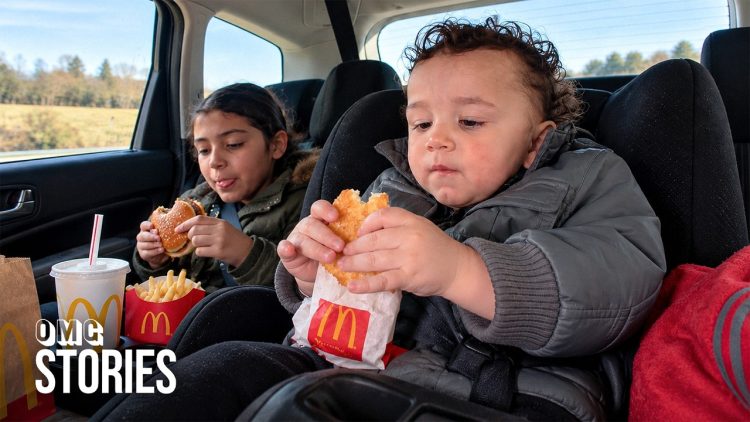
Fast Food Babies | Full Documentary | OMG Stories
Takeaways, fizzy drinks and mealtime tantrums have left three families struggling to change their children’s eating habits. From a 19-month-old drinking up to six cans of cola a day to a three-year-old living on fast food, this documentary follows parents confronting the reality of what their toddlers eat.
In Cardiff, Sam and Simon must overhaul the whole family’s takeaway routine to improve little Cuba’s diet. Cuba is 19 months old, and he prefers takeaways to anything else. His parents have multiple takeaways each week, and Cuba has unrestricted access to junk food throughout the day, consuming up to six cans of cola daily. The scale of the problem becomes clear when the family’s health visitor, Jane Imperato, a family health visitor with 20 years of experience, measures what Cuba is actually eating: over 3,200 calories a day, 700 more than recommended for an adult, with signs of iron deficiency.
In Surrey, Cara and Gareth seek help for their son Michael, whose battle with meningitis has left them anxious and mealtimes fraught. Michael fell seriously ill with meningitis at six months old, and his parents, who had planned to cook every night and provide balanced meals, became so anxious about his eating that they tried to control every mouthful. The more they tried to control his eating, the more Michael rebelled, and the more he demanded his favourite fast food. Mealtimes became a battleground, and the stress began to affect Cara and Gareth’s relationship as well.
Meanwhile, young mum Taylor begins learning to cook after concerns grow over her own health and her son Harley’s food habits. Harley is three years old and has never had a healthy meal cooked by his mother, living on fried chicken, chips, frozen pizzas and an alarming amount of fizzy drinks — 24 glasses a week, nearly four times the recommended sugar intake for his age group. Taylor is a single mum studying part-time, and fast food has become the easiest way to get through the day. With support from a health visitor, a dietitian and feeding specialists, can these families break old routines and make lasting changes? The film follows them as they try, and it does not pretend the answer is simple.
What the Film Explores
The film explores how a child’s diet is set in the first years of life. The experts it features explain that the risks of a fast-food diet in toddlers are not abstract: tooth decay, iron-deficiency anaemia, rickets, constipation and developmental delays are all consequences of poor nutrition in very young children, and some of them are already visible in the three families. The film’s point is that the damage does not wait until adulthood.
It also explores why parents end up feeding their children this way. The three families have three different reasons, and the film is careful to show all of them. Sam and Simon in Cardiff fell into a takeaway routine and never broke out of it. Cara and Gareth in Surrey became over-controlling after their son’s illness, and their control created rebellion. Taylor is a young single mother with no time, no money to spare and no experience of cooking, for whom fast food is the path of least resistance.
Finally, the film explores what change actually looks like. The families are not given a diet plan and sent home. They are given support: a health visitor who works with the whole family, a dietitian who shows them how to swap foods gradually, and feeding specialists who help them understand why their children behave the way they do at the table. The film shows that change is slow, that it involves tantrums and setbacks, and that it requires the adults to change first. The children, the film suggests, are not the problem. They are eating what they have been given, and what they have been given is what their parents have learned to give them.
Key Themes
- Three families, three stories: a takeaway routine in Cardiff, anxiety after illness in Surrey, and a young single mum learning to cook — three different routes to the same problem.
- Startling numbers: a 19-month-old drinking six cans of cola a day and eating 3,200 calories, and a three-year-old consuming nearly four times the recommended sugar intake.
- Real health risks: tooth decay, iron-deficiency anaemia, rickets and developmental delays are already visible in children under five.
- Why parents do it: habit, fear, time pressure and lack of cooking experience — not laziness, and not a lack of love.
- The control trap: Cara and Gareth’s attempt to control every mouthful made Michael rebel more, showing that pressure at the table can backfire.
- Change is a family project: the health visitor, dietitian and feeding specialists work with the whole family, because the adults have to change first.
Production and Background
The film is BBC Three’s Fast Food Baby, first broadcast in 2011, presented here in a re-upload by OMG Stories under the title Fast Food Babies. The original documentary follows three British families as they try to get back on the right nutritional track, and it was made at a time when concern about childhood obesity and junk-food marketing to children was growing rapidly in Britain.
The film remains relevant because the problem it describes has not gone away. The convenience of takeaway food, the marketing of sugary drinks to children, and the time pressure on young parents are all still with us, and the health risks the film names — tooth decay, anaemia, rickets — are still among the most common preventable conditions in young children.
Recommended Companion Viewing
Explore authoritative investigative documentaries on related historical events and investigative subjects.

A global longevity movement - Eternal life with biohacking?
Why Fruits Have Lost Their Vitamins | ENDEVR Documentary
From India to Germany - Creating a new world with good food | DW Documentary
Frequently Asked Questions
What is Fast Food Babies about? It is a documentary, originally made by BBC Three in 2011 as Fast Food Baby, that follows three families trying to change their toddlers’ eating habits, from a 19-month-old drinking six cans of cola a day to a three-year-old living on fast food.
How much was little Cuba eating? Cuba, the 19-month-old from Cardiff, was consuming over 3,200 calories a day — 700 more than recommended for an adult — with signs of iron deficiency, according to the family’s health visitor.
Why did Michael’s parents struggle with mealtimes? Michael, from Surrey, had meningitis at six months old, which left his parents anxious about his eating. Their attempts to control every mouthful made him rebel and demand fast food, turning mealtimes into a battleground.
What help do the families get? They are supported by a health visitor, a dietitian and feeding specialists, who work with the whole family to break old routines gradually — swapping foods, removing the sweety cupboard, and helping the adults set a better example.
More to watch
- Inside a high-tech lab designing food for a hotter world
- China’s plan to never run out of food
- Fake Steak – Future-Proof Food And Lab-Grown Meat
- The limits of learning – kids in crisis
The question of what we eat — and what it does to us — is also explored in Fake Steak – Future-Proof Food And Lab-Grown Meat, which asks whether lab-grown meat could change the food system.