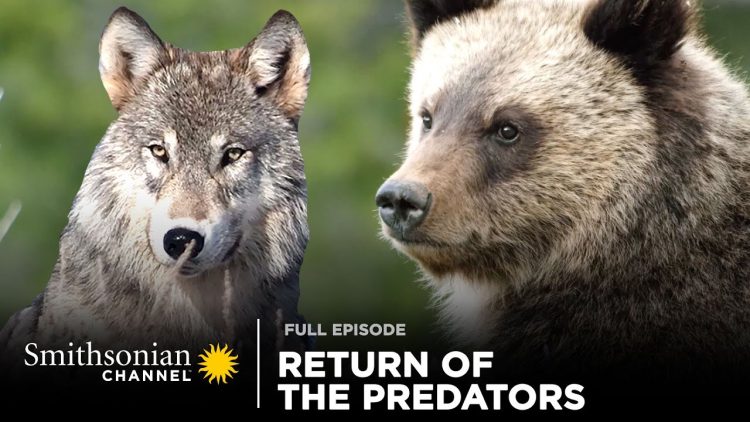
Return of the Predators | Epic Yellowstone: Full Episode | Smithsonian Channel
It is the dawn of a new era in Yellowstone. The wolves have returned. The grizzly bear population is at an all-time high. The mountain lions never left. And Yellowstone will never be the same. That is how this full episode of Epic Yellowstone begins, and it is not an exaggeration. The presence of these predators touches every aspect of life in Yellowstone National Park, and through their eyes, the film shows nature’s dramas playing out over the course of a year.
Yellowstone is the world’s first national park, established on 1 March 1872, and it covers about 2.2 million acres across Wyoming, Montana and Idaho. It holds the largest concentration of free-roaming wildlife in the lower forty-eight states: elk, bison, pronghorn, mule deer, bighorn sheep and moose, and the predators that hunt them. For most of the twentieth century, the top of that food chain was missing.
The wolves came back in January 1995, when thirty-one Canadian grey wolves were released into the park, in one of the most famous wildlife experiments ever attempted. The film follows what happened next, and it is a story of return. The wolves learned to hunt in a new country, formed packs, and began to do what wolves do: they killed elk, and in doing so they changed the behaviour of the elk themselves. Elk that had grazed the river valleys without fear began to move, and to avoid the places where wolves hunted. The willows and aspens along the streams, which the elk had eaten down to nothing, began to grow back. Beavers, which had been absent from the Lamar Valley when the wolves were reintroduced, returned and built dams. Coyotes, which had expanded into the niche the wolves had left, were pushed back, their numbers falling as the wolves killed them as competitors.
The grizzly bears are the other half of the story. When the wolves were gone, the grizzlies were in trouble too: in 1975 there were only about 136 of them left in the Greater Yellowstone Ecosystem, and they were listed as a threatened species. Today there are about seven hundred, and the film shows why the wolves helped them. When the wolves were absent, elk died in large numbers in the winter, and the bears had a brief feast of winter-killed carcasses in the spring. Now that the wolves are back, the elk die more evenly through the year, and the bears have a steady supply of carcasses left by the wolves, or taken from them. The bears also benefit from the wolves in another way: a wolf pack’s kill is a meal a bear can steal, and grizzlies are very good at stealing.
The mountain lions are the third predator in the film, and the one that never left. After their near-eradication in the early 1900s, there are now probably twenty-five to forty mountain lions in the park, the largest feline in Yellowstone and the Rocky Mountains, hunting deer, elk and porcupine, mostly alone and mostly at night. The film follows them through the year as well, and it shows how the three predators divide the park between them: the wolves hunt in packs on the open ground, the bears dominate the carcasses, and the lions hunt alone in the broken country. The film’s point is that the predators do not only compete with each other. Together, they keep the whole system in balance, and without them, Yellowstone would not be Yellowstone.
What the film explores
The first part of the film is the return itself. It tells the story of the wolves’ reintroduction in 1995, the thirty-one Canadian wolves released into the park, and the first years of the packs as they learned to hunt in a new country. The film explains what the park was like without its top predator, and what happened when the predator came back.
The second part follows the predators through the year. The film shows the wolves hunting, the grizzlies emerging from hibernation and raising cubs, and the mountain lions hunting alone, and it shows the dramas of that year: the fights over territory, the struggle to feed young, and the constant competition for food. The film’s structure is the seasons, and it uses them to show how the predators’ lives change through the year.
The third part is the wider effect. The film explains the trophic cascade, the chain of changes that followed the wolves’ return: the elk moving, the willows and aspens growing back, the beavers returning, the coyotes falling back, and the whole park becoming richer and more diverse. It ends with the thought that the predators are not a threat to Yellowstone. They are what makes it work.
Key Themes
- Wolves reintroduced to Yellowstone in January 1995, after seventy years away.
- Thirty-one Canadian grey wolves, and the packs they founded.
- Grizzly bears: from about 136 in 1975 to about 700 today.
- Mountain lions, the predator that never left.
- The trophic cascade: elk, willows, aspens and beavers.
- Competition for carcasses between wolves, bears and lions.
Production and Background
The film is a full episode of Epic Yellowstone, a Smithsonian Channel series about the wildlife of Yellowstone National Park, and it follows the channel’s established pattern of single-place natural history: one location, filmed over a year, with the story told through the animals that live there rather than through a presenter.
Yellowstone National Park was established on 1 March 1872, the first national park in the world, and it covers about 2.2 million acres across Wyoming, Montana and Idaho. The wolf reintroduction of 1995 was one of the most controversial and most studied wildlife decisions ever made, and it has since become a textbook example of how the return of a top predator can change an entire ecosystem.
Recommended Companion Viewing
Explore authoritative investigative documentaries on related historical events and investigative subjects.

The Gulf Stream: Warming the North Atlantic
Wonder Shore: Africa's Most Spectacular Coastline
Mexico Untamed: At the Crossroads of the Wild
Call of the Wild
Frequently Asked Questions
When were wolves reintroduced to Yellowstone? In January 1995, when thirty-one Canadian grey wolves were released into the park.
How many grizzly bears are there in Yellowstone now? About seven hundred in the Greater Yellowstone Ecosystem, up from about 136 in 1975, when they were listed as a threatened species.
What is a trophic cascade? A chain of changes that follows when a top predator returns.
Are there mountain lions in Yellowstone? Yes. After their near-eradication in the early 1900s, there are now probably twenty-five to forty mountain lions in the park.
When was Yellowstone established? On 1 March 1872, as the world’s first national park.
More to watch
- A Wolf’s Journey: The Wolf With Golden Eyes
- Whales: Giants of the Deep Blue Oceans (Full Episode) | Documentary Special | Nat Geo Animals
- Wild Colombia: A Wildlife Paradise Between Rainforest and Ocean | Free Documentary Nature
- Masai Mara: African Wildlife Stories
- Nature’s Smartest Animals
For another mountain kingdom, Rare Wildlife of China’s Mountains follows snow leopards, Pallas’s cats and Tibetan wolves through the high country of Qinghai.