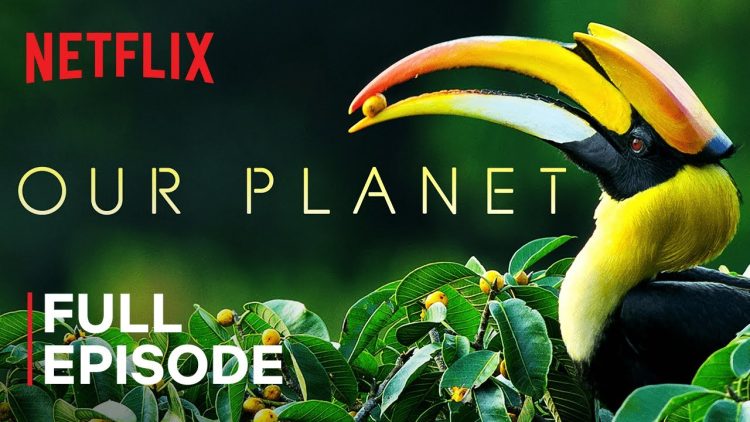
Our Planet | Forests | FULL EPISODE | Netflix
Forests cover about a third of the land on Earth, and they are the lungs of the planet. They produce much of the oxygen we breathe, store the carbon that would otherwise warm the climate, and hold more than half of all species on land.
The film begins in the rainforest, where the canopy is a world of its own. In Borneo, orangutans move through the trees, and the film shows how they live, and how they depend on the forest for everything. In the Congo, the great hornbill flies through the canopy, and the film shows the birds of paradise, whose mating displays are among the most elaborate in the animal kingdom.
The film then moves to the temperate rainforests of the Pacific Northwest, where the trees are the tallest in the world, and the forest is a place of mist and moss. It shows the cloud forests, where the trees are covered in orchids and bromeliads, and the taiga, the boreal forest that stretches across the north of the planet, the largest forest on Earth. The film’s point is that forests are not one thing.
The film’s central argument is that forests are the lungs of the planet, and that their destruction is the fastest way to damage the climate. When a forest is cut down, the carbon stored in its trees is released into the atmosphere, and the capacity of the planet to store carbon is reduced. The film shows the scale of the loss: about ten million hectares of forest are lost every year, according to the Food and Agriculture Organization, and much of that loss is in the tropics, where the forests are the richest and the most important. The film does not hide the cause. It is us, and it is the demand for timber, for beef, for palm oil and for soy.
The episode ends with the film’s larger point, and with the series’ larger point. The forests are worth saving, and they can be saved. The film shows the places where forests are being protected, and the people who are protecting them, and it says plainly that the choice is ours. It is the final episode of the first season, and it ends the series where it began, with the planet itself, and with the thought that the forests are not only a place, but a system, and that the system is worth keeping.
What the film explores
The first part of the film is the rainforest. It travels through Borneo and the Congo, and it shows the canopy, the orangutans, the hornbills and the birds of paradise, and it explains why the rainforest is the most diverse place on Earth.
The second part is the other forests: the temperate rainforests of the Pacific Northwest, the cloud forests and the taiga, the largest forest on Earth. The film shows how each forest is different, and how each of them does a different job, and it shows the creatures that live in them.
The third part is the loss, and the choice. The film shows the scale of deforestation, about ten million hectares a year, and it explains why it matters for the climate. It ends with the places where forests are being protected, and with the thought that the forests can still be saved, if we choose to save them.
Key Themes
- Forests cover about a third of the land on Earth.
- The rainforests of Borneo and the Congo, and their canopy.
- Orangutans, hornbills and birds of paradise.
- The temperate rainforests of the Pacific Northwest.
- The taiga, the largest forest on Earth.
- About ten million hectares of forest lost every year.
- Forests as the lungs of the planet, and their role in the climate.
- Protection, and the choice to save the forests.
Production and Background
The film is the eighth and final episode of the first season of Our Planet, the first nature documentary Netflix ever made, and one of the most ambitious ever produced. It was made by Silverback Films, the company founded by Alastair Fothergill and Keith Scholey, in partnership with the World Wildlife Fund, and it was narrated by David Attenborough. The music was composed by Steven Price, who won an Oscar for his score for Gravity. All eight episodes of the first season were released on 5 April 2019, and the series was watched by tens of millions of people in its first month.
The series was filmed over four years, in fifty countries, and it was designed to be more than a nature documentary. It was, as its makers put it, a call to action, a film about the planet at a moment of crisis, and about what can still be done.
Recommended Companion Viewing
Explore authoritative investigative documentaries on related historical events and investigative subjects.

The Maya of Belize - The battle for culture, the rainforest and ancient knowledge
Wild Malaysia: Life on the Emerald Islands
World's Most Isolated Town
Destination Wild: Wild Islands
Frequently Asked Questions
How much of the Earth is forest? Forests cover about thirty per cent of the land on Earth. They produce much of the oxygen we breathe, store carbon, and hold more than half of all species on land.
What is the taiga? The boreal forest, the largest forest on Earth, which stretches across the north of the planet, through Canada, Alaska, Russia and Scandinavia. It is made up mostly of conifers, and it stores more carbon than any other forest.
How much forest is lost each year? About ten million hectares, according to the Food and Agriculture Organization, for the period 2015 to 2020. Much of that loss is in the tropics, where the forests are the richest and the most important for the climate.
Why are forests called the lungs of the planet? Because they produce oxygen and store carbon. When a forest is cut down, the carbon stored in its trees is released into the atmosphere, and the planet’s capacity to store carbon is reduced. The film argues that the destruction of forests is the fastest way to damage the climate.
Who made Our Planet? Silverback Films, founded by Alastair Fothergill and Keith Scholey, in partnership with the World Wildlife Fund, with narration by David Attenborough and music by Steven Price. All eight episodes of the first season were released on 5 April 2019.
More to watch
- Rare Wildlife of China’s Mountains | Full Episode | The Hidden Kingdoms of China | Nat Geo Animals
- Can Trees Save the Planet?
- Jungles: Survival of the Fittest | Full Episode | Hostile Planet
- Wild Colombia: A Wildlife Paradise Between Rainforest and Ocean | Free Documentary Nature
- Madagascar’s Legendary Lemurs
For the planet these forests are part of, The story of our planet, retold tells how the Earth itself was made.