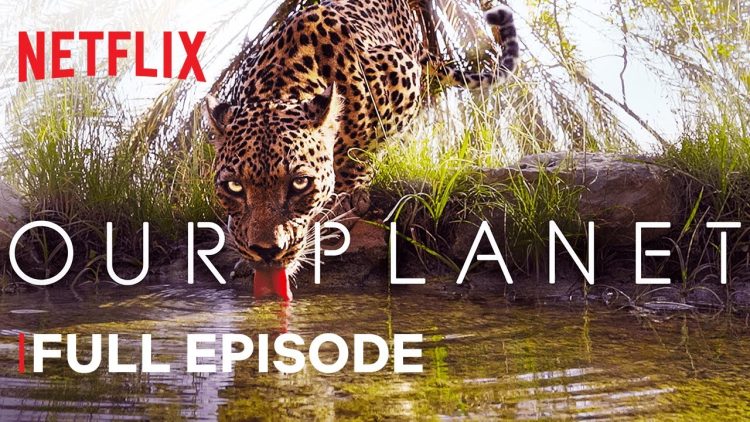
Our Planet | From Deserts to Grasslands | FULL EPISODE | Netflix
Deserts and grasslands look empty, but they are not. They are home to some of the most extraordinary life on Earth, creatures that have adapted to the extremes of heat, cold and drought, and to the great migrations that cross them. This episode of Our Planet, narrated by David Attenborough, travels from the dunes of the Namib to the grasslands of the Serengeti, and shows what lives there, and what is happening to it.
Deserts cover about a fifth of the land surface of the Earth, and they are defined not by heat but by dryness: a desert is a place that receives less than 250 millimetres of rain a year. The film visits the Namib, the oldest desert in the world, where the dunes are so high that they create their own weather, and where the fog that rolls in from the Atlantic is the only water many creatures ever see. It visits the Atacama, the driest place on Earth, where some weather stations have never recorded rain, and the Sahara, the largest hot desert in the world, and the Arabian desert, where the sand is so fine that it gets into everything.
The film then moves to the grasslands, and the change is dramatic. The grasslands are the great open spaces of the planet, the Serengeti, the steppes of Central Asia, the pampas of South America, and they are home to the greatest migrations on Earth. The film follows the great wildebeest migration, in which about one and a half million wildebeest, zebra and gazelle cross the Serengeti in search of grass and water, and it shows the predators that follow them: the lions, the cheetahs and the hyenas, and the crocodiles that wait in the rivers.
The film’s argument is that deserts and grasslands are not empty, but full of life adapted to extremes, and that the grasslands are among the most threatened habitats on Earth. Less than five per cent of temperate grassland is protected, and the grasslands are being lost to farming, to grazing and to development, faster than almost any other habitat. The film shows the scale of the loss, and it says why it matters: the grasslands are home to the great migrations, and the migrations are one of the great spectacles of the natural world, and when the grasslands go, the migrations go with them.
The episode ends with the film’s larger point. The deserts and grasslands are the most extreme places on Earth, and they are also among the most fragile. The film shows what is at stake, and it says plainly that the fate of these places is in our hands. It is not a lecture. It is a tour of the most beautiful and most extreme places on the planet, and an argument, made with images, that they are worth saving.
What the film explores
The first part of the film is the deserts. It travels through the Namib, the Atacama, the Sahara and the Arabian desert, and it shows the life that has adapted to the extremes of heat, cold and drought, from the fog-harvesting beetles of the Namib to the plants that bloom for a single day when the rain comes.
The second part is the grasslands. The film follows the great wildebeest migration across the Serengeti, and it visits the steppe and the pampas, and it shows the predators that follow the herds, and the creatures that live in the open grass.
The third part is the threat, and the choice. The film shows how little temperate grassland is protected, and how fast it is being lost, and it ends with the thought that the deserts and grasslands are worth saving, and that saving them is a choice we can still make.
Key Themes
- Deserts cover about a fifth of the land surface of the Earth.
- The Namib, the oldest desert in the world, and its fog-harvesting beetles.
- The Atacama, the driest place on Earth.
- The great wildebeest migration, about one and a half million animals.
- The saiga antelope of the Central Asian steppe.
- Less than five per cent of temperate grassland is protected.
- Life adapted to extremes, from heat to drought to cold.
- The grasslands as one of the most threatened habitats on Earth.
Production and Background
The film is the fifth episode of Our Planet, the first nature documentary Netflix ever made, and one of the most ambitious ever produced. It was made by Silverback Films, the company founded by Alastair Fothergill and Keith Scholey, in partnership with the World Wildlife Fund, and it was narrated by David Attenborough. The music was composed by Steven Price, who won an Oscar for his score for Gravity. All eight episodes of the first season were released on 5 April 2019, and the series was watched by tens of millions of people in its first month.
The series was filmed over four years, in fifty countries, and it was designed to be more than a nature documentary. It was, as its makers put it, a call to action, a film about the planet at a moment of crisis, and about what can still be done.
Recommended Companion Viewing
Explore authoritative investigative documentaries on related historical events and investigative subjects.

Masai Mara: African Wildlife Stories
Our Planet | Coastal Seas | FULL EPISODE | Netflix
Wild Attraction
High-Tech Shark Deterrence - Australia's New Strategy for Safe Beaches
Frequently Asked Questions
What is a desert? A desert is defined not by heat but by dryness: a place that receives less than 250 millimetres of rain a year. Deserts cover about a fifth of the land surface of the Earth, and they include the hot deserts of the Sahara and the Arabian peninsula, and the cold deserts of Central Asia and Antarctica.
What is the great wildebeest migration? The annual movement of about one and a half million wildebeest, zebra and gazelle across the Serengeti, in Tanzania and Kenya, in search of grass and water. It is one of the greatest wildlife spectacles on Earth, and it is followed by lions, cheetahs, hyenas and crocodiles.
What is a saiga antelope? A strange-looking antelope of the Central Asian steppe, with a bulbous nose that filters dust and warms cold air, and huge herds that migrate across the grasslands of Kazakhstan. It is one of the most distinctive animals in the film.
How much temperate grassland is protected? Less than five per cent. The grasslands are among the most threatened habitats on Earth, being lost to farming, grazing and development faster than almost any other habitat, and the film argues that their loss threatens the great migrations that depend on them.
Who made Our Planet? Silverback Films, founded by Alastair Fothergill and Keith Scholey, in partnership with the World Wildlife Fund, with narration by David Attenborough and music by Steven Price. All eight episodes of the first season were released on 5 April 2019.
More to watch
- Zebras: Stars With Stripes
- Masai Mara: African Wildlife Stories
- A Wolf’s Journey: The Wolf With Golden Eyes
- Wild Colombia: A Wildlife Paradise Between Rainforest and Ocean | Free Documentary Nature
- Nature’s Social Network
For the wildest frontiers on Earth, Extreme Nature: Earth’s Wildest Frontiers travels to the places where life survives against the odds.