
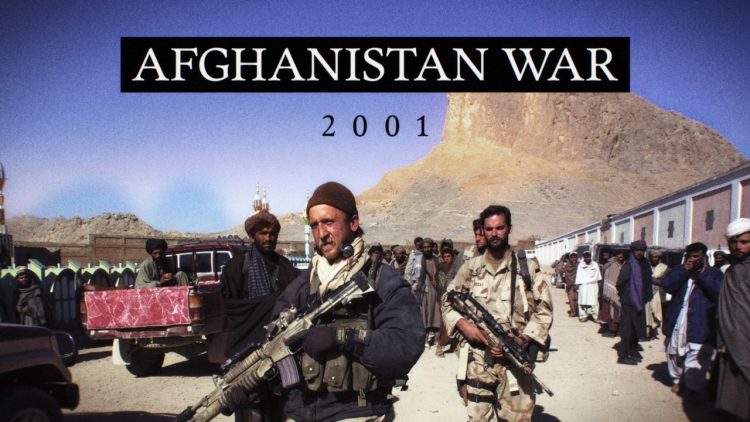
2001 Invasion of Afghanistan: Ousting the Taliban (Documentary)
After the attacks of 11 September 2001, Afghanistan became the centre of the new War on Terror. The country had been largely ignored by the United States in the 1990s, after the Soviet withdrawal and the civil war that followed it, but the attacks changed that overnight. The Taliban government of Afghanistan was sheltering Osama bin Laden and al-Qaeda, the organisation that had carried out the attacks, and the United States set out to capture or kill bin Laden and, if possible, to topple the Taliban government that sheltered him.
The response, as this film from Real Time History shows, was a new kind of warfare. Rather than a conventional invasion, the CIA and the United States Central Command devised a campaign that relied on special forces and CIA operators on the ground, working in tandem with the Afghan Northern Alliance, the coalition of anti-Taliban forces that had been fighting the Taliban for years. A handful of Americans, on horseback and in pick-up trucks, called in air strikes for Afghan fighters who knew the ground, and together they took a country in a matter of weeks.
The film follows that campaign step by step. It begins with the first CIA teams to enter Afghanistan, in the weeks after 9/11, and it follows them as they made contact with the Northern Alliance, built the relationships that the campaign depended on, and began to direct American air power against Taliban positions. The campaign’s first great test came at Mazar-i-Sharif, in the north, whose fall in November 2001 opened the way to Kabul, which fell days later, and the film shows how quickly a regime that had seemed immovable collapsed once its forces began to lose.
What the film does well is to show how much depended on so few people. The campaign was fought by small teams, and its success depended on trust between Americans who had just arrived and Afghans who had been fighting for years. The film draws on the accounts of the men who were there, from Gary Bernsten, the CIA officer who led the first teams, to the Special Forces soldiers who fought alongside the Northern Alliance, and it gives a sense of a war that was won, in its first phase, by a few dozen people and a great deal of air power.
By the end, the film has arrived at the moment when the Taliban’s regime fell, and at the irony that followed. Bin Laden, the man the campaign had been launched to capture or kill, escaped, most famously at Tora Bora in December 2001, and the war that had been won in weeks would last for twenty years. The film closes on that thought: a campaign that had been a triumph of improvisation became the opening chapter of America’s longest war.
What the Film Explores
The film explores the origins of the campaign first, and the country it was fought in. Afghanistan had been largely ignored by the United States in the 1990s, after the Soviet withdrawal in 1989 and the civil war that followed, and the Taliban, who had taken power in 1996, were sheltering bin Laden and al-Qaeda. The film shows how 9/11 changed that in a day, and how the demand that the Taliban hand over bin Laden, and their refusal, made war inevitable.
It then turns to the new kind of warfare the campaign pioneered. The CIA and Central Command did not send in divisions. They sent in small teams of operators and special forces, who worked with the Northern Alliance, called in air strikes, and let Afghan fighters do the ground fighting. The film follows those teams as they entered the country, made contact with Northern Alliance commanders, and began to direct the air campaign, and it shows how a war could be fought by a few dozen men on horseback, backed by the most powerful air force in the world.
The film also explores the campaign’s key moments, and the speed of its success. Mazar-i-Sharif fell in November 2001, Kabul fell days later, and by December the Taliban’s regime had collapsed. The film shows the battles that made that happen, including the uprising at the fortress of Qala-i-Jangi, near Mazar-i-Sharif, where Taliban prisoners rose up and fought for days, and it shows how the campaign’s momentum carried it forward, city by city, until there was no regime left to fight.
Finally, the film looks at what the campaign did not do. Bin Laden escaped, at Tora Bora in December 2001, and the war that followed would last for twenty years, until the Taliban returned to power in 2021.
Key Themes
- The attacks of 11 September 2001, and Afghanistan’s sudden return to the centre of American policy.
- The Taliban’s sheltering of Osama bin Laden and al-Qaeda, and the demand to hand him over.
- A new kind of warfare, built on CIA operators and special forces working with the Northern Alliance.
- The first teams into Afghanistan, and the relationships the campaign depended on.
- Mazar-i-Sharif and Kabul, and the speed with which the Taliban’s regime collapsed.
- Qala-i-Jangi, and the uprising at the fortress near Mazar-i-Sharif.
- Bin Laden’s escape at Tora Bora, and the incompleteness of the victory.
- A campaign won in weeks, and a war that would last for twenty years.
Production and Background
2001 Invasion of Afghanistan: Ousting the Taliban was produced by Real Time History, the channel presented by Jesse Alexander, and it runs for 39 minutes and 18 seconds. It was published in September 2026. The film is written by Jesse Alexander, directed and edited by Toni Steller and Philipp Appelt, and researched by Florian Wittig and Michael Adato. Its sources include Gary Bernsten’s Jawbreaker, Steve Coll’s Ghost Wars and Directorate S, Carter Malkasian’s The American War in Afghanistan, and the RAND study Toppling the Taliban, and like all of the channel’s work it uses only authentic historical footage.
Recommended Companion Viewing
Explore authoritative investigative documentaries on related historical events and investigative subjects.

Forgotten Heroes: The WWII Rescue Pilots
Archaeologists Re-examine Artifacts From Post-Roman Britain
Road to WW2: 1931 - 34
Frequently Asked Questions
Why did the United States invade Afghanistan in 2001?
The Taliban government was sheltering Osama bin Laden and al-Qaeda, who had carried out the attacks of 11 September 2001, and the United States set out to capture or kill bin Laden and to topple the Taliban government that sheltered him.
What was the Northern Alliance?
It was the coalition of Afghan forces that had been fighting the Taliban for years, and that American special forces and CIA operators worked alongside during the 2001 campaign.
How was the campaign fought?
Small teams of CIA operators and special forces worked on the ground with Northern Alliance fighters, calling in American air strikes, rather than a conventional invasion by large ground forces.
When did Kabul fall?
Kabul fell in November 2001, days after the fall of Mazar-i-Sharif, and the Taliban’s regime had collapsed by December 2001.
Was bin Laden captured in 2001?
No. He escaped, most famously at Tora Bora in December 2001, and the war that followed lasted for twenty years, until the Taliban returned to power in 2021.







