
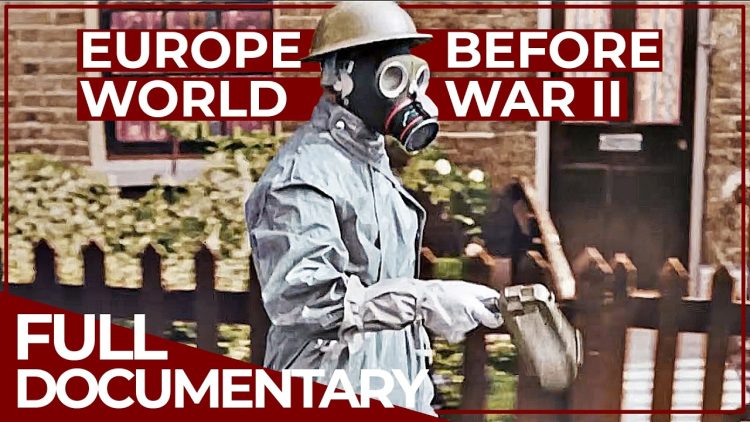
Countdown to War: 1930s Europe in Colour
This three-part series takes black-and-white films from the 1930s and colourises the footage, showing us a past that suddenly does not seem so distant. That is the premise of Countdown to War, a history of 1930s Europe told through the moving image, and its effect is immediate: the decade stops being a chapter in a textbook and becomes a place, with streets, faces and clothes that look startlingly like our own. The film gives the viewer a chance to peer through a remarkable window into a turbulent decade, a world determined to remain stable in the face of economic and political chaos across Europe.
The series is built around the footage itself, and around the people who can explain it. Social historians and people with direct connections to the films explore what everyday life was really like for people in the 1930s: the tough working conditions and the uncertainty, but also the new opportunities for leisure and the increased social freedoms that the decade brought, despite the looming war. It is the point: by restoring colour to films that were shot in black and white, the series restores a sense of immediacy to a decade that is usually seen in grey.
The 1930s were a decade of contradiction, and the film shows both sides of it. On one side, there was the Depression, mass unemployment and the fear that the old order was collapsing. On the other, there were new freedoms: for women, for workers, for anyone who could afford a cinema ticket or a day at the seaside. The film shows people dancing, swimming, going to work and going on holiday, and it shows them doing it in a world that was, year by year, becoming more dangerous.
That danger is the thread that runs through all three parts. The decade began with the Depression and ended with the outbreak of the Second World War, and in between came the rise of Hitler in Germany, the rise of Mussolini in Italy, the Spanish Civil War and the policy of appeasement, in which Britain and France gave ground to Hitler in the hope of avoiding war. The film does not tell that story through politicians and treaties alone. It tells it through the streets and the faces, and through the people who lived it.
By the end, the viewer has seen a decade that feels close enough to touch, and a war that feels, for the first time, like something that happened to real people in a world that looked like ours. The film’s achievement is to make the 1930s present, and to show that the people who lived through them were not so different from us, and that the choices they faced were not so different either.
What the Film Explores
The film explores everyday life in the 1930s first, and the world the colourised footage reveals. The decade was one of tough working conditions and uncertainty, with unemployment reaching levels that seem hard to imagine today, and the film shows the streets, the factories and the homes in which that life was lived. But it also shows the other side: new opportunities for leisure, from the cinema to the dance hall to the seaside, and increased social freedoms, above all for women, who were entering work and public life in numbers that would have been unthinkable a generation earlier.
It then turns to the colourisation itself, and to what it does. The footage in the series was shot in black and white, and the colour has been added by modern techniques, guided by research into the colours of the clothes, the vehicles and the buildings of the time.
The film also explores the political story of the decade, and the way it pressed on ordinary life. The Depression, which began with the crash of 1929, drove unemployment across Europe to levels that destabilised governments and fed extremism. In Germany, Hitler came to power in 1933; in Italy, Mussolini had been in power since 1922; and in Spain, the civil war of 1936 to 1939 became a rehearsal for the wider war. The film follows that gathering storm through the footage, showing how the decade’s freedoms and its dangers existed side by side.
Finally, the film looks at the people who connect the footage to the present. Social historians explain what the films show, and people with direct connections to the footage, the children and grandchildren of the people on screen, talk about what it means to see their families in colour, in a world on the edge of war.
Key Themes
- Colourised footage, and how restoring colour makes the 1930s feel present rather than distant.
- Everyday life in the decade, from tough working conditions to new leisure and social freedoms.
- The Great Depression, and the unemployment and uncertainty it brought across Europe.
- The rise of Hitler and Mussolini, and the gathering storm of fascism.
- The Spanish Civil War, and the decade’s descent into armed conflict.
- Appeasement, and the attempt to avoid war by giving ground to Hitler.
- Social historians, and what the footage reveals about ordinary people’s lives.
- The people connected to the films, and what it means to see their families in colour.
Production and Background
Countdown to War: 1930s Europe in Colour was released by Free Documentary History and runs for two hours, ten minutes and 13 seconds. It was published in November 2026, and it presents the three-part series The Thirties in Colour in a single film, with its three parts running from the start, through the middle and to the end of the decade. The series takes black-and-white films from the era and colourises them, with social historians and people connected to the footage explaining what everyday life was really like in the 1930s, and it is related to the channel’s earlier series The Third Reich in Colour.
Recommended Companion Viewing
Explore authoritative investigative documentaries on related historical events and investigative subjects.

The Man in the Iron Mask: France's Greatest Secret Revealed
What does three degrees of global warming look like?
The Vikings: The Truth Behind the Legend
Pitcairn Island: Refuge or Prison?
Frequently Asked Questions
What is colourised footage?
It is black-and-white film to which colour has been added by modern techniques, guided by research into the colours of the clothes, vehicles and buildings of the time, so that the past looks as it would have looked to the people who lived it.
What was everyday life like in the 1930s?
It was a decade of tough working conditions and uncertainty, driven by the Great Depression, but also of new opportunities for leisure and increased social freedoms, above all for women.
What happened in Europe during the 1930s?
The decade saw the Depression, the rise of Hitler in Germany and Mussolini in Italy, the Spanish Civil War and the policy of appeasement, and it ended with the outbreak of the Second World War in 1939.
Who explains the footage in the film?
Social historians and people with direct connections to the films, including the children and grandchildren of the people on screen, talk about what everyday life was really like.
How long is the film?
The film runs for two hours, ten minutes and 13 seconds, presenting the three-part series The Thirties in Colour as a single documentary.







