A Journey Across Africa | BBC Earth
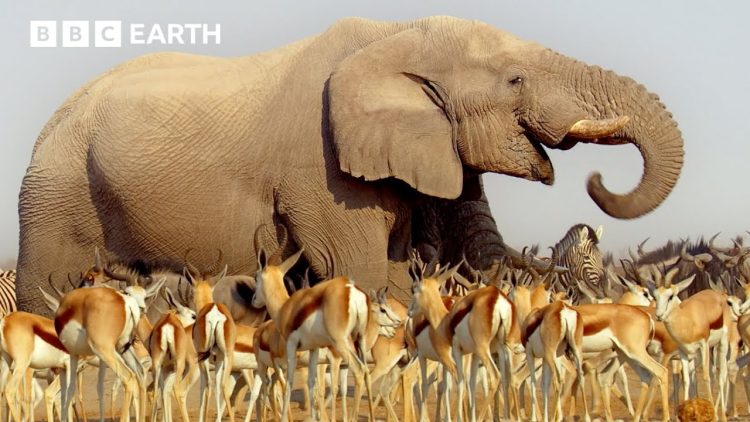
Africa is the continent where wildlife still plays out on the grandest scale, and this BBC Earth film is a journey across it. As giraffes compete for dominance and hatchlings struggle to survive their first moments of life, these scenes capture some of Africa’s most extraordinary wildlife encounters — the moments when the continent’s animals are at their most dramatic, their most vulnerable, and their most alive.
The film begins with the giraffes, and with one of the most extraordinary contests in the animal kingdom. Two males competing for dominance do not charge at each other or lock horns. They stand side by side and swing their long necks like clubs, in a behaviour known as necking. Each blow is delivered with the full weight of a head hardened for the purpose, and the contest can go on for a long time before one animal gives way. It is a strange, slow, almost ritualised fight, and it is also a serious one: dominance decides who mates, and the loser’s genes do not go forward. The film watches the contest unfold without commentary getting in the way, and the sheer oddity of it — two of the tallest animals on Earth duelling with their necks — is the kind of thing that makes African wildlife so compelling.
From the giraffes the film moves to the other end of life’s scale: the hatchlings. A newly hatched animal is among the most vulnerable creatures on Earth, and its first moments are a race against predators, weather and its own inexperience. The film shows hatchlings struggling to survive those first moments, and the tension is real precisely because the stakes are so simple. There is no strategy to admire and no strength to rely on, only instinct and luck, and the knowledge that most young animals do not survive their first days.
Between those two poles — the giants fighting for dominance and the smallest creatures fighting for their first breath — the film builds a portrait of a continent. Africa’s wildlife is not a collection of separate spectacles. It is a single, connected world, where the giraffe’s contest and the hatchling’s struggle are part of the same story: life finding a way to continue, in landscapes that are beautiful and unforgiving in equal measure.
That is what makes the film work as a journey rather than a compilation. It does not simply show Africa’s animals one after another. It moves across the continent the way a traveller would, from one encounter to the next, and each scene adds to the last. The giraffes show the scale of African life. The hatchlings show its fragility. Together they show why Africa remains, for natural history, the continent that sets the standard.
What the Film Explores
The film explores dominance, and what it costs. The giraffes’ contest is not violence for its own sake. It is how the species decides who passes on their genes, and the film shows the ritual in full: the sizing up, the swinging necks, the slow exhaustion of the loser. It is a reminder that the animal kingdom has its own politics, and that the rules are written in muscle and bone rather than in words.
It also explores the fragility of new life. A hatchling’s first moments are the most dangerous of its life, and the film does not look away from that danger. The struggle to survive the first hours — to find food, to avoid predators, to reach safety — is the most universal story in nature, and the film tells it with a directness that makes the viewer feel the stakes. The wildlife stories of the Masai Mara show the same pattern on a grander scale: a landscape where every life begins in peril.
The film looks closely at Africa itself, as a place rather than a backdrop. The continent’s landscapes — the savannas, the rivers, the forests — are not scenery for the animals. They are the conditions that shape them, and the film’s journey across Africa is also a journey through the environments that make African wildlife what it is. The giraffe’s long neck and the hatchling’s struggle both make sense only in the context of the land they live on.
Finally, the film explores why these encounters matter. Africa’s wildlife is under pressure from every direction, and the film’s quiet argument is that these scenes — the dominance contests, the first moments of life — are worth protecting because they are extraordinary, and because once they are gone they cannot be brought back.
Key Themes
- Giraffes competing for dominance in the ritual contest of necking.
- Hatchlings struggling to survive their first moments of life.
- Africa’s most extraordinary wildlife encounters, captured across the continent.
- Dominance as the decider of who passes on their genes.
- The vulnerability of new life, and the danger of the first hours.
- The savannas, rivers and forests that shape African wildlife.
- BBC Earth’s natural history filmmaking, built on fifty years of footage.
- A journey, not a compilation: encounters that add up to a portrait of a continent.
Production and Background
The film is a BBC Earth presentation from 2026, running just under fifty minutes. BBC Earth is the home of fifty years of natural history content, from the BBC’s Natural History Unit and beyond, and this film draws on that tradition: dramatic, rare and exclusive footage of African wildlife, presented as a journey across the continent. Its scenes of giraffes competing for dominance and hatchlings struggling to survive are the kind of moments the unit is known for — behaviour captured patiently, at close range, and presented without embellishment.
Recommended Companion Viewing
Explore authoritative investigative documentaries on related historical events and investigative subjects.

Nature's Smartest Animals
Deadly Bite: Nature's Most Toxic Animals
Destination Wild: Ethiopia - Animal Kingdom
Viper Queens
Frequently Asked Questions
What is “necking”? The dominance contest between male giraffes, in which two animals stand side by side and swing their long necks at each other. The winner gains dominance, which decides mating rights.
Why are a hatchling’s first moments so dangerous? A newly hatched animal has no experience, little strength and no protection, and must immediately find food and avoid predators. Most young animals face their highest risk of death in their first days.
Is this film from a BBC series? It is a BBC Earth presentation, drawing on the natural history tradition of the BBC’s Natural History Unit, presented as a single journey across Africa.
What makes African wildlife so extraordinary? The scale of the continent’s animals and landscapes, the drama of its predator and prey relationships, and the sheer variety of life — from the tallest land animals to the smallest hatchlings.
How long is the film? Just under fifty minutes.
More to watch
- Masai Mara: African Wildlife Stories
- Destination Wild: Rwanda – Heart of Africa
- Africa’s Wildest Coast: Life At The Sweeping Edge
- Wonder Shore: Africa’s Most Spectacular Coastline