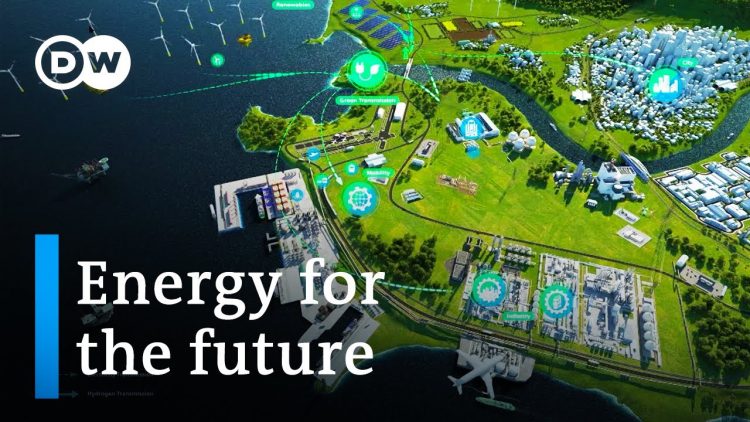
Global renewables: Pioneering the energy transition | DW Documentary
We are facing the greatest upheaval since industrialization. To stop climate change, the energy system must be transformed worldwide, and very little time remains to accomplish this. But there are places where this renewable future has already arrived, and this DW Documentary visits them to find out how they did it — and what the rest of the world can learn.
The documentary explores the question of what needs to happen in terms of politics, policies, and society to implement what is technically possible when it comes to renewable energy. The technology, the film argues, is not the problem. The solutions already exist. The challenge is everything around them: the decisions, the money, the rules, and the people who must drive the change. To answer that question, the film visits two completely different places, one in the United States and one in Bavaria, which have two things in common: both have completely converted their energy supply to renewables, and as a result, both now have more money in their coffers today than before.
The first stop is Lancaster, California, a city of about 175,000 residents aiming to become the first carbon-neutral community in the country. In 2009, officials began a journey to go green, fundamentally transforming the city’s economy and infrastructure. The hardest part, the film finds, was changing the culture within the city staff. Lancaster’s mayor, Rex Parris, began by having photovoltaic panels installed on all municipal buildings, and the city pushed solar power onto practically every rooftop available. What started as an environmental goal became an economic one: the city found that clean energy could pay for itself, and then some.
The second stop is Wunsiedel, in the German state of Bavaria — a rural region where the forest industry is key. When Marco Krasser took the helm of the regional energy supplier, everything here changed. Wunsiedel shifted to a circular system that effectively linked its regionally strong timber industry with the local energy system, turning the wood the region already produced into heat and power, and keeping the value of that energy in the community instead of sending it away. It is a very different place from Lancaster, with very different resources, and the film’s point is that both succeeded by using what they had.
The film does not stop at those two places. It provides a global overview of the solutions that already exist for a worldwide energy transition, from Copenhagen, where a newly built district called Nordhavn served as the testing ground for the EnergyLab project — a living laboratory for research into innovative and more efficient energy cycles — to Oslo, which is aiming to reduce its CO2 emissions to zero by 2030. And it asks what challenges still need to be overcome, not only in the laboratories and power plants, but also among the movers and shakers who must drive the change today.
What the Film Explores
The film explores the gap between what is technically possible and what actually happens. The renewable technologies exist. The sun shines, the wind blows, the wood grows, and the engineering to harvest them is proven. What stands between that possibility and reality is politics, policy and society: the decisions of mayors and managers, the rules that govern energy markets, and the willingness of communities to change. The film’s two main examples are chosen precisely because they show that gap being closed.
It also explores the economics of the transition. Both Lancaster and Wunsiedel now have more money in their coffers than before they converted, and the film treats that as the most important fact in the whole documentary. The energy transition is usually discussed as a cost, something to be paid for. These two places show it as an investment, something that pays. The question of whether renewables can stop the climate crisis is usually argued in the abstract; the film answers it with balance sheets.
The film looks closely at the local character of the solution. Lancaster’s answer was solar, because California has sun. Wunsiedel’s answer was timber, because Bavaria has forests. Copenhagen’s answer was a living laboratory, because Denmark has the research culture to run one. The film’s argument is that there is no single renewable future. There are many, each shaped by what a place already has, and the skill lies in seeing the resource in front of you.
Finally, the film explores what still stands in the way. The technology is ready, and the examples are real, but the transition is not happening fast enough. The film ends by asking what needs to change among the movers and shakers — the politicians, the executives, the officials — who must drive it. The answers it finds are not technical. They are human: courage, persistence, and the willingness to be first.
Key Themes
- The greatest upheaval since industrialization, and the little time left to achieve it.
- Lancaster, California, aiming to become the first carbon-neutral community in the US.
- Mayor Rex Parris, and solar panels on all municipal buildings.
- Wunsiedel, Bavaria, where the timber industry powers a circular energy system.
- Marco Krasser, who transformed the regional energy supplier.
- Both places fully converted to renewables — and both richer for it.
- Copenhagen’s Nordhavn EnergyLab, a living laboratory for energy cycles.
- Oslo, aiming to reduce CO2 emissions to zero by 2030.
Production and Background
The film is a DW Documentary production from 2023, running just under forty-three minutes. It follows DW’s method of taking a global subject — the energy transition — and grounding it in the places where it is actually happening, from a Californian city to a Bavarian forest town to a Copenhagen district. The film is the second part of a DW series on renewables, and it arrives at a moment when the question it asks — what needs to happen to implement what is technically possible — has become one of the central questions of climate policy.
Recommended Companion Viewing
Explore authoritative investigative documentaries on related historical events and investigative subjects.

Fleeing climate change — the real environmental disaster | DW Documentary
Is the sea swallowing up the land? | DW Documentary
Inside the planet’s most urgent climate warning | Global Warning E1 | Featured Documentary
Climate change – living on the water
Frequently Asked Questions
Where has the renewable future already arrived? The film visits Lancaster, California, and Wunsiedel, Bavaria. Both have completely converted their energy supply to renewables, and both now have more money in their coffers than before.
How did Lancaster go green? The city of about 175,000 residents began its transition in 2009, aiming to become the first carbon-neutral community in the US. Mayor Rex Parris started by putting solar panels on all municipal buildings, and solar spread across the city’s rooftops.
What makes Wunsiedel’s approach different? It is a rural Bavarian region where the forest industry is key. Under Marco Krasser, the regional energy supplier built a circular system linking the local timber industry with the local energy system.
What is EnergyLab Nordhavn? A living laboratory in a newly built district of Copenhagen, testing innovative and more efficient energy cycles and the business models to go with them.
Is renewable energy more expensive? The film’s examples suggest the opposite: both Lancaster and Wunsiedel ended up with more money than before they converted, because the energy they produce pays for itself.
More to watch
- Will renewables stop the climate crisis?
- Climate change – living on the water
- How heatwaves impact our lives
- ‘Sun tax’ in Spain hurting solar providers