
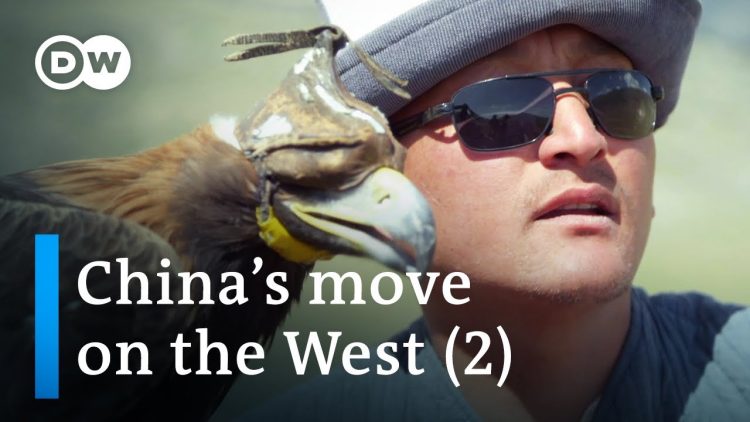
The New Silk Road, Part 2: From Kyrgyzstan to Duisburg | DW Documentary
The New Silk Road is a mammoth project meant to connect China with the West. It is a gigantic infrastructure project that Beijing says will benefit all. But this two-part documentary shows another side: of China’s self-interest and geopolitical ambitions. This second part follows the road from Kyrgyzstan to Duisburg, and the journey reveals both the promise and the price of the largest building project on Earth.
China’s path to global power leads through the legendary trade road. The filmmakers travel west on two separate paths: one team follows the sea route, along which China is expanding its support bases, while the other follows the ancient Silk Road through Central Asia. Their journey takes them through stunning landscapes and to magical places with ancient caravanserais, where the lore of the old Silk Road lives on. At the same time, they observe China’s overwhelming new influence in immense construction sites and shipping hubs.
People everywhere hope the new trade will bring them and their children work and prosperity, just as the old Silk Road did hundreds of years ago. But others fear a future dominated by China will bring them no good at all. That tension is sharpest in Kyrgyzstan, where Chinese investment has brought better roads, power lines and railways — but also environmental pollution, corruption and crippling debt. “Clean water, the mountains and nature are much more important than the money they give us,” the filmmakers are told there, and the sentence carries the film’s central question: what is development worth, if it costs you the things that matter most?
The journey continues to Oman, where Beijing has taken over large parts of a new Special Economic Zone in the desert city of Duqm. You can still see traditional Arab dhows in the old harbour at Sur, but they no longer have a place in today’s international trade. Instead, the horizon is dotted with huge container ships, many of them flying the Chinese flag — an old world of wooden boats giving way to a new world of steel and containers.
The road ends in Europe, in the French port city of Marseille, which is aiming to become the New Silk Road’s European bridgehead. A small container village in the hills above the city is the first step. Cheap textiles from the Far East are delivered here to the “Marseille International Fashion Center”. MIF 68 for short — 68 is considered a lucky number in China — it is geared towards distributing China’s products throughout Europe. The documentary shows the breathtaking dimensions of this gigantic project, one where, it would seem, no stone will be left unturned.
What the Film Explores
The film explores the scale of the New Silk Road, and the ambition behind it. This is not a road in the ordinary sense. It is a network of railways, ports, pipelines, roads and economic zones stretching from China to Europe, built with Chinese money and labour and designed to reshape world trade. The film follows it across mountains, deserts and seas, and the sheer size of what it shows leaves the viewer in no doubt about what is happening.
It also explores the bargain at the heart of the project. Everywhere the road goes, people hope it will bring work and prosperity, and everywhere it brings something else as well: debt, pollution, corruption, and dependence. Kyrgyzstan got roads and railways, and also environmental damage and debts it may never repay. The film does not argue the bargain is never worth it — only that the people making it deserve to know the full price. The rise of China as a global power is the backdrop to the whole story, and the New Silk Road is its clearest expression.
The film looks closely at what the old Silk Road has become. The ancient caravanserais, the dhows of Sur, the lore of the traders who crossed Central Asia for centuries — all of it is still there. But the new road is not a revival of the old one. The old Silk Road was a network of many peoples trading with each other; the new one is a project of a single state, built to serve that state’s interests.
Finally, the film explores what the New Silk Road means for Europe. Marseille’s container village is small now, but its ambition is not: to become the bridgehead through which Chinese goods flow into Europe. The film ends with the same question it asked in Kyrgyzstan: who benefits from this project, and who pays?
Key Themes
- The New Silk Road, a mammoth project to connect China with the West.
- Two journeys: the sea route, and the ancient Silk Road through Central Asia.
- Kyrgyzstan: better roads, power lines and railways — and pollution, corruption and crippling debt.
- “Clean water, the mountains and nature are much more important than the money they give us.”
- Oman and the Duqm Special Economic Zone, largely taken over by Beijing.
- The dhows of Sur, and the container ships that have replaced them.
- Marseille, aiming to become the New Silk Road’s European bridgehead.
- MIF 68, the container village distributing Chinese goods across Europe.
Production and Background
The film is a DW Documentary production from 2019, the second part of a two-part series on the New Silk Road. The first part followed the road from China to Pakistan; this instalment continues the journey westward, from Kyrgyzstan through Oman to Duisburg and Marseille. It follows DW’s method of sending its authors along the route itself, filming in the landscapes and the construction sites, and letting the people who live along the road explain what it means to them. The series was made at a moment when China’s Belt and Road Initiative was becoming one of the most debated projects in world politics, and the film’s even-handed account — hope and fear, progress and price — remains one of the clearest introductions to it.
Recommended Companion Viewing
Explore authoritative investigative documentaries on related historical events and investigative subjects.

North Korea - Propaganda and the next generation
Inside the AfD - How Germany's Far-Right Populist Party Operates
Inside the Polarization
The New Silk Road, Part 1: From China to Pakistan | DW Documentary
Frequently Asked Questions
What is the New Silk Road? A gigantic Chinese infrastructure project — also known as the Belt and Road Initiative — meant to connect China with the West through railways, ports, roads and economic zones across Central Asia, the Middle East and Europe.
What does the film show in Kyrgyzstan? Chinese investment bringing better roads, power lines and railway lines, but also environmental pollution, corruption and crippling debt — and local people who value clean water, mountains and nature more than the money.
What is happening in Duqm, Oman? Beijing has taken over large parts of a new Special Economic Zone in the desert city, while traditional Arab dhows in the old harbour at Sur have been replaced by huge container ships.
What is MIF 68? The “Marseille International Fashion Center”, a container village in the hills above Marseille geared towards distributing Chinese products throughout Europe. The number 68 is considered lucky in China.
Is this the first part of the series? No. This is part two; part one followed the road from China to Pakistan. Each part follows a different stretch of the route.
More to watch
- Rise of China
- Mao’s China: Against the World
- China’s plan to never run out of food
- North Korea’s alliance with China and Russia







