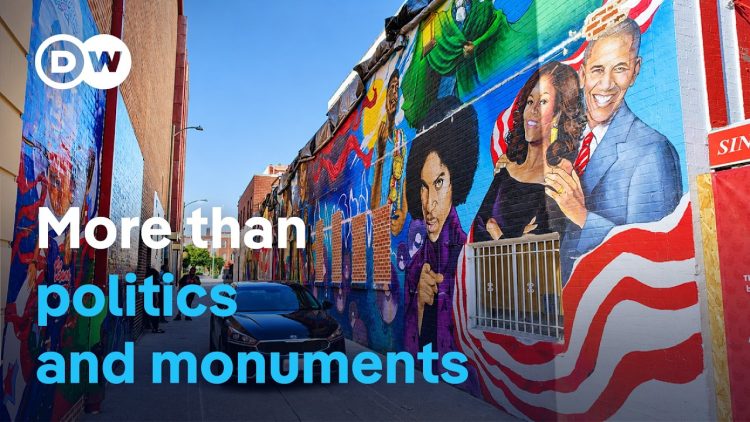
Between Capitol Hill and Black Broadway – Washington, D.C.’s hidden worlds
Barely a day goes by without images of Washington, D.C. being in the media. The US capital is the nation’s political heart, and its iconic landmarks exude a sense of history. This documentary starts there, with the city the world thinks it knows — and then it walks away from the monuments, to find the city that lives behind them.
Washington’s monuments and memorials are known around the world. They tell the story of the United States, from the White House to the Capitol and the Lincoln Memorial, where Martin Luther King Jr. delivered his famous “I Have a Dream” speech. The film gives those landmarks their due: they are the reason the world looks at Washington, and they carry the history of the country in stone. But the documentary’s point is that they are not the whole city.
Proximity to the corridors of power is just one reason for the city’s appeal. Away from the monumental avenues and boulevards lies a vibrant cultural scene that dances to the beat of go-go. The genre, created by local African American musicians, still fills the funk clubs on what is known as “Black Broadway” in the U Street neighborhood. The film moves from the marble of the memorials to the music of U Street, and treats both as the same city — one political, one cultural, both Washington.
Washington is a city of contrasts. In the 1970s, its nonwhite majority population gave it the nickname “Chocolate City”. It is a place where people of all kinds try to realize humanity’s greatest ideas: freedom, equality, democracy and human rights. D.C. is a political idea, carved in the marble of its monuments. And yet behind its famous facades, the city has more to offer than many realize. The documentary’s subject is that gap between the idea and the place — between the city of marble and the city of music.
What the film leaves the viewer with is a Washington that is larger than its postcards. The monuments tell one story, the story of the United States as a political idea. Black Broadway tells another, the story of the people who made the city’s culture. The documentary’s achievement is to hold both stories at once, and to show that the capital is not only where power sits, but where people live — and dance.
What the Film Explores
The film explores the monumental city first, because that is the Washington the world knows. The White House, the Capitol, the Lincoln Memorial — and the “I Have a Dream” speech delivered there by Martin Luther King Jr. — are the landmarks that define the capital in the world’s imagination. The documentary shows them as the film’s starting point, not its destination: the story of the United States, told in stone, and the reason barely a day goes by without images of the city in the media.
A second thread follows the city away from the monuments, to U Street and “Black Broadway”. The film’s subject here is go-go, the genre created by local African American musicians, which still fills the funk clubs of the neighborhood. The documentary treats go-go not as a footnote to the capital’s story but as a central part of it — a living culture, made by the city’s own people, in a neighborhood whose name carries the history of Black Washington.
A third thread follows the nickname “Chocolate City”, given to Washington in the 1970s when its nonwhite majority population made it a majority-Black city. The film uses the nickname to open up the question of who Washington belongs to: a city that is at once the seat of national power and a place where people of all kinds try to realize humanity’s greatest ideas — freedom, equality, democracy and human rights. The contrast is the film’s subject, and it returns to it again and again.
Running through the film is the idea of D.C. as a political idea carved in marble — and the reality behind the facades. The monuments present the United States as an idea; the streets present it as a place where people live, work, make music and argue about what those ideas mean. The documentary’s point is that both are true, and that the city is more than many realize precisely because it contains both.
Key Themes & Topics Examined
- Washington, D.C.: the nation’s political heart
- The White House, the Capitol and the Lincoln Memorial
- Martin Luther King Jr. and the “I Have a Dream” speech
- Go-go: the genre created by local African American musicians
- “Black Broadway” and the funk clubs of the U Street neighborhood
- “Chocolate City”: the nickname from the 1970s
- Freedom, equality, democracy and human rights
- A city of contrasts: marble monuments and a living culture
Production & Background
The documentary is a DW Documentary production filmed in Washington, D.C., moving between the monumental core of the capital — the White House, the Capitol, the Lincoln Memorial — and the U Street neighborhood, home of “Black Broadway” and the go-go scene.
The film’s structure follows the city itself: from the landmarks the world knows, to the neighborhoods it does not, and back again. It is a portrait of a capital that is both a political idea and a place where people live.
Recommended Companion Viewing
Explore authoritative investigative documentaries on related historical events and investigative subjects.

The housing crisis in Los Angeles - Between homelessness and luxury real estate
Economist on How High Inflation Takes Time To Build Up
How to Lose $35 Billion Dollars Betting on AI
The power of the drugs mafia - Cocaine and the Netherlands
Frequently Asked Questions
What is Black Broadway?
The name for the U Street neighborhood in Washington, D.C., known for its funk clubs and its cultural scene. The film presents it as the other Washington — the city behind the monumental facades.
What is go-go?
A music genre created by local African American musicians, which still fills the funk clubs on “Black Broadway” in the U Street neighborhood. The film treats it as a living part of the city’s culture.
Why was Washington called “Chocolate City”?
In the 1970s, the city’s nonwhite majority population gave it the nickname “Chocolate City”. The film uses it to open up the question of who Washington belongs to.
What does the film show beyond the monuments?
A vibrant cultural scene away from the monumental avenues — go-go music, the funk clubs of U Street, and a city of contrasts where people of all kinds try to realize the ideas of freedom, equality, democracy and human rights.
What is the film’s central idea?
That D.C. is a political idea, carved in the marble of its monuments — and yet behind its famous facades, the city has more to offer than many realize.