
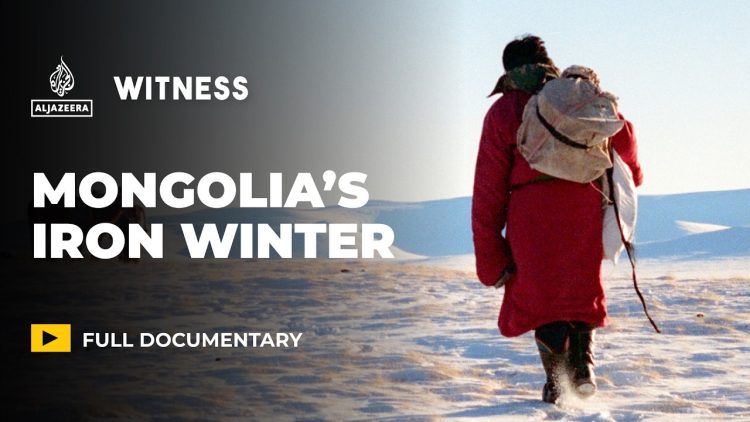
Mongolia’s Deadly Winter: Two Teenagers Fight to Save an Ancient Tradition
In Mongolia’s remote Tsakhir Valley, horses mean survival. For generations, herders protected their horses from winter storms by gathering a vast herd and nominating their bravest young men to protect it. It was a duty, a test and a rite of passage all at once — the moment a young man proved himself by standing between the herd and the storm. But mounting environmental pressures forced the centuries-old tradition to be abruptly abandoned in 2019, and with it came the fear that the rite of passage would be lost forever.
Determined to reclaim their heritage, village elders pledge to revive the winter herd — and they place the daunting responsibility on two teenage friends. The boys must safeguard the horses through what becomes Mongolia’s deadliest winter on record. Over several brutal months, they battle blizzards, exhaustion and doubt, and they discover, as the film puts it, that in the Iron Winter, nothing can survive alone.
The film is built around that simple, stark premise: two boys, a herd of horses, and a winter that does not forgive mistakes. There is no safety net in the Tsakhir Valley when the storms come. The herd is the village’s wealth and its future, and the boys are its only line of defence. The documentary follows them day by day as the cold deepens, the snow piles up, and the responsibility they have taken on grows heavier with every storm.
What makes the story work is the friendship at its centre. The two teenagers face the winter together, and the film is as interested in what the ordeal does to them as in what it does to the horses. They doubt themselves, they argue, they get exhausted — and they keep going, because the herd has to be watched and because the village is counting on them. The tradition they are trying to revive is not a ceremony performed for cameras. It is a job, done in the cold, by young men who have agreed to do it.
By the end, the film has become something larger than a story about a winter. It is a story about what a community does when a tradition it has lived by for centuries is taken away — and about the choice to take it back, even when the conditions are worse than they have ever been. The elders’ decision to revive the herd, and the boys’ decision to accept the task, are presented as two halves of the same act: a village refusing to let its heritage die, and two teenagers learning what that refusal costs.
What the Film Explores
The film explores the tradition itself first: the winter herd, gathered from across the valley, and the young men nominated to protect it. For generations, the bravest young men of the village were given this task, and the documentary treats it as more than a custom. It was how the community kept its horses alive through the storms, and how it marked the passage of its young men into adulthood. Understanding the tradition means understanding that it was never decorative — it was practical, and it was essential.
A second thread follows the break in 2019, when mounting environmental pressures forced the centuries-old tradition to be abruptly abandoned. The film does not linger on the causes in the abstract; it shows the consequence, which was the fear that the rite of passage would be lost forever. A tradition abandoned for even a few years can become a tradition forgotten, and the documentary’s urgency comes from that gap — the years between the abandonment and the revival, during which the knowledge of how to do it might have slipped away.
A third thread follows the revival itself, and the two teenage friends at its centre. The village elders pledge to bring the winter herd back, and the boys take on the job of safeguarding the horses. The film follows them through the months of the winter as they battle blizzards, exhaustion and doubt. The winter they face turns out to be Mongolia’s deadliest on record, which raises the stakes of everything they do: every decision matters more, every storm is more dangerous, and the margin for error is gone.
Running through the film is the idea in its closing line — that in the Iron Winter, nothing can survive alone. The boys survive because they have each other, the horses survive because the boys watch them, and the tradition survives because the village decides together to revive it. The documentary’s argument is that survival in the Tsakhir Valley has always been a collective act, and that the winter herd is the clearest expression of it: a whole community, gathered around a herd, in the cold.
Key Themes & Topics Examined
- The Tsakhir Valley, where horses mean survival
- The winter herd: a vast herd gathered to face the storms
- The bravest young men, nominated to protect the herd
- A centuries-old tradition and rite of passage
- The abrupt abandonment of the tradition in 2019
- Mounting environmental pressures on the herders
- Two teenage friends given the daunting responsibility
- Mongolia’s deadliest winter on record — blizzards, exhaustion and doubt
Production & Background
Iron Winter is a documentary film by Kasimir Burgess, presented by Al Jazeera English as part of its Witness strand. The Witness documentaries are built around intimate, character-led stories from around the world, and this film follows that pattern: a small cast, a remote location, and a story that unfolds over months rather than days.
The film’s setting is the Tsakhir Valley in Mongolia, and its subject is a herding tradition that had been abandoned in 2019 and revived by the village elders. The documentary’s structure follows the winter itself — the decision to revive the herd, the months of guarding it, and the outcome — with the two teenage friends at the centre throughout.
Recommended Companion Viewing
Explore authoritative investigative documentaries on related historical events and investigative subjects.

How Germany's elite research institution fails young scientists
No future in Germany? Why skilled Polish workers are going home
Bill Gates' Daughter is in Trouble
Greater Israel: How Christian Zionism became policy
Frequently Asked Questions
What is the winter herd?
A tradition in which herders gathered a vast herd of horses and nominated their bravest young men to protect it from winter storms. In the Tsakhir Valley, where horses mean survival, the herd was the village’s wealth and its future.
Why was the tradition abandoned?
Mounting environmental pressures forced the centuries-old tradition to be abruptly abandoned in 2019, sparking fears that the rite of passage would be lost forever.
Who revived it?
Village elders, determined to reclaim their heritage, pledged to revive the winter herd — and placed the responsibility on two teenage friends.
What did the two boys face?
They had to safeguard the horses through what became Mongolia’s deadliest winter on record, battling blizzards, exhaustion and doubt over several brutal months.
Who made the film?
Iron Winter is a documentary film by Kasimir Burgess, presented by Al Jazeera English in its Witness strand.







