City of the Future: Singapore – Full Episode | National Geographic
The future of the world lies in its urban environments. More than half of the world’s population now lives in cities, and the question of how those cities will feed, house and move their people is the great planning challenge of the century.
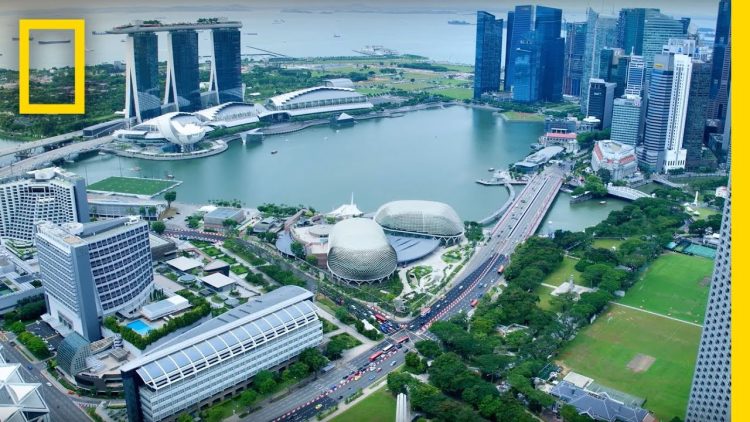
Singapore is a land-scarce nation, and the question is often not what to build but where to build. The Urban Redevelopment Authority is in charge of identifying the future needs of all of Singapore’s land, and the city plans its development forty years ahead of time. Since independence in 1965, Singapore has used land reclamation to increase its land mass by about 23 percent, and Marina Bay, a vast engineering project decades in the making, is the most striking example of what that planning can achieve.
Housing is the foundation of the whole project. Singapore’s Housing and Development Board has built a million flats, creating one of the most successful public housing programmes in the world, and it is now looking to high-tech solutions to provide not only enough living space but a better quality of life for decades to come. Computer models help architects and planners improve the environmental quality of each town, encouraging the tropical breezes to flow through the buildings.
Food and water are the hardest problems, and the film follows the people solving them. Singapore imports 93 percent of its produce, so controlled-environment agriculture is essential: Sustenir Agriculture grows crops indoors without sunlight or soil, controlling temperature, humidity and light wavelength so precisely that it can emphasise specific characteristics of plants without genetic modification, producing Singaporean-grown strawberries and sweeter kale. Researchers at Singapore Polytechnic’s Food Innovation Centre are working on personalised nutrition for an ageing population, using wearable technology to measure individual needs and a 3D printer to produce food tailored to them, such as chicken rice enriched with calcium or potassium. On water, the country collects rainwater through an extensive network of rivers and canals into 17 reservoirs, and is investing in desalination to secure its supply. Even delivery is being reinvented: the Airbus Skyways project is testing drones for urban air delivery, with aircraft designed for safety and capable of carrying parcels of up to four kilograms.
What the Film Explores
The film explores how a city plans when it cannot afford to get it wrong. Singapore’s forty-year planning horizon is the thread that runs through every story in the film: the land reclamation, the underground layers, the housing models, the food farms.
It also explores the idea that the future of the city is vertical. With no land to spare, Singapore is building upwards and downwards at the same time: underground for infrastructure, upwards for housing, and into the air rights above its roads for the sky gardens of the future.
Finally, the film explores food as a technology problem. The vertical farms and the personalised nutrition work are presented not as novelties but as necessities: a city that imports 93 percent of its food cannot rely on the goodwill of its suppliers forever. The film’s closing argument is that Singapore could one day be self-sustained in food production, and that the techniques it is pioneering — growing food without soil or sunlight, tailoring meals to the person eating them — are ones that densely populated cities everywhere will eventually need.
Key Themes
- Planning forty years ahead: the Urban Redevelopment Authority maps the future needs of every parcel of land in a country with almost none to spare.
- Reclaiming land: since independence in 1965, reclamation has increased Singapore’s land mass by about 23 percent.
- A million flats: the Housing and Development Board’s public housing programme is one of the most successful in the world.
- Building up and down: underground infrastructure layers and Jason Pomeroy’s sky courts push the city into the space above and below it.
- Growing food indoors: vertical farms like Sustenir grow strawberries and kale without sunlight, soil or genetic modification.
- Water security: rainwater is collected into 17 reservoirs, with desalination securing the supply as the climate changes.
- Drones overhead: the Airbus Skyways project tests drone delivery for parcels of up to four kilograms in the city.
Production and Background
The film is a National Geographic production, part of the broadcaster’s City of the Future series, and it follows the series’ method: visionary thinkers and innovators as guides, with the camera moving between the planning office, the farm, the laboratory and the building site.
Singapore’s model is not one that every city can copy: it depends on a small, wealthy, highly centralised state with the power to plan decades ahead.
Recommended Companion Viewing
Explore authoritative investigative documentaries on related historical events and investigative subjects.

Westminster Abbey: The Most Important Church in England
Gothic architecture - When cathedrals reached up to the heavens
Inside A Perfectly-Preserved 15th-Century Medieval Manor House
Frequently Asked Questions
Why is Singapore called a city of the future? Because it plans its development forty years ahead, reclaims land from the sea, builds infrastructure underground, grows food in vertical farms and tests drone delivery, all to overcome severe land and resource scarcity.
How much of Singapore’s food is imported? About 93 percent of its produce is imported, because the country has very little farmland. That is why it is investing in controlled-environment agriculture, such as Sustenir’s indoor farms, which grow crops without sunlight or soil.
What is the Bee House? It is Singapore’s first zero-carbon house, designed by architect Jason Pomeroy. Pomeroy’s wider vision is for structures built over roads and motorways, with rooftops becoming sky courts and sky gardens.
How does Singapore secure its water? It collects rainwater through a network of rivers and canals into 17 reservoirs, and it is investing in desalination as an additional source, so that a warming climate and growing demand do not leave the city short.
More to watch
- Copenhagen – The world’s greenest capital city?
- Gothic architecture – When cathedrals reached up to the heavens
- Westminster Abbey: The Most Important Church in England
- Africa’s Tech Pioneers – Innovative Solutions for a Sustainable Future
- The Future of Veritasium
Singapore is not the only city betting its future on green design: Copenhagen – The world’s greenest capital city? asks whether the Danish capital has already got there.