Climate protection from moors
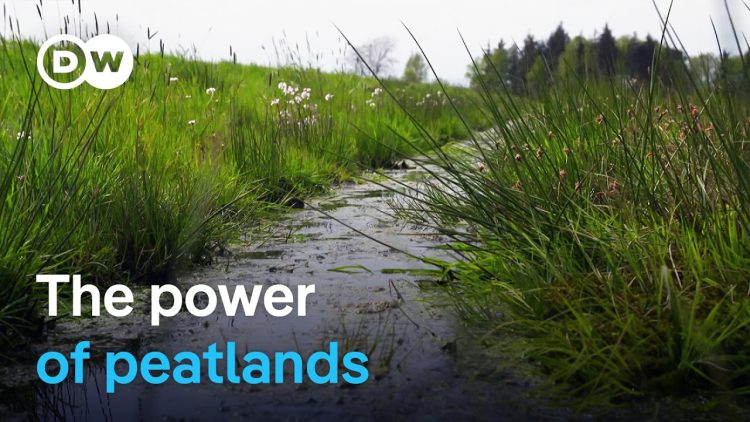
Peatlands bind more carbon than forests. But in Germany, almost all the country’s natural peatlands have been drained — and now they are emitting greenhouse gases instead of storing them. People around the world are currently working to rewet the moors, while keeping them usable for agriculture. This documentary follows that effort, from the laboratories of northern Germany to the fields of England.
The scale of the problem is large, and it has been hiding in plain sight. Dry peatlands are responsible for seven percent of all greenhouse gas emissions in Germany. Taken together, all the moorland areas in Germany cover over 1.5 million hectares — but much of this moorland has given way to pasture and arable land over the centuries. Drained, the moors lose their ability to store greenhouse gases. In Germany alone, they could store about as much carbon as the entire German forest — but they must remain wet.
That is the challenge at the heart of the film: how do you put the water back without taking the land away from the people who farm it? Scientists Greta Gaudig and Sabine Wichmann from the Greifswald Moor Centrum are working on a strategy to rewet the moors while keeping them usable for agriculture. To accomplish this, they are testing the cultivation of peat mosses and cattails — plants that thrive in wet ground and that could be used to produce environmentally friendly potting soil and building materials. This way, farmers could continue generating income while saving the moors.
The idea is already working beyond Germany. In Bristol, young entrepreneurs are producing a sustainable down substitute using cattails — and with success, because the product is selling well. Several farmers in England are now converting their drained fields back to wet moorland for farming, because for the first time they have found a way to protect the moors and continue to make a living from their land.
The film’s quiet message is that climate protection does not always look like a wind turbine or a solar panel. Sometimes it looks like a wet field, a crop of cattails, and a farmer who can earn a living from land that is doing two jobs at once: producing something useful, and holding carbon safely in the ground where it belongs.
What the Film Explores
The film explores the science of peat first: why moors store carbon, and why draining them reverses the process. A wet moor locks carbon away in waterlogged, oxygen-poor soil; drain it, and the stored carbon is exposed to the air and released as greenhouse gas. That is how land that once protected the climate became responsible for seven percent of Germany’s greenhouse gas emissions — a share that comes not from a power station or a factory, but from fields that look, to the untrained eye, perfectly ordinary.
A second thread follows the land itself. More than 1.5 million hectares of moorland in Germany have, over the centuries, given way to pasture and arable land — a slow transformation that drained the country’s natural peatlands almost completely. The film shows what was lost in that transformation: a landscape that could store about as much carbon as the entire German forest, if only it stayed wet. The numbers make the point that moors are not a marginal habitat but one of the country’s largest carbon stores.
A third thread follows the people trying to put the water back. Greta Gaudig and Sabine Wichmann at the Greifswald Moor Centrum are testing a practical compromise: rewet the moors, but keep them productive by growing peat mosses and cattails that can be turned into potting soil and building materials. In Bristol, young entrepreneurs are proving the market side of the same idea, selling a sustainable down substitute made from cattails — and the farmers in England who are converting their drained fields back to wet moorland are proof that the compromise can work in both directions.
Running through the film is a question about what climate action looks like when it has to work for the people who live with it. Rewetting a moor is not just a technical fix; it is a negotiation with farmers, markets and centuries of land use. The film’s answer is that the negotiation can succeed — when the wet land still pays its way, protecting the climate and earning a living stop being opposites.
Key Themes & Topics Examined
- Peatlands bind more carbon than forests
- Seven percent of Germany’s greenhouse gas emissions from dry peatlands
- Over 1.5 million hectares of moorland in Germany
- Moors that could store as much carbon as the entire German forest
- Greta Gaudig and Sabine Wichmann at the Greifswald Moor Centrum
- Growing peat mosses and cattails on rewetted moors
- Potting soil and building materials from moor plants
- A sustainable down substitute from cattails in Bristol
Production & Background
The documentary is a DW Documentary production that follows scientists and farmers working on moorland restoration in Germany and England. Its central voices are Greta Gaudig and Sabine Wichmann from the Greifswald Moor Centrum, who are developing the strategy for rewetting moors while keeping them usable for agriculture, and the young entrepreneurs in Bristol who are turning cattails into a sustainable down substitute.
The film moves from the drained moors of Germany — where almost all the country’s natural peatlands have been lost to pasture and arable land — to the rewetted fields of England, where farmers are converting drained land back to wet moorland. Its structure follows the problem, the science and the solution, in that order.
Recommended Companion Viewing
Explore authoritative investigative documentaries on related historical events and investigative subjects.

The Global North taken to court - Who pays for the climate catastrophe?
Climate change – living on the water
Climate change: Europe's melting glaciers
How heatwaves impact our lives
Frequently Asked Questions
What is this documentary about?
It shows how drained peatlands in Germany have become a major source of greenhouse gases — and how scientists and farmers are rewetting the moors while keeping them usable for agriculture.
How much carbon can moors store?
Peatlands bind more carbon than forests. In Germany alone, the moors could store about as much carbon as the entire German forest — but only if they remain wet.
Why are dry peatlands a problem?
Drained, moors lose their ability to store greenhouse gases. Dry peatlands are responsible for seven percent of all greenhouse gas emissions in Germany.
How can farmers keep earning from wet moors?
By growing peat mosses and cattails, which can be used for environmentally friendly potting soil and building materials — and in Bristol, a sustainable down substitute made from cattails is already selling well.
Who is working on the rewetting strategy?
Scientists Greta Gaudig and Sabine Wichmann from the Greifswald Moor Centrum in Germany.