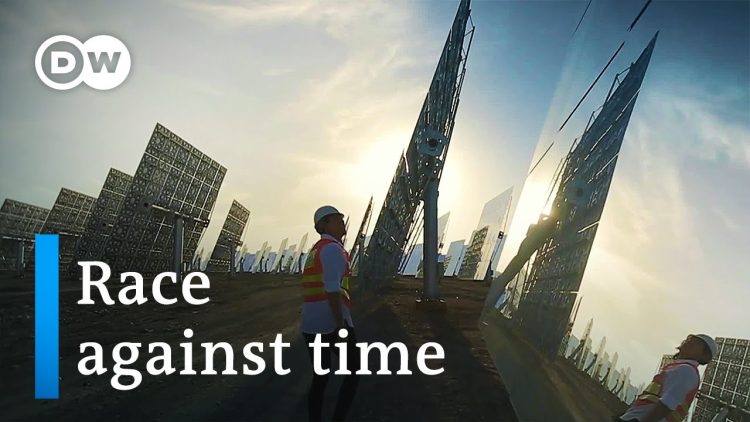
Will renewables stop the climate crisis?
Mankind is facing the greatest upheaval since industrialization. To stop climate change, the energy system must be transformed worldwide and fossil fuels must be completely replaced. But is this even possible? That is the question this documentary sets out to answer — the first part of a two-part film about the global energy transition.
Time is running out. If climate targets are still to be met and the survival of future generations is to be ensured, virtually all fossil energy sources worldwide will have to be replaced by renewables by 2050. That leaves us with almost exactly one generation from today to make this massive change. So what needs to happen for the global energy transition to succeed? The film treats that question not as a slogan but as an engineering problem with a deadline.
Part 1 looks at the question of whether it is even possible to provide enough green energy for the whole world. How can the oil economy be replaced? The film travels to places that could one day become the Saudi Arabia of renewable energies — for example, gigantic offshore wind farms in the North Sea, or the most modern solar fields in Spain. One day, these regions will supply all of Europe with electricity.
But generating the energy is only half the challenge. The globally increasing demand for energy must be met in ways that are both sustainable and affordable, and the film follows the researchers working on that problem. At the Technical University of Ilmenau in Thuringia, a team is working with researchers from the California Institute of Technology on high-tech materials that will make renewable energies more efficient — and less expensive than their fossil fuel predecessors.
The documentary leaves the viewer with the scale of the task and the seriousness of the deadline: a complete transformation of the world’s energy system within a single generation, and a question — will renewables stop the climate crisis? — that the second part of the film continues to explore.
What the Film Explores
The film explores the deadline first: by 2050, virtually all fossil energy sources worldwide will have to be replaced by renewables if climate targets are to be met. That is almost exactly one generation from today, and the film keeps returning to what that means in practice — not just building new power plants, but rebuilding the entire energy system on which modern life depends, in the time it takes a child born today to grow up.
A second thread follows the question of supply: is it even possible to provide enough green energy for the whole world? The film’s answer is to show the places where it is already happening at scale — the gigantic offshore wind farms in the North Sea and the most modern solar fields in Spain, regions that could one day become the Saudi Arabia of renewable energies and supply all of Europe with electricity. The point is that the resources are there; the question is whether the world can build the infrastructure fast enough.
A third thread follows the question of cost and materials. Renewable energy must be not only sustainable but affordable, and the film visits the researchers at the Technical University of Ilmenau in Thuringia who are working with a team from the California Institute of Technology on high-tech materials. Their goal is to make renewables more efficient and less expensive than fossil fuels — because a transition that people cannot afford is a transition that will not happen.
Running through the film is the comparison the opening draws: this is the greatest upheaval since industrialization. The industrial revolution changed how the world makes things, moves and lives; the energy transition must change how the world powers all of it, and do it in a generation. The film does not promise that renewables will stop the climate crisis — it asks whether they can, and shows the people working to make the answer yes.
Key Themes & Topics Examined
- The greatest upheaval since industrialization
- Replacing virtually all fossil energy by 2050
- One generation to transform the world’s energy system
- Offshore wind farms in the North Sea
- The most modern solar fields in Spain
- Regions that could become the Saudi Arabia of renewables
- High-tech materials from Ilmenau and Caltech
- Making renewables cheaper than fossil fuels
Production & Background
The documentary is a DW Documentary production and the first part of a two-part film about the global energy transition. It travels from the offshore wind farms of the North Sea to the solar fields of Spain, and into the laboratories of the Technical University of Ilmenau in Thuringia, where researchers are working with a team from the California Institute of Technology on the materials that could make renewables cheaper than fossil fuels.
The film’s structure follows its central question: first the deadline and the scale of the change, then the places where green energy is already being produced at scale, then the research that could make it affordable. A second part continues the story, and the film makes clear that the question in its title is still open.
Recommended Companion Viewing
Explore authoritative investigative documentaries on related historical events and investigative subjects.

Climate change – living on the water
Rivers Under Pressure: From Drought and Competing Agendas
How heatwaves impact our lives
Climate protection from moors
Frequently Asked Questions
What is this documentary about?
It asks whether renewable energies can stop the climate crisis — and whether the world’s energy system can be transformed in time. It is the first part of a two-part documentary.
How much time is left?
Virtually all fossil energy sources worldwide will have to be replaced by renewables by 2050 — almost exactly one generation from today.
Where could the green energy come from?
Places like the gigantic offshore wind farms in the North Sea and the most modern solar fields in Spain, which could one day supply all of Europe with electricity.
What are researchers working on?
At the Technical University of Ilmenau in Thuringia, a team is working with researchers from the California Institute of Technology on high-tech materials to make renewables more efficient and less expensive than fossil fuels.
Is there a second part?
Yes — this is Part 1 of a two-part documentary, and the second part continues the story of the energy transition.