
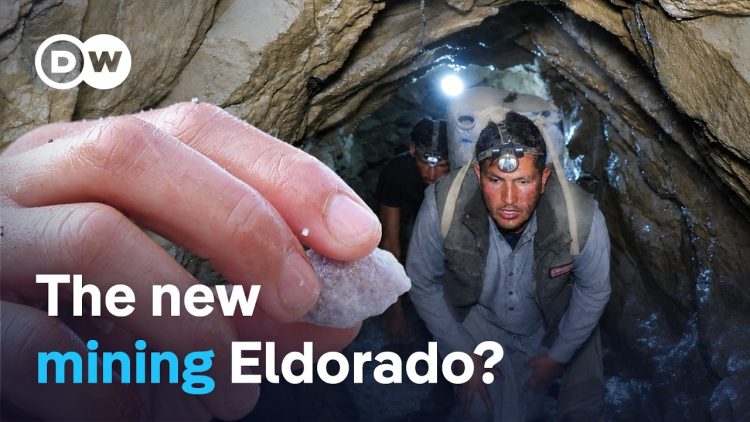
Afghanistan’s raw materials – The race is on
Afghanistan possesses an invaluable wealth of mineral resources. That single fact is the starting point of this documentary — and, the film argues, the reason the country has become the object of a new kind of competition. Following the Taliban’s takeover, the old patterns of investment broke apart. Europe and the US are holding back, while other countries are already jostling for access.
The countries the film names are China, Russia, Turkey, Qatar, Pakistan and India, and it presents them as seeing real opportunities for economic investment in Afghanistan. The focus of that interest is the raw materials themselves — materials that are important for the global energy, technology and industrial sectors. In other words, the competition is not about Afghanistan alone. It is about the inputs that the world’s energy transition, its technology industries and its factories all depend on, and about who gets to supply them.
Some of these countries are already establishing contacts in the Afghan capital, Kabul. The film follows that quiet diplomacy — the meetings, the relationships being built, the groundwork being laid while the bigger Western economies stay on the sidelines. At the same time, it points out that the country’s strategic location is also of interest, quite apart from what lies underground. Afghanistan sits where regions meet, and that position has always been part of its value to outside powers.
Against the jostling, the film sets the caution of Europe and the US, who remain hesitant. It gives three reasons for that caution, and it keeps returning to them: political uncertainties, security risks and legal hurdles. Each of those is a different kind of obstacle — uncertainty about who to deal with and on what terms, the risk of operating in an insecure environment, and the legal questions that surround investment under a government many countries do not recognise. Together, the film argues, they are enough to keep Western investment on hold even as others move in.
The documentary’s title says it plainly: the race is on. The film’s question is what that race will mean — for Afghanistan, for the countries competing for its resources, and for the wider world that depends on the materials at stake. It does not offer a prediction. Instead it lays out the two sides of the contest as they stand now: the countries already jostling for access, and the countries holding back, and the wealth underground that has brought them both to the same table.
What the Film Explores
The film explores the mineral wealth itself first, and the scale of what is at stake. Afghanistan’s resources are described as an invaluable wealth, and the documentary treats that wealth as the engine of everything that follows. The point is not the geology alone but the fact that these are raw materials the global energy, technology and industrial sectors need — which is why a country that has been defined in the world’s imagination by war is now being defined, in the film’s telling, by what lies beneath its soil.
A second thread follows the countries that are moving in. China, Russia, Turkey, Qatar, Pakistan and India are named as seeing opportunities for economic investment, and the film shows how that interest is already taking practical form: contacts being established in Kabul, relationships being built with the people in power. The documentary’s interest is in the speed of it — how quickly the jostling began after the Taliban’s takeover, and how concrete the engagement already is.
A third thread follows the countries that are not moving: Europe and the US. The film is careful to explain their caution rather than simply noting it, and it gives three distinct reasons. Political uncertainties — the question of who governs and on what terms. Security risks — the danger of operating in the country at all. And legal hurdles — the complications of investing under a government whose standing is unresolved. The film presents these as real obstacles, not as excuses, and it shows how they have left the field open to others.
Running through the film is the question of location. Afghanistan’s strategic position is of interest in its own right, the documentary notes, quite apart from its minerals. The film does not spell out a single answer to what that means, but it keeps the two kinds of value — what is underground and where the country sits — side by side, so the viewer understands that the race is about both at once.
Key Themes & Topics Examined
- Afghanistan’s invaluable wealth of mineral resources
- The Taliban’s takeover and the break in old investment patterns
- China, Russia, Turkey, Qatar, Pakistan and India jostling for access
- Raw materials for the global energy, technology and industrial sectors
- Contacts being established in the Afghan capital, Kabul
- Afghanistan’s strategic location
- Europe and the US holding back on investment
- Political uncertainties, security risks and legal hurdles
Production & Background
The documentary is a DW Documentary production about the competition for Afghanistan’s mineral resources in the wake of the Taliban’s takeover. Its frame is economic and geopolitical rather than military: it follows money, contacts and access rather than armies.
The film’s structure follows the race it describes — the wealth, the suitors, the cautious, and the location — and it leaves the outcome open. The competition it documents is still running, and the documentary’s point is that the stakes are high precisely because the materials at issue matter to the whole world, not only to the countries at the table.
Recommended Companion Viewing
Explore authoritative investigative documentaries on related historical events and investigative subjects.

How a Mexican Migrant Farmer’s Journey to the U.S. Turned Fatal
Fmr. Trump Envoy on Negotiating the Abraham Accords | Jason Greenblatt (Interview)
Greater Israel: How Christian Zionism became policy
America, But Not Quite: Inside Puerto Rico
Frequently Asked Questions
What raw materials does Afghanistan have?
The film describes an invaluable wealth of mineral resources, and says the focus is on raw materials that are important for the global energy, technology and industrial sectors. It speaks of those resources in general terms, as the prize in the competition it documents.
Which countries are competing for access?
China, Russia, Turkey, Qatar, Pakistan and India are named as seeing opportunities for economic investment in Afghanistan, and some of them are already establishing contacts in Kabul.
Why are Europe and the US holding back?
According to the film, they remain cautious primarily for three reasons: political uncertainties, security risks and legal hurdles.
Why does Afghanistan’s location matter?
The documentary notes that the country’s strategic location is also of interest, quite apart from its mineral wealth — Afghanistan sits where regions meet, and that position has always been part of its value to outside powers.
What is the race about?
Access to Afghanistan’s mineral resources, and to the country itself. The film presents it as a contest between countries already jostling for a share and countries holding back, with the outcome still undecided.







