
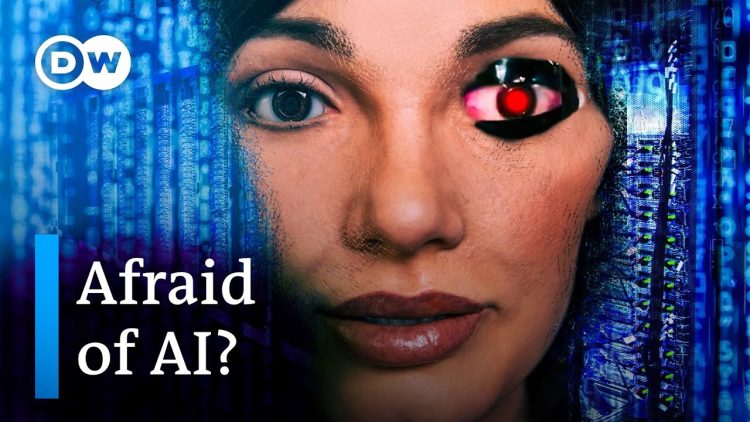
How Artificial Intelligence is Making Creatives Superfluous
The impact of artificial intelligence is not limited to high-tech laboratories in Silicon Valley, or to the discussion about chatbots like ChatGPT and Bard. It has also taken the art world by storm, and it plays a role in our day-to-day lives. When an AI engine can create astonishing paintings in various artistic styles in just a brief moment, it creates endless possibilities, not only for artists but for regular people as well. That is the starting point of this episode of Arts Unveiled, which asks the question in its title: is artificial intelligence making creatives superfluous?
The question is sharper than it first sounds. If a machine can do it faster and more precisely, does that make the artist obsolete? It could be argued that only humans with real emotions are able to create art, because art is ultimately connected to expression and therefore to emotion, and a computer simply cannot feel emotion. So can an AI put real meaning into a painting? And can you even call these artificial paintings art? The film does not settle those questions quickly: it takes them seriously, and it goes to the people who are living with them, artists, curators, engineers and professors, to find out what the answers look like in practice.
The film travels widely to find those answers. It speaks with artists like Leon Lowentraut, known as Baby Picasso, and with Studio Drift, the Dutch art collective working with Google Quantum AI. It visits the museum world, including the Vitra Design Museum and the Bauhaus Archiv, and talks to professors at the Hochschule Kaiserslautern. It looks at work from Boston Dynamics, Universal Everything and OpenAI, and from researchers at TU Delft. And it shows the range of what AI is already doing in art: from 3D-printed Rembrandt paintings to enchanting drone shows, a robot that paints in real time, AI websites where anyone can create pictures with baffling ease, and an AI opera at the Semperoper in Dresden.
What emerges is a picture of a technology that is both a tool and a threat. The artists in the film use AI to do things they could not do alone: to generate images at a speed and scale no human could match, to explore styles and combinations they would never have thought of, and to reach audiences in new ways. But the same technology can also produce a convincing painting in seconds, without a human hand, and the film asks what happens to the value of human skill when the machine can imitate it so well. The creatives in the film are not afraid of the technology, but they are clear-eyed about what it changes.
What the Film Explores
The film explores how AI learns from artists first, and it wants the viewer to understand the mechanism. AI image systems are trained on vast collections of existing pictures, including the work of human artists, and they learn the patterns of style, composition and colour that make a painting look like a Rembrandt or a Picasso. The film shows how that learning works, and why it raises questions about originality and ownership: if a machine’s painting is built from the work of thousands of human artists, who is the author, and who should be paid?
A second thread follows the machines that make art, and the film is at its most spectacular here. The 3D-printed Rembrandt is a painting made by an algorithm that studied the master’s work and produced a new portrait in his style, printed in layers of paint to mimic his brushwork. The robot that paints in real time is Ai-Da, a humanoid robot artist that draws and paints from what its cameras see. The drone shows are performances in the sky, hundreds of lit drones moving in formation to draw pictures in the air. Each of these is a demonstration of what the technology can do, and each raises the same question: is this art, or is it a trick?
A third thread follows how creatives actually use AI, and this is where the film finds its most human material. Studio Drift’s collaboration with Google Quantum AI uses computing power to explore forms and movements that would be impossible to calculate by hand. Leon Lowentraut, the young painter known as Baby Picasso, uses digital tools alongside traditional painting. The AI opera at the Semperoper in Dresden uses machine-generated music and staging. In each case, the artist is still making the decisions: choosing what to keep, what to change, and what the work means. The machine provides the material, and the human provides the judgement.
Key Themes & Topics Examined
- Chatbots like ChatGPT and Bard, and AI’s arrival in the art world
- How AI learns from artists, and the questions of authorship and ownership
- The 3D-printed Rembrandt, and machines that paint in a master’s style
- Ai-Da, the robot that paints in real time
- Drone shows, and art performed in the sky
- Studio Drift and Google Quantum AI, and artists working with machines
Production & Background
The film is a DW History and Culture production, part of the Arts Unveiled series, which looks at the stories behind art, culture and history. Its chapters run from the introduction through the robots coming, how AI learns from artists, when machines make art, how creatives use AI, how AI is becoming creative, and a glimpse into the future.
Recommended Companion Viewing
Explore authoritative investigative documentaries on related historical events and investigative subjects.

An Unknown Engineer is Apple's New CEO
Something is jamming GPS over Europe. Here's what we found
How Flappy Bird Ruined The Life of its Creator
The Business of Space Travel
Frequently Asked Questions
What is the film about?
Whether artificial intelligence is making artists and creatives superfluous, and what AI is already doing in the art world, from robot painters to AI opera.
Can AI create real art?
The film asks exactly that: if only humans with real emotions can create art, can a machine put real meaning into a painting, and can its pictures even be called art?
What examples does the film show?
A 3D-printed Rembrandt, drone shows, the robot artist Ai-Da painting in real time, AI websites where anyone can create pictures, and an AI opera at the Semperoper in Dresden.
Who does the film talk to?
Artists including Leon Lowentraut and Studio Drift, the museum world including the Vitra Design Museum and the Bauhaus Archiv, and professors at the Hochschule Kaiserslautern.







