
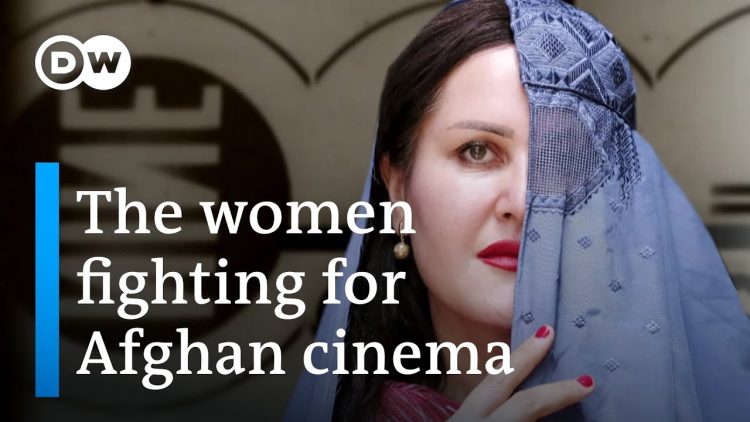
How Afghan filmmakers fight for their cinema
A year after the Taliban took power in Afghanistan, a group of courageous women filmmakers were still fighting to tell their stories on the big screen. That is the starting point of this episode of Arts Unveiled, which asks what the Taliban’s return means for Afghan cinema, and follows the women who refuse to let it die. Amnesty International has described what has been happening to women in Afghanistan since the Taliban regained control of the country in August 2021 as death in slow motion, and the film shows what that slow death looks like for artists: rights that had only just been won, drastically restricted again, and a cinema that had been built over twenty years, dismantled almost overnight.
For two decades, female directors, producers and actresses had shaped Afghan cinema, making dramas and award-winning films that attracted international attention. Women ran production companies, directed feature films, programmed festivals and led the country’s state film institution. Then the Taliban returned, and their cultural policy made the direction clear: they wanted a cinema that took a hardline stance on what they called Islamic values, national traditions and Afghan culture. In practice, that meant an end to the cinema women had built, and to the stories women had been telling about their own lives.
The film introduces its subject through two pioneers. Roya Sadat, born in Herat in 1983, was the first woman director in the history of Afghan cinema in the post-Taliban era, and her debut feature Three Dots was followed by A Letter to the President, which was shortlisted for the Oscars. With her sister Alka Sadat she founded the Roya Film House in 2003, the first independent Afghan film company, and in 2013 she co-founded the International Women’s Film Festival in Herat. Sahraa Karimi, born in 1981 to Afghan refugee parents in Tehran, became the first woman to lead Afghan Film, the country’s state film organisation, in 2019, and her feature Hava, Maryam, Ayesha premiered at the Venice Film Festival the same year. Both women are now working in exile, and both are still making films.
The episode traces the turbulent history of Afghan cinema itself, a history of openings and closures that mirrors the country’s own. Afghan Film, the state film body, was founded in 1968, and Afghan cinema has been remade again and again by war, by occupation and by regime change. The twenty years after 2001 were the longest period of freedom the country’s filmmakers had known, and it was in that period that women built the cinema the film celebrates. The Taliban’s return in August 2021 ended it, and the film shows how the filmmakers who had to flee managed to save themselves, and what they were able to carry with them.
What the Film Explores
The film explores the two pioneers first, and it wants the viewer to understand what they built before it was taken away. Roya Sadat’s career runs from a play she wrote and directed for a group of Afghan women in 1999, during the Taliban’s first period in power, through her debut feature after the regime fell, to the Roya Film House and the women’s film festival in Herat. Her work has always been about the injustice and restrictions imposed on women, and she was named a 2018 International Woman of Courage by the United States State Department. Sahraa Karimi’s path runs through exile in Slovakia, a doctorate in film studies, and a return to Kabul in 2012, where her documentary Afghan Women Behind the Wheel won awards around the world, before her appointment to lead Afghan Film in 2019.
A second thread follows the history of Afghan cinema, and the film treats it as a story of repeated interruption. Cinemas were built and burned, archives were hidden and destroyed, and filmmakers worked under governments that alternately celebrated and banned their work. The twenty years after 2001 were exceptional, and the film shows what that freedom produced: production companies run by women, films about women’s lives shown at international festivals, and a generation of actresses and directors who had never known a cinema without women in it. That is what was at stake in August 2021, and the film is careful to show it as a concrete loss, not an abstraction.
A third thread follows the escape, and the film does not soften how close it was. Karimi has described going to the bank for money in the days after Kabul fell and finding it closed and evacuated, and she was eventually evacuated from Kabul to Kyiv with eleven other people before settling in Italy, where she taught at the National School of Cinema in Rome. Sadat was in the United States when the Taliban resumed power, and has remained there with her husband and children. The film shows how filmmakers in their position saved themselves: through networks of colleagues, festival contacts and friends abroad, and through quick decisions made under pressure.
Key Themes & Topics Examined
- Roya Sadat, the first woman director of Afghan cinema in the post-Taliban era
- Sahraa Karimi, the first woman to lead Afghan Film, appointed in 2019
- Twenty years of women shaping Afghan cinema, from 2001 to 2021
- The Taliban’s return in August 2021, and the cultural policy that followed
- Amnesty International’s description of women’s lives as death in slow motion
- The turbulent history of Afghan cinema, from 1968 to the present
Production & Background
The film is a DW History and Culture production, part of the Arts Unveiled series, which looks at the stories behind art, culture and history. Its chapters run from the introduction through the female pioneers of Afghan cinema, the turbulent history of Afghan cinema, how female filmmakers managed to save themselves from the Taliban, how they support and protect each other, and Afghan cinema in exile.
Recommended Companion Viewing
Explore authoritative investigative documentaries on related historical events and investigative subjects.

Economist on How High Inflation Takes Time To Build Up
Why is Shamanism so Attractive to Artists?
How Dependent Is Germany on Skilled Workers from Abroad?
Why There Are So Many Different Hotel Brands
Frequently Asked Questions
What is the film about?
The Afghan women filmmakers who are fighting to keep their cinema alive after the Taliban’s return to power in August 2021, and the cinema they built over the previous twenty years.
Who are the two pioneers in the film?
Roya Sadat, the first woman director of Afghan cinema in the post-Taliban era and founder of the Roya Film House, and Sahraa Karimi, the first woman to lead Afghan Film, appointed in 2019.
What does the Taliban want Afghan cinema to be?
According to the film, the Taliban’s cultural policy wants a cinema that takes a hardline stance on Islamic values, national traditions and Afghan culture.
What happened to Afghan cinema after August 2021?
The women filmmakers who had shaped it for twenty years were forced into exile, and Afghan cinema now continues largely outside the country, made by directors who cannot go home.







