
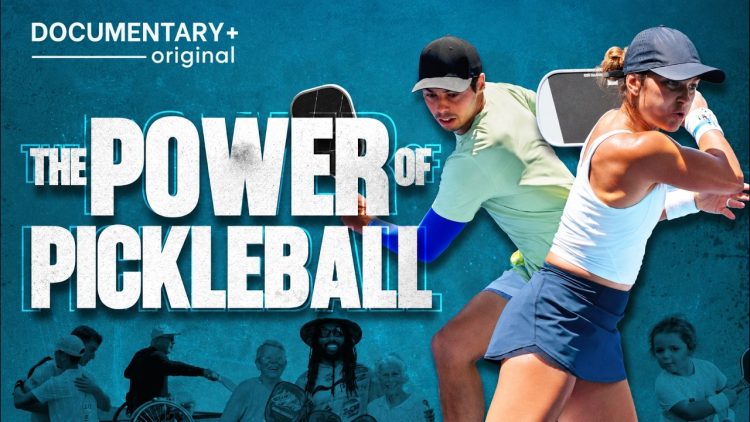
How a Backyard Game Became a Global Movement | The Power of Pickleball | FULL DOCUMENTARY
What began as a simple backyard game in 1965 has grown into a sporting phenomenon bringing together players across generations. The Power of Pickleball explores the remarkable rise of a game whose accessibility, competitive spirit, and sense of community have helped transform it into a powerful cultural movement.
The story starts, as the best sports stories do, with boredom. In the summer of 1965, on Bainbridge Island in Washington state, Joel Pritchard — later a congressman and Washington’s lieutenant governor — and his friend Bill Bell came home from golf to find their families with nothing to do. There was a badminton court and no shuttlecock, so they improvised: ping-pong paddles, a perforated plastic ball, a lowered net. The next weekend a third friend, Barney McCallum, joined in and helped shape the rules. Pritchard’s wife Joan named the game after the “pickle boat” in rowing, a crew thrown together from leftover oarsmen — a fitting name for a sport assembled from spare equipment.
Nobody involved could have guessed what would follow. For decades pickleball was a curiosity, a game played in backyards and community centres by people who had stumbled across it. Then, in the space of a few years, it became one of the fastest-growing sports in North America, with dedicated courts appearing in parks, converted tennis facilities, and purpose-built clubs. The film meets the people who helped shape that rise, and the people whose lives have been changed by it — and it finds that the reasons for the game’s growth are the same qualities it had from the beginning.
The first of those qualities is accessibility. Pickleball is played on a small court with a light paddle and a slow, perforated ball, and the game is easy to learn and gentle on the body. A child can play it, and so can a seventy-year-old. That matters more than it sounds: most sports are designed, whether they admit it or not, for the young and the athletic. Pickleball is one of the rare games that genuinely welcomes everyone, and the film shows courts where grandparents play with grandchildren, and where people who had given up on sport found their way back to it.
The second quality is competitive spirit. Easy to learn does not mean easy to master, and the film shows the other side of the game: the players who train seriously, the tournaments, and the strategy of the soft game at the net. Jennifer Lucore, one of the people featured in the film, co-wrote a history of the sport, and the film draws on her knowledge to show how a backyard pastime developed a genuine competitive culture without losing its friendliness.
The third quality, and the one the film cares about most, is community. Pickleball is a social game by design: doubles is the most popular format, the court is small enough that players talk while they play, and the culture around the game is famously welcoming. The film’s most affecting moments are the relationships — friendships formed on public courts, and players who found belonging late in life. More than the story of a sport, the film celebrates connection, community, and the enduring ability of play to bring people together.
What the Film Explores
The film explores how a game invented to cure an afternoon’s boredom became a cultural movement. The answer it finds is not marketing or money, but the qualities built into the game from its first weekend: it is easy to start, hard to master, and social by nature. The film traces that arc from a Bainbridge Island backyard to a phenomenon that spans generations and continents, and it treats the growth as something that happened because the game was good, not because it was sold well.
It also explores who plays pickleball, and why that matters. The film’s players are not the people sport usually celebrates. They are older, or less athletic, or new to competition altogether, and the game has given them something most sports do not offer: a place where they belong. The surfers who changed their sport forever fought for recognition from the outside; pickleball’s players built theirs from the inside, one court at a time.
The film looks closely at the people who shaped the game. J. Gizmo Hall, Rusty Howes and Jennifer Lucore are among those featured, and through them the film shows the many kinds of contribution that build a sport: players, organisers, historians, and the enthusiasts who kept the game alive through the decades when nobody was watching.
Finally, the film explores what a sport can be when it is built on play rather than spectacle. Pickleball’s rise has brought money, professional leagues and sponsors, but its power comes from something simpler and harder to buy: belonging to a community, and the joy of a game anyone can play.
Key Themes
- A simple backyard game, invented on Bainbridge Island in the summer of 1965.
- Joel Pritchard, Bill Bell and Barney McCallum, and the improvised game they built.
- Ping-pong paddles, a wiffle ball and a lowered badminton net.
- The name, coined by Joan Pritchard after the “pickle boat” in rowing.
- Accessibility: a game a child and a seventy-year-old can both play.
- Competitive spirit: easy to learn, hard to master, with a real tournament culture.
- Community: doubles, conversation, and friendships formed on public courts.
- Jennifer Lucore, J. Gizmo Hall and Rusty Howes, among the people who shaped the game.
Production and Background
The film is a Documentary+ production, directed by Alexander Jeffery and written by Jeffery and Chris Lyon, featuring J. Gizmo Hall, Rusty Howes and Jennifer Lucore. It runs just under eighty-five minutes, making it one of the longest films in this batch, and it uses that time to cover both the history of the game and the lives it has touched. Documentary+ is home to full-length documentaries across true crime, sports, music, culture, history, science and technology, and this film is a characteristic example of its approach: a complete story, told at feature length, about a subject that turns out to be much larger than it first appears.
Recommended Companion Viewing
Explore authoritative investigative documentaries on related historical events and investigative subjects.

Frequently Asked Questions
When and where was pickleball invented? In the summer of 1965, on Bainbridge Island in Washington state, at the summer home of Joel Pritchard.
Who invented pickleball? Joel Pritchard, Bill Bell and Barney McCallum, who improvised the game with ping-pong paddles and a perforated plastic ball on a badminton court.
Why is it called pickleball? Joel Pritchard’s wife Joan named it after the “pickle boat” in rowing — a crew assembled from leftover oarsmen — a fitting name for a game put together from spare equipment.
Why has pickleball grown so fast? The film points to three qualities: accessibility, competitive spirit, and community. It is easy to learn, hard to master, and social by design.
Who is Jennifer Lucore? A pickleball player and historian featured in the film, and co-author of a history of the sport, “History of Pickleball: More than 50 Years of Fun!”
More to watch
- The Surfers Who Changed the Sport Forever | Bustin’ Down the Door | FULL DOCUMENTARY
- Nature and risk for likes – How social media is changing extreme sports
- India’s Little-Known Minority – The Siddi and the Olympic Dream







